
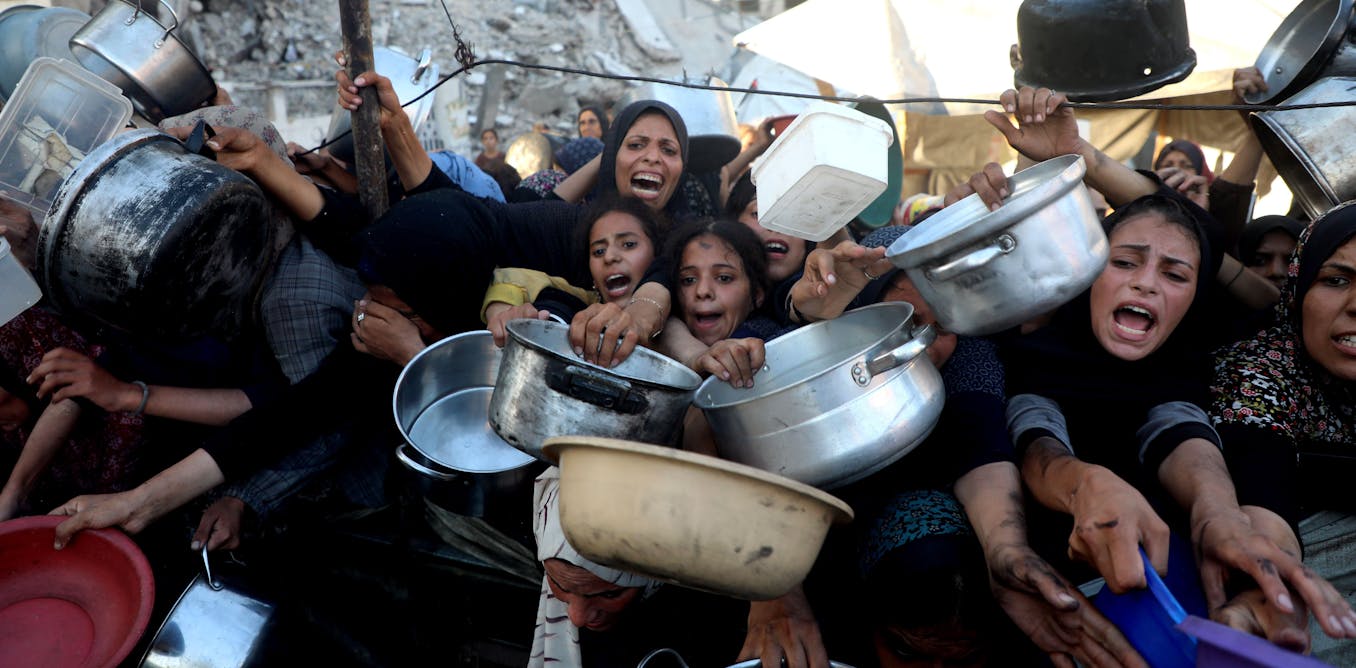
Gaza Faces Catastrophic Starvation as Aid System Falters
International Pressure Mounts on Israel Amidst Growing Humanitarian Crisis
The humanitarian situation in Gaza has worsened dramatically, with widespread starvation now a grim reality for hundreds of thousands. Reports detail children dying in overwhelmed hospitals, lacking the basic nutrition needed for survival and recovery from injuries.
Aid Chaos Fuels Civilian Deaths
Aid distribution efforts launched in May, intended to alleviate suffering and backed by the US and Israel, have been marred by chaos. Over the past two months, the system has allegedly been responsible for the deaths of approximately 1,000 people, with both Israeli Defence Forces personnel and armed Palestinian groups implicated.
Writing from within a Gaza hospital, a volunteer surgeon, **Nick Maynard**, shared harrowing accounts of patients succumbing not to their wounds, but to severe malnutrition preventing necessary medical procedures. “They deteriorate and die, not from their injuries, but because they are too malnourished to survive surgery,” he stated.
The international community is beginning to react. The UK, along with 27 other nations, has condemned the “drip feeding of aid and the inhumane killing of civilians” attempting to access vital supplies. However, according to **Simon Mabon**, a professor of international relations, “Most are apparently content to condemn – but little action has been taken.”
Calls for Meaningful Action Against Starvation
The scale of the crisis is starkly illustrated by the IPC’s food security monitoring. Half a million people in Gaza are facing “catastrophe,” while an additional 1.1 million are in the “emergency” risk category, indicating a predictably rising civilian death toll.
To address this, **Simon Mabon** suggests several avenues for countries allied with Israel to exert pressure on the Netanyahu government. These include formally recognizing the state of Palestine, a step seen as essential for any credible two-state solution, and halting arms sales to Israel, a measure already adopted by many nations. Drawing parallels with the international pressure that led to the dismantling of apartheid in South Africa, Mabon advocates for similar comprehensive measures.
Netanyahu Navigates Political Landscape Amidst Crisis
Meanwhile, Israeli Prime Minister **Benjamin Netanyahu** is reportedly considering an early election. While previously a politically perilous move, recent polls suggest a boost in his popularity following a military campaign against Iran. **Brian Brivati**, a professor of contemporary history and human rights, believes Netanyahu’s path to victory hinges on successfully framing his government’s successes around hostage releases, defeating Hamas, and ensuring regional security, calling it “a tall order.”
UN Rapporteur Sanctioned Amidst Criticism
In a controversial move, the US government has imposed sanctions on **Francesca Albanese**, the UN’s special rapporteur for Palestine’s occupied territories. The US Secretary of State, **Marco Rubio**, cited Albanese’s engagement with the International Criminal Court and her alleged communication with companies as reasons for the sanctions. **Alvina Hoffman**, an expert in diplomatic affairs, explains the vital role of special rapporteurs in defending human rights and why targeting Albanese is misplaced.
Dispatches from Ukraine
Russia-Ukraine Talks Yield Little Progress
Delegations from Russia and Ukraine met for brief talks in Istanbul, agreeing to prisoner swaps and establishing online working groups for political, military, and humanitarian issues. **Stefan Wolff**, an international security expert, noted the talks’ brevity was unsurexpected given both sides’ entrenched maximalist war aims.
The outcome of these negotiations may hinge on future decisions by former US President **Donald Trump**. He has indicated plans to impose sanctions on countries buying Russian oil and supply Ukraine with weapons if a ceasefire is not reached within 50 days. Both Russia and Ukraine are expected to adopt a wait-and-see approach until after September 2nd to gauge US actions.
Zelensky Faces Domestic Backlash Over Anti-Corruption Moves
Ukrainian President **Volodymyr Zelensky** is facing internal dissent following his decision to consolidate anti-corruption organizations under government control. While he cites preventing Russian infiltration as the reason, critics argue it’s a power grab to shield allies from investigation. **Jenny Mathers** describes these protests as a significant “fracture of the ‘informal agreement between the government and society to show a united front to the world while the war continues’.”
Despite protests, Zelensky retains significant political capital, with his party holding a parliamentary majority and a 65% approval rating. The constitution also prohibits elections during wartime. **Mathers** emphasizes the historical importance of civil society accountability in Ukraine, a sentiment **Zelensky** would be wise to heed, particularly given the need to maintain Western support.
https://youtube.com/watch?v=XxS2fsEV-8s%22+loading%3D%22lazy
Ukraine Quits Landmine Treaty, Raising Future Concerns
In a move mirroring other nations fearing Russian aggression, Ukraine has withdrawn from the Ottawa Convention, which prohibits anti-personnel landmines. Ethicist **Marcel Vondermassen** warns that this decision could create a deadly legacy. He highlights that landmines often continue to claim civilian lives, including children, long after conflicts end, citing ongoing casualties in former conflict zones worldwide.
Thailand-Cambodia Border Dispute Escalates
A long-standing territorial dispute between Thailand and Cambodia has reignited, leading to border closures and diplomatic expulsions. The conflict escalated when Thai soldiers were injured by a landmine, followed by exchanges of rocket fire and artillery, resulting in civilian casualties on both sides.
The current tensions are rooted in a colonial-era border dispute dating back to the 19th and early 20th centuries, according to **Petra Alderman**, an expert in Southeast Asian politics.
