
Germany and UK Forge New Security Pact, Bolstering European Defense
New “E3” Alliance Addresses Russian Threat and US Reliability Concerns
Germany has cemented a historic friendship with the United Kingdom, signing a comprehensive bilateral treaty that deepens security and arms cooperation. This landmark agreement, the first of its kind since World War II, establishes mutual assistance obligations during crises, building upon existing NATO frameworks.
Strengthening European Resolve
The pact arrives amidst escalating geopolitical tensions, with the “E3” alliance – comprising Germany, France, and the UK – seeking to present a united front. This strategic alignment is a direct response to perceived threats from Russia and growing uncertainty about the unwavering commitment of the United States to European security under potential future administrations.
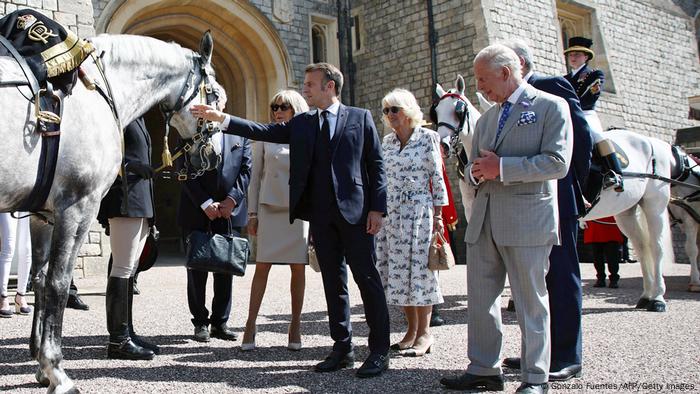
The treaty’s signing follows a significant state visit by French President Emmanuel Macron and his wife Brigitte to the UK. Their visit, which included engagements with the royal family, also focused on the security interests of Europe’s nuclear powers.
A United Front for Ukraine
Earlier this year, Merz, Macron, and British Prime Minister Keir Starmer undertook a joint train journey to Kyiv to reaffirm support for Ukraine. Polish Prime Minister Donald Tusk later joined them, highlighting a growing consensus among key European leaders.
Navigating Post-Brexit Realities
The “E3” grouping, though formalizing ties between Germany and the UK after Brexit, acknowledges the differing political landscapes. Despite the UK’s departure from the European Union, the urgency of shared security challenges has spurred this deeper collaboration.
The nuclear capabilities of France and the UK are seen by Merz as a potential supplement, or even long-term replacement, for US security guarantees in Europe. This strategic consideration arises from concerns over potential shifts in US foreign policy, particularly regarding its commitment to NATO allies.
Germany’s Call for Self-Reliance
Merz has openly discussed Europe’s past reliance on the US for defense, stating, “We were free-riders in the past.”
He emphasized Germany’s commitment to increasing its defense spending, a move echoed by calls from the US. However, analysts caution against complete independence from Washington. “There can be no question of independence,”
stated political scientist Johannes Varwick, stressing the necessity of both political and military interdependence.
Germany & UK sign new friendship treaty. Aims for closer security & defence cooperation. Could this be the start of a stronger European defence bloc independent of the US?
— DW News (@dw_news) July 17, 2024
In a BBC interview, Merz acknowledged, “We know that we have to do more on our own.”
Germany’s defense budget is set to significantly increase, reflecting this shift towards greater self-sufficiency. In 2023, Germany’s defense spending was approximately €55.2 billion, a notable increase from previous years, according to the German Ministry of Defence.
Border Tensions Strain Polish Relations
Despite efforts to bolster European ties, Germany’s recent introduction of border controls with Poland has created friction. Merz, who leads the Christian Democratic Union, has accused the previous government of neglecting relations with both France and Poland. His initial diplomatic overtures to Paris were met with a positive reception, but a dispute arose with Polish Prime Minister Donald Tusk over migration policies and border enforcement.
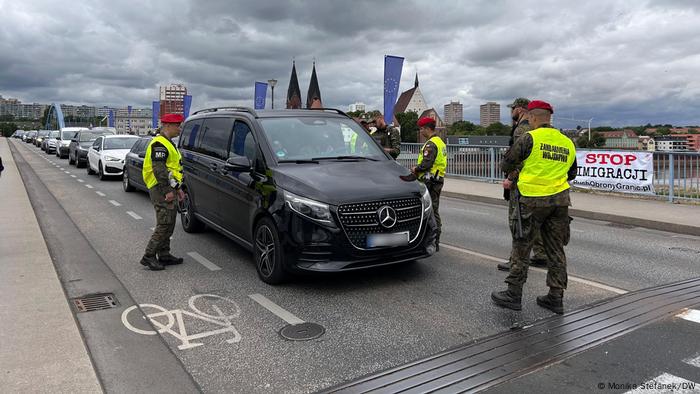
The border issue was described as a “false start”
by analysts, who noted that “symbolic migration policy was more important to him than European cohesion and good neighborly relations with Poland.”
Merz, however, assured that the E3 cooperation is not exclusive, stating that Germany considers “Poland, Italy and the other also smaller European partners”
in its decisions.
The joint trip to Kyiv, excluding Polish and Italian leaders, has underscored the current focus on the “E3” format, signaling a new strategic direction in European security policy.
