
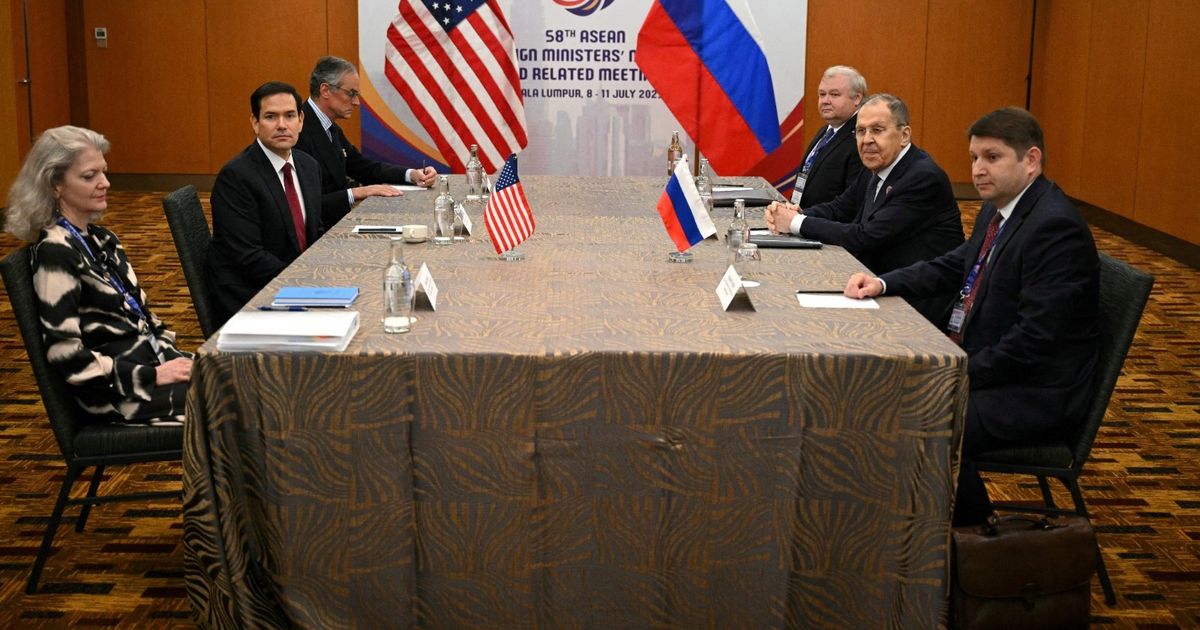
Kremlin Believes US-Russia Talks Can Continue Despite Ukraine Stance
Table of Contents
world-today-news.com">
world-today-news.com">
world-today-news.com/images/placeholder.jpg">
The Kremlin stated Friday that it does not believe President Donald Trump’s firm stance on Ukraine signifies an end to discussions aimed at improving U.S.-Russia relations. Trump had previously given Moscow a 50-day deadline to reach a ceasefire agreement in Ukraine, threatening sanctions if this was not met.He also indicated plans to send more missiles to Kyiv, a move that drew criticism from the Russian Foreign Ministry.
When questioned about whether Trump’s statements would halt negotiations to revive bilateral relations, Kremlin spokesman Dmitry Peskov responded friday, “We assume that this is not intended. Of course, thes are two different issues. One is the issue of (peaceful) settlement in Ukraine. And the othre is our bilateral relations.”
Peskov acknowledged that numerous “problems” and “obstacles” need to be addressed to mend relations with Washington, which he characterized as being in a “deplorable state.” Dialogue between Moscow and Washington had shown signs of advancement following Trump’s return to office in January. However, President Vladimir Putin‘s conditions for a potential ceasefire reportedly increased Trump’s disappointment with the Russian leader.
Russia and Ukraine have engaged in two rounds of peace talks in Türkiye this year, resulting in agreements on prisoner exchanges and troop de-escalation. A date for a third round of discussions has not yet been set.
Trump Expresses Disappointment with Putin
On Tuesday, Trump voiced his “disappointment” with Putin, though he added that he had “not despaired of him” yet. This statement followed an announcement of plans to provide Ukraine with new weaponry and threats of further sanctions against Moscow.
“I do not trust anyone,” President Trump stated in an interview with the BBC on Tuesday when asked about his confidence in the Russian president.
Trump’s remarks were made after he outlined plans to send weapons to Ukraine and warned Russia against imposing strict tariffs if a ceasefire agreement was not reached within 50 days.
The ongoing conflict in ukraine has significantly strained international relations, particularly between the United States and Russia. Understanding the past context of these diplomatic interactions is crucial for grasping the current complexities. Past attempts at de-escalation and negotiation, such as the talks held in Türkiye, highlight the persistent challenges in finding common ground amidst geopolitical tensions.
Frequently Asked Questions
- What is the Kremlin’s stance on U.S.-Russia talks regarding Ukraine?
- The Kremlin believes that President Trump’s position on Ukraine does not preclude ongoing discussions aimed at improving U.S.-Russia relations.
- What deadline did President Trump set for a ceasefire in Ukraine?
- President Trump gave Moscow 50 days to reach a ceasefire agreement in Ukraine, threatening sanctions if this deadline was missed.
- What are the main issues hindering U.S.-russia relations, according to the Kremlin?
- The Kremlin cited several “problems” and “obstacles” that need resolution to improve the “deplorable state” of U.S.-Russia relations.
- Have there been previous peace talks between Russia and Ukraine?
- Yes, Russia and Ukraine have held two rounds of peace talks in Türkiye this year, leading to agreements on prisoner exchanges and troop de-escalation.
- What was President Trump’s reaction to President Putin’s conditions for a ceasefire?
- president Putin’s conditions for a potential ceasefire reportedly increased President Trump’s disappointment with the Russian leader.
- Did President Trump express confidence in President Putin?
- In a BBC interview, president Trump stated, “I do not trust anyone,” when asked about his confidence in the Russian president.
