
Tuam Excavation Underway for Mass Baby Grave
Unprecedented Dig Uncovers Remains at Former Mother and Baby Home
The meticulous excavation of a mass grave, believed to contain hundreds of infants and young children, has officially begun at the former St. Mary’s mother-and-baby home in Tuam, County Galway. This long-awaited process aims to provide answers and potential identification for families affected by the institution’s operation between 1925 and 1961.
A Decade of Discovery
The tragic scale of infant mortality at the Tuam institution first came to international attention eleven years ago when amateur historian **Catherine Corless** uncovered records showing 796 babies and children had died there, yet no burial records existed. Investigators later discovered significant quantities of human remains in disused underground chambers, described as part of an old sewage system.
Global Expertise for a Complex Task
An international team, comprising specialists from Colombia, Spain, the UK, Canada, Australia, and the United States, is collaborating with Irish experts on this unique and highly complex operation. The Office of the Director of Authorised Intervention, Tuam (ODAIT), is leading the excavation, which began with four weeks of preparatory work. ODAIT head **Daniel MacSweeney** has emphasized the unprecedented nature of the task.
Scientists anticipate that the remains will be largely “commingled,” meaning bones will be mixed. Various scientific methods will be employed to attempt to reconstruct and, where possible, identify individual remains. The excavation is expected to continue until 2027, with an additional three years dedicated to follow-up work.
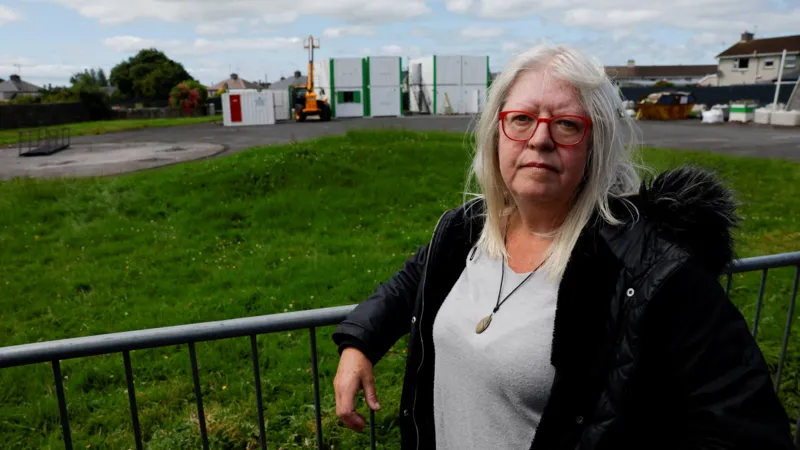
Families Seek Justice and Closure
Approximately 80 individuals have come forward to provide DNA samples, holding onto the hope that their relatives’ remains might be recovered and identified. Among them is **Anna Corrigan**, whose two brothers were born at the Tuam home. She described the commencement of the excavation as “both welcome and difficult.”
“While it’s a relief to see work started on the site, it’s really only the latest stage in what is still a long road for all of us. I won’t rest until I see justice for my two brothers who not only need a proper Christian burial but also the full rigours of the law applied.”
—Anna Corrigan
Anna Corrigan shared that one brother, William Joseph Dolan, is listed as having died in 1951, but no death certificate exists for him. Her other brother, John Desmond Dolan, died in 1947, with his death certificate citing “measles” and “congenital idiot.”
“I contended that he died of neglect and malnutrition. After my mother left the home, she sent the nuns five shillings a month for his upkeep. So how did it come to this?”
—Anna Corrigan
The legal representative for families, **Kevin Winters** of KRW Law, stated that the issuance of PULSE record numbers by the police last month signifies formal criminal investigation status for this historical human rights issue. He also emphasized the critical need for inquests into the unexplained deaths.
Hope for Identified Burials
The excavation site is secured with hoardings and 24-hour surveillance, maintained to stringent forensic standards. Families like **Annette McKay**, who believes her sister Mary Margaret may be among the deceased, are awaiting news. Her mother’s headstone currently only bears the names of her brother and stepfather.
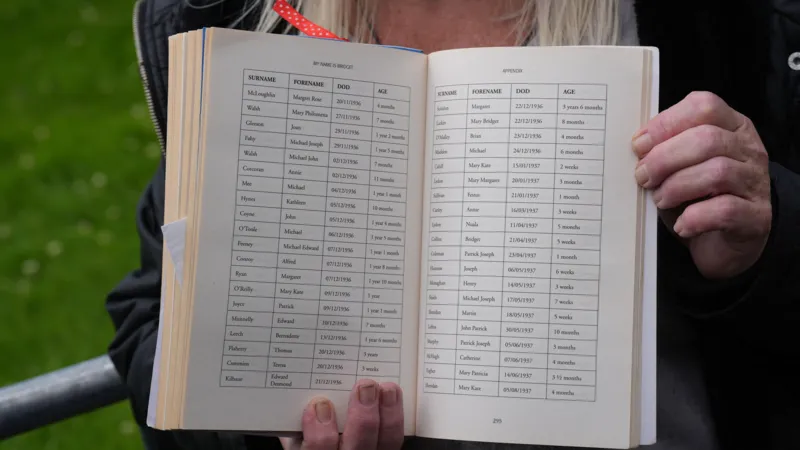
The Bon Secours Sisters and Galway County Council have both issued apologies. The religious order has contributed £2.14 million towards the costs of the excavation, reflecting the significant financial and societal commitment to addressing this painful chapter in Ireland’s history. According to Ireland’s Central Statistics Office, infant mortality rates in Ireland, while significantly lower now, have seen recent fluctuations, with a slight increase reported in 2022 for babies under one year old (CSO, 2024).
