
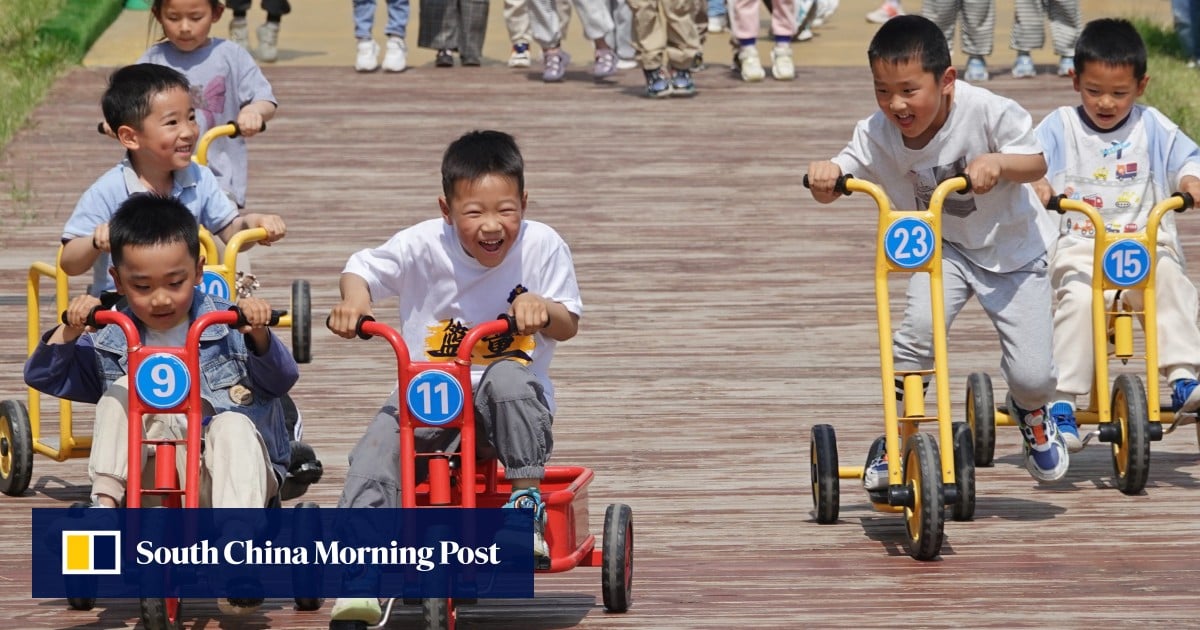
China’s Kindergartens Adapt to Falling Birth Rates
Facing a steep decline in the number of children, kindergartens in China are changing their strategies to stay afloat, including recruiting students more broadly.
Adapting to Demographic Shifts
The kindergarten where Lily Wang works, once exclusively for children of government officials in northeastern China, now seeks a wider range of students due to the country’s declining birth rate.
“The leadership has shifted its approach, enlarging the enrolment base and learning from the southern regions by adopting group-based management,”
said Wang, a senior teacher in Harbin, the capital of Heilongjiang province.
Starting last autumn, the school began admitting children from the general public, though priority is still given to children of officials. Wang noted an increase in the proportion of students from non-official backgrounds this year.
Kindergarten Closures on the Rise
Many kindergartens are struggling amidst China’s demographic changes. The number of kindergartens operating in China fell by over 13% between 2020 and last year, with approximately 253,300 kindergartens in operation last year.
Enrollment figures have also dropped significantly. After peaking at 48.18 million in 2020, the number of enrolled children decreased by 25.5% to 35.84 million.
In response to these challenges, some kindergartens are also branching out, offering services leveraging their teachers’ skills to generate additional revenue. According to the China Philanthropy Research Institute, private kindergartens in China are facing the most severe financial pressures due to declining enrollment (Sohu, 2024).
