
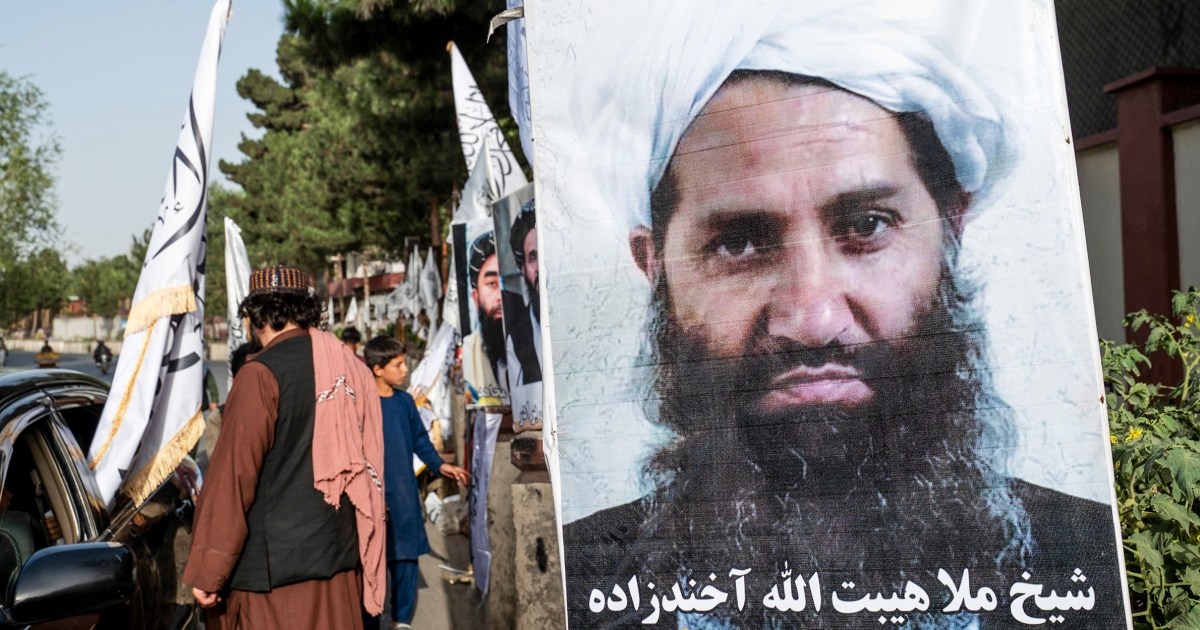
ICC Issues Arrest Warrants for Taliban Leaders
Accused of persecuting women and girls in Afghanistan
The International Criminal Court (ICC) has escalated its stance against the Taliban regime, issuing arrest warrants for its top leaders over their alleged systematic persecution of women and girls. The move intensifies global pressure on the group already facing condemnation for human rights abuses.
Key Accusations
The arrest warrants target **Hibatullah Akhunzada**, the Taliban’s supreme leader, and **Abdul Hakim Haqqani**, head of Afghanistan’s Supreme Court. They are accused of persecuting women and girls, as well as individuals not conforming to the Taliban’s strict gender policies and those perceived as their allies.
According to the court, these policies have “severely deprived, through decrees and edicts, girls and women of the rights to education, privacy and family life and the freedoms of movement, expression, thought, conscience and religion.”
The ICC’s prosecution office hailed the warrants as “an important vindication and acknowledgment of the rights of Afghan women and girls,”
also recognizing the rights of the LGBTQI+ community and allies.
Taliban Rejects Authority
**Zabihullah Mujahid**, the Taliban government’s chief spokesman, dismissed the ICC’s authority, stating that the decision reflects “open hostility and hatred toward the holy religion of Islam and Shariah law,”
and is “an insult to the beliefs of all Muslims.”
In response, **Liz Evenson**, international justice director at Human Rights Watch, asserted that “Senior Taliban leaders are now wanted men for their alleged persecution of women, girls, and gender-nonconforming people,”
urging the international community to enforce the warrants.
UN Action and International Context
The warrants coincide with increased international scrutiny, including a recent United Nations resolution calling on the Taliban to reverse their oppressive policies and eliminate terrorist organizations. Despite this, Russia recently became the first nation to formally recognize the Taliban’s government.
These warrants place the Taliban leaders alongside other high-profile figures like **Vladimir Putin** and **Benjamin Netanyahu**, who are also sought by the ICC. As of 2023, over 80% of Afghans lived in poverty, partly attributed to the Taliban’s restrictions on women’s employment (UNDP 2023).
ICC Investigation Background
The ICC’s investigation into Afghanistan was initially shelved after Kabul claimed it could handle the probe. However, chief prosecutor **Karim Khan** reopened it in 2022, citing the lack of genuine domestic investigations under the Taliban. His predecessor, **Fatou Bensouda**, received approval in 2020 to investigate alleged offenses committed by various parties, including Afghan government forces, the Taliban, American troops, and U.S. intelligence operatives, dating back to 2002.
**Khan**, currently under investigation for alleged sexual misconduct, has focused the reopened probe on crimes by the Taliban and the Afghan affiliate of ISIS.
