
Free Software Foundation Celebrates 40 years of Championing User Freedom
Table of Contents
For four decades, the Free Software Foundation (FSF) has been at the forefront of advocating for user freedom in the digital world. From providing a legal foundation for the GNU operating system to actively campaigning against the restrictions imposed by proprietary software, the FSF’s mission remains as vital as ever in an increasingly tech-dependent society.
FSF’s Core Initiatives and Campaigns
the FSF’s work extends beyond software development to encompass a wide array of campaigns aimed at protecting user rights. Thes initiatives address various threats to software freedom, ensuring that individuals retain control over the technology they use.
- LibrePlanet Community Engagement: The FSF actively fosters community engagement through events like LibrePlanet meetups. Recent events included presentations for the Shiraz, Iran event and the Thessaloniki, Greece meetup. More LibreLocal meetups are planned.
- Defective by design Campaign: the FSF’s Defective by Design campaign voices opposition to injustices like Microsoft’s requirement for a hardware TPM module for windows 11 users. The campaign encourages continued pressure on Microsoft, especially after the company ceased security updates for Windows 10.
- Advocating for Free Tax Filing Software: Following advocacy efforts, parts of the IRS tax filing software, Direct File, were released as free software.
- FSF40 Logo Contest: The FSF sourced its FSF40 logo from the free software community through a logo contest.
- FSF Memorabilia Auction: The FSF cataloged historic items related to the free software movement and entrusted a select number of them to the community through its first memorabilia auction.
- Organizing FSF40 Events: The FSF is actively organizing the FSF40 hackathon and a celebration event scheduled for October 4.
- Working Together for Free Software Series: The FSF highlights free software activists in its Working Together for Free Software series to inspire others.
- Video Tutorials: The FSF recorded video tutorials on topics such as editing the libreplanet wiki, opening a terminal, and using the command line, published on its PeerTube channel.
- Board Process: The FSF facilitated a smooth board process, leading to the introduction of new board and voting members.
- Free Software Awards: The FSF invited nominations for the 2024 Free Software Awards.
- NIST Consortium: Greg Farough serves as a software freedom advocate on the machine learning safety consortium of the US National Institute of Standards and Technology (NIST).
- Reporting on software Freedom News: The FSF reports on important news, such as the US Social Security Administration reversing its identity verification policy and threats to user freedom like Amazon tightening digital handcuffs.
Did You Know? The FSF has published thirty-two blog posts and press releases, plus six newsletters in English, French, and Spanish, and a spring Bulletin with five special articles in 2025.
Looking ahead: Future Initiatives
The FSF has ambitious plans for the future, including more LibreLocal meetups, the in-person celebration on October 4, and the FSF40 hackathon. They also plan to expand their campaigns, offer more talks and workshops, create a command line video series, and launch a volunteer training program to educate students and teachers about free software.
The Importance of Free Software in a Dystopian World
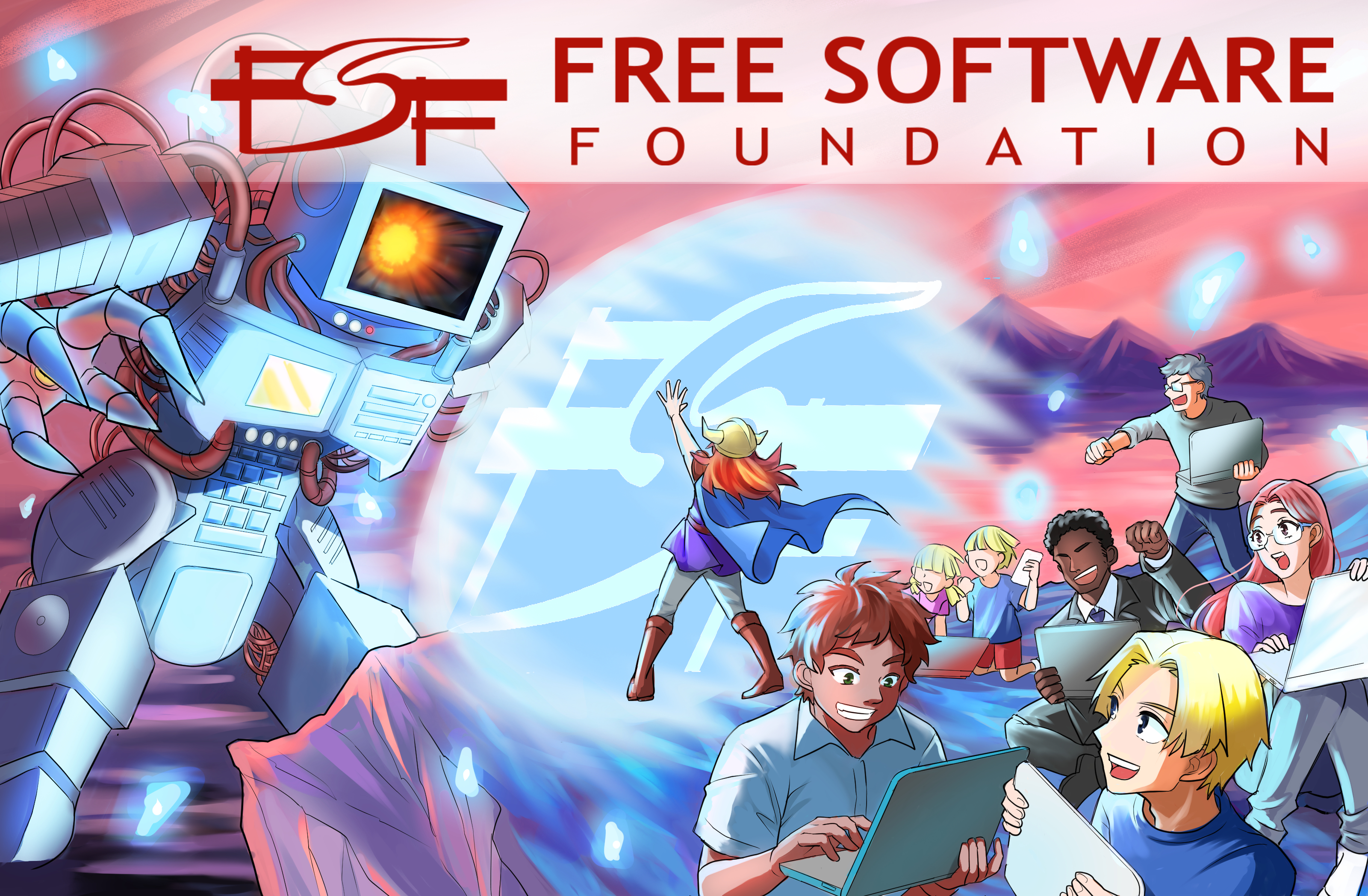
In a world where technology increasingly threatens user autonomy, free software stands as a bulwark against dystopian scenarios caused by proprietary systems. By ensuring users have full control over their software, the FSF promotes a future where technology empowers rather than subjugates.
|
Defy dystopia with free software! |
The FSF’s forty-year commitment to user freedom continues, but they cannot achieve their goals alone. Support from the community is crucial to guarding user freedom and defying dystopia.
Individuals can support the FSF by becoming associate members,with a goal of reaching 200 new members. alternative membership options, such as the Friends membership, and sponsored memberships are also available.
Pro Tip: Promoting free software alternatives in place of nonfree programs is a great way to support the cause.
The FSF relies on the commitment to software freedom to fuel its mission. Every refusal to use a nonfree program and promotion of a free one brings us closer to an autonomous digital future.
Thank you for your support,
Miriam Bastian
Program Manager
“Fight Dystopia” © 2025 by the Free Software Foundation, Inc. This image is licensed under a Creative Commons Attribution 4.0 International licence.
The Evolution of Free Software
The free software movement, spearheaded by the FSF, has significantly impacted the tech industry. Initially focused on providing alternatives to proprietary systems, it has evolved into a broader advocacy effort for user rights and digital autonomy. The rise of open-source software and the increasing awareness of data privacy issues reflect the movement’s growing influence. according to a report by the linux Foundation, open source contributions have increased by 25% in the last year, highlighting the growing importance of collaborative software development.
Frequently Asked Questions About Free Software
What are the core principles of free software?
Free software guarantees users the freedom to run, study, distribute, and modify the software. these freedoms ensure that users have control over their technology and can adapt it to their needs.
How does free software differ from open-source software?
While the terms are often used interchangeably, free software emphasizes the ethical aspects of user freedom, whereas open-source software focuses on the practical benefits of collaborative development.
What are the benefits of using free software?
free software offers numerous benefits, including increased security, greater control over technology, and the ability to customize software to specific needs. It also promotes innovation through collaborative development.
How can I contribute to the free software movement?
You can contribute by using free software, advocating for its adoption, contributing to development projects, and supporting organizations like the Free Software Foundation.
What is the role of the Free Software Foundation in promoting free software?
The FSF plays a crucial role in promoting free software by providing legal support, organizing campaigns, and educating the public about the importance of user freedom in the digital age.
How do you think free software can further combat digital dystopia? What steps can individuals take to promote software freedom in their communities?
