
Mexico Rejects US Money Laundering Claims against Banks, Demands Evidence
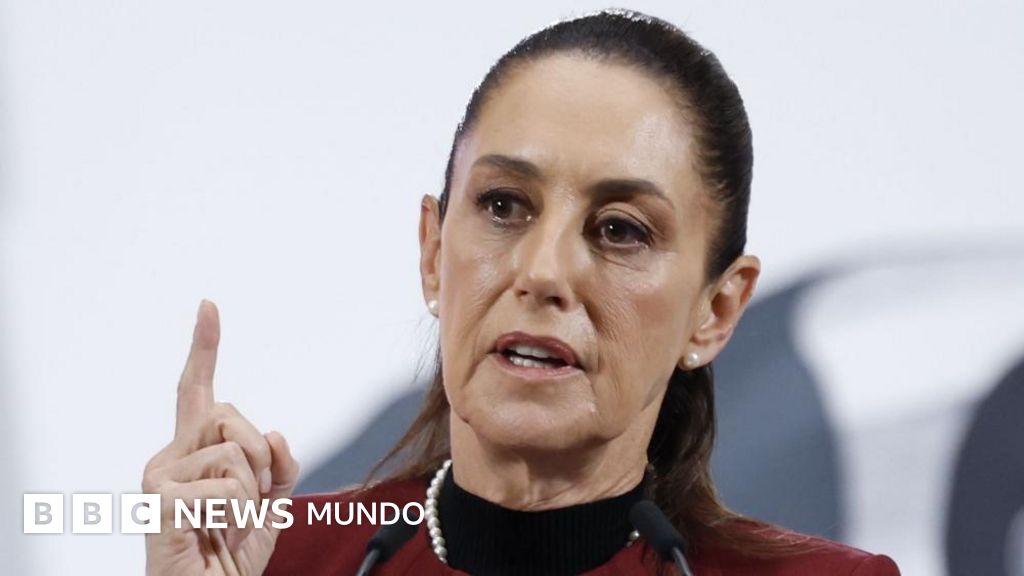
Mexico’s President Claudia Sheinbaum has strongly refuted accusations made by the United States against three Mexican financial institutions, namely Cibanco, Intercam, and Vector, alleging their involvement in money laundering linked to drug trafficking. Sheinbaum demanded concrete evidence to support the claims, asserting that Mexico will not act on unsubstantiated allegations.
Sheinbaum’s Rebuttal and Demand for Proof
During a recent press conference, President Sheinbaum revealed that her management had received a “confidential report” from U.S. authorities concerning suspicions surrounding the three banks. However, she emphasized that no supporting evidence accompanied the report, leading her to reject the subsequent announcement by the U.S. Treasury Department imposing partial sanctions on the institutions for their purported connections to money laundering related to fentanyl trafficking.
did You Know? Fentanyl is a synthetic opioid 50 to 100 times more potent then morphine, contributing considerably to opioid-related deaths in the United States. In 2023, over 70,000 overdose deaths in the U.S. involved synthetic opioids, primarily fentanyl Centers for Disease Control and Prevention.
“We are not going to cover anyone.There is no impunity, but it has to be demonstrated that, in effect, there was money laundering.Not with sayings, but with strong evidence,” Sheinbaum stated firmly.
Mexico’s Stance on Sovereignty and Collaboration
Sheinbaum underscored mexico’s commitment to sovereignty and independence, asserting that while the country collaborates and coordinates with the U.S., it does not subordinate itself. She emphasized the importance of mutual respect in the relationship between the two nations.
“Mexico does not subordinate anyone. We are a free, sovereign and self-reliant country… We are not a piñata of anyone, Mexico is respected,” she declared.
Mexican Investigation and Findings
The President disclosed that investigations conducted by the Ministry of Finance and Public Credit (SHCP) and the Financial Intelligence Unit (FIU) had identified procedural irregularities within the banks. Though, these investigations did not uncover any links to money laundering, contradicting the U.S. Treasury’s assertions.
Banks Deny Allegations
Cibanco, Intercam, and Vector have each issued statements rejecting the accusations, affirming that their customers’ assets are secure and that they are cooperating fully to clarify the situation.
Mexico’s response
The Mexican Treasury Ministry acknowledged awareness of the U.S. suspicions but stated that “no probative data was received about it.” They affirmed their commitment to acting with the full force of the law if compelling evidence of illegal activities emerges but noted the absence of such data to date.
While investigations by the SHCP and FIU revealed administrative failures leading to sanctions,these were unrelated to money laundering.The Treasury also found that approximately 300 Mexican companies engaged in commerce with Chinese entities flagged by the U.S., utilizing 10 Mexican financial institutions, without detecting any anomalies.
President Sheinbaum highlighted the extensive financial transactions between Mexico and China, driven by a substantial trade volume. She clarified that the transfers in question primarily involved legally constituted Chinese companies dealing with Mexican counterparts, which does not inherently indicate money laundering.
Pro tip: Cross-border transactions are often scrutinized for potential money laundering, requiring financial institutions to implement robust compliance programs.
“It is not money laundering test.It is indeed a transfers test, such as thousands that are made every day between Chinese and Mexican companies, as there is a trade of US $ 139,000 million,” she stated.
Sheinbaum reiterated her demand for respect from the United States in issuing such accusations, emphasizing that action should be based on evidence, not conjecture.She affirmed that Mexico will act decisively against any proven wrongdoing but cannot proceed without concrete proof.
“If there is evidence, it acts…until now, the Treasury department has not sent any evidence that indicates that there is money laundering.”
Key Metrics
| Metric | Value |
|---|---|
| US-Mexico Trade Volume | US $139 Billion |
| Fentanyl Overdose Deaths (US,2023) | 70,000+ |
| mexican Banks Under Scrutiny | 3 |
What impact coudl these accusations have on the economic relationship between Mexico and the United States? How might this situation affect international efforts to combat drug trafficking and money laundering?
Evergreen Insights: The Complexities of Cross-border Finance
The accusations against mexican banks highlight the intricate challenges of cross-border financial regulation and the ongoing struggle to combat money laundering. Financial institutions operating in multiple jurisdictions must navigate a complex web of laws and regulations, often facing conflicting demands from different governments.The case also underscores the importance of international cooperation in addressing transnational criminal activities such as drug trafficking and money laundering.
The relationship between the United States and Mexico is critical in addressing these issues. Both countries must work together,sharing information and coordinating enforcement efforts,to effectively disrupt criminal networks and protect the integrity of the financial system.
frequently Asked Questions
- Why is money laundering a serious concern for financial institutions?
- money laundering allows criminals to conceal the origins of illegally obtained funds, enabling them to profit from their illicit activities and undermining the integrity of the financial system.
- What evidence is needed to prove money laundering?
- Proof of money laundering typically requires demonstrating that funds were derived from illegal activities, that the funds were moved or concealed to disguise their origins, and that the individuals involved knew or should have known about the illicit nature of the funds.
- How do international trade volumes affect money laundering risks?
- High trade volumes can provide cover for money laundering activities,as criminals can use legitimate trade transactions to disguise the movement of illicit funds.
- What measures can banks take to prevent money laundering?
- Banks can implement robust compliance programs, including Know Your Customer (KYC) procedures, transaction monitoring systems, and reporting suspicious activities to regulatory authorities.
- What is the role of the Financial Intelligence Unit (FIU) in combating money laundering?
- The FIU is responsible for collecting, analyzing, and disseminating financial intelligence to detect and prevent money laundering and other financial crimes.
- How does fentanyl trafficking relate to money laundering?
- Fentanyl trafficking generates substantial illicit profits, which criminals then attempt to launder through various means, including financial institutions.
- What are the potential consequences for banks found guilty of money laundering?
- Banks found guilty of money laundering can face severe penalties, including fines, sanctions, reputational damage, and even the loss of their operating licenses.
Disclaimer: This article provides general information and should not be construed as financial or legal advice. Consult with a qualified professional for specific guidance.
Share your thoughts: Do you believe the U.S. should release the evidence it has against the Mexican banks? What steps can be taken to improve transparency in cross-border financial transactions?
Enjoyed this article? Share it with your network and subscribe to our newsletter for more in-depth analysis!
