
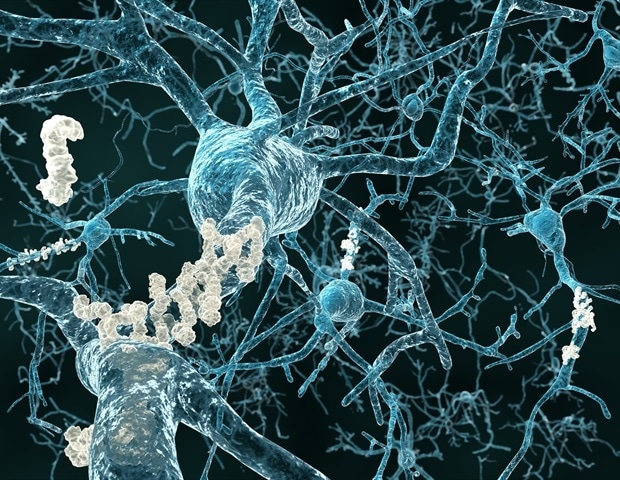
Newborn Brains and Alzheimer’s: A Surprising Connection
Researchers have discovered a surprising link between newborns and Alzheimer’s patients. Both groups share elevated levels of a protein, offering new insights into brain development and the disease, with potential implications for novel treatments.
Tau Protein: A Dual Role
A study from the University of Gothenburg, led by Fernando Gonzalez-Ortiz and Kaj Blennow, reveals that newborns and Alzheimer’s patients have increased levels of phosphorylated tau (p-tau217) in their blood. While indicative of Alzheimer’s, this protein appears to have a different role in newborns.
In Alzheimer’s, p-tau217 is associated with harmful tau aggregations known as tangles. In newborns, however, the protein seems to support healthy brain growth by fostering connections between neurons.
…original tweet embed code…
The research, involving blood samples from over 400 individuals, highlighted that newborns have the highest p-tau217 levels, surpassing even those with Alzheimer’s. These levels are highest in premature babies and diminish over their first few months.
“We believe that understanding how this natural protection works – and why we lose it as we age – could offer a roadmap for new treatments. If we can learn how the newborn brain keeps tau in check, we might one day mimic those processes to slow or stop Alzheimer’s in its tracks.”
—Fernando Gonzalez-Ortiz, First Author
In the United States, approximately 6.7 million people aged 65 and older are living with Alzheimer’s disease in 2023 (Alzheimer’s Association).
Implications for Treatments
The study, published in Brain Communications, suggests that the brain might possess natural defenses against tau’s damaging effects. Understanding this protection could be key to developing new treatments for Alzheimer’s disease. The team also emphasizes the need for thorough understanding of the mechanism for the increase in p-tau217, particularly for use in clinical and epidemiological research and drug development.
Unraveling the Mystery
This research signifies that amyloid plaques might not be the main factor behind increasing p-tau217. The dual role of the molecule—building the brain in newborns and signaling its decline in older adults—underscores the complexity of neurological processes.
This groundbreaking research provides a basis for further explorations into the role of tau and its relationship to brain health across the lifespan.
