
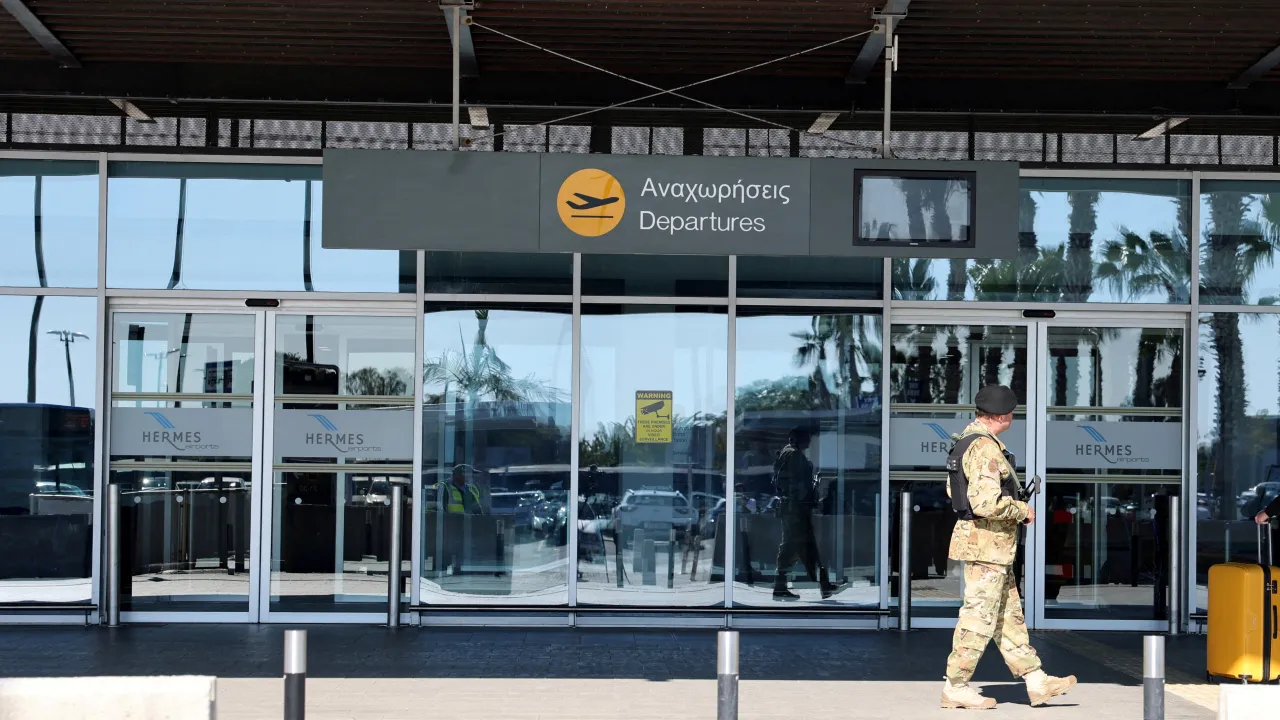
cyprus Activates Middle East Evacuation Plan Amid Rising Tensions
Table of Contents
- cyprus Activates Middle East Evacuation Plan Amid Rising Tensions
- Cyprus Prepares for Potential influx of Evacuees
- Geostrategic Importance of Cyprus
- european Nations Heighten Security Measures
- European Leaders Urge de-Escalation
- Conference on Palestine Postponed
- Evergreen Insights: Understanding the Geopolitical Context
- Frequently Asked Questions About the Middle East Crisis
As tensions surge in the Middle East, Cyprus has activated its “Hestia” evacuation plan, prepared to receive and assist citizens of the European Union and other nations seeking refuge. The Cypriot government is preparing temporary accommodations in anticipation of incoming evacuees. Concurrently, European countries are bolstering security measures to protect their populations and key sites.
Cyprus Prepares for Potential influx of Evacuees
Under the “Hestia” plan, evacuees will initially be housed in temporary facilities such as tents, schools, and hotels, according to the Cypriot Government Crisis Plan. From ther, arrangements will be made for their onward travel to their respective home countries. Several flights bound for Israel have already been redirected to Cyprus, as reported by operators at Larnaca Airport. Some passengers are being accommodated in hotels, while others await further instructions at the airport.
Did You Know? Cyprus is the closest EU member state to the Middle East, situated approximately 250 kilometers northwest of Israel.
Geostrategic Importance of Cyprus
Cyprus’s location in the eastern Mediterranean gives it a pivotal role in coordinating humanitarian aid. The island has frequently served as a hub for countries evacuating their citizens from the Middle East during times of crisis.
These preparations come in the wake of heightened regional instability.
european Nations Heighten Security Measures
in response to the escalating tensions, the Czech Republic’s Foreign Ministry has elevated its travel warning for Iran to the highest level. While the warning for Israel remains unchanged, Czech authorities are in contact with the thousands of Czech citizens, including those with dual citizenship, residing in the country.
Following recent events, czech police have reinforced security around jewish sites within the Czech Republic. Similarly, Slovakian police have announced increased patrols in selected areas. Greece has convened its National Security Council to address the unfolding situation.
Pro Tip: When traveling to regions with heightened security risks, always monitor local media for the most up-to-date information and heed the advice of local authorities.
Germany has also enhanced the protection of Jewish and Israeli facilities, a measure that has been in place sence the October 7, 2023 attacks.
European Leaders Urge de-Escalation
german Chancellor Friedrich Merz has called on all parties to avoid actions that coudl further escalate the conflict and destabilize the region. He affirmed Israel’s right to defend itself and the security of its citizens, noting that he had been briefed by israeli Prime Minister Benjamin Netanyahu on the military operations.
Czech Foreign Minister Jan Lipavský expressed understanding for Israel’s actions, citing Iran’s non-compliance with international obligations regarding its nuclear programme and its threatening rhetoric towards Israel.
Other European leaders, including British Prime Minister keir Starmer and French President Emmanuel Macron, have echoed calls for restraint and a return to diplomatic efforts.
Conference on Palestine Postponed
French President Emmanuel Macron announced the postponement of the UN International Conference aimed at fostering a Palestinian state and a two-state solution to the Israeli-Palestinian conflict. The conference, initially scheduled to be co-hosted by France and Saudi arabia, has been delayed due to logistical challenges.
| Country | Action Taken |
|---|---|
| Cyprus | activated “Hestia” evacuation plan |
| Czech Republic | Tightened travel warning for Iran,reinforced security around Jewish sites |
| slovakia | Increased police patrols in selected areas |
| Germany | Enhanced protection of jewish and Israeli facilities |
Evergreen Insights: Understanding the Geopolitical Context
The current tensions are rooted in a complex history of regional conflicts and geopolitical rivalries. The ongoing Israeli-Palestinian conflict, coupled with concerns over Iran’s nuclear program and regional influence, contribute to the instability. Cyprus,due to its strategic location,frequently enough finds itself at the center of humanitarian efforts during such crises.
According to a 2024 report by the Council on Foreign Relations, the Middle East faces persistent security challenges stemming from state fragility, sectarianism, and external interventions. The report highlights the need for regional cooperation and diplomatic solutions to address these underlying issues.
The United Nations has a long history of involvement in the Israeli-Palestinian conflict, dating back to the 1947 partition plan.Despite numerous resolutions and peace initiatives, a lasting solution remains elusive.
Frequently Asked Questions About the Middle East Crisis
- What are the main drivers of instability in the Middle East?
- Several factors contribute to instability, including the Israeli-Palestinian conflict, sectarian tensions, concerns over Iran’s nuclear program, and regional power struggles.
- What role does Cyprus play in regional crises?
- Cyprus’s strategic location makes it a key hub for humanitarian aid and evacuation efforts during Middle Eastern conflicts.
- what is the international community doing to address the tensions?
- International actors, including the United Nations and various countries, are engaged in diplomatic efforts to de-escalate the situation and promote dialog.
- How can individuals stay informed about the evolving situation?
- Reliable sources of information include reputable news organizations, government advisories, and international organizations like the UN.
- What are the potential long-term consequences of the current crisis?
- The long-term consequences could include further regional instability, humanitarian crises, and disruptions to global trade and energy markets.
The information provided in this article is for general knowledge and informational purposes only,and does not constitute professional advice.
What are your thoughts on the international response to the escalating tensions? How do you think this situation will evolve?
Share your insights and join the conversation below. Stay informed and subscribe to our newsletter for the latest updates on global events.
