
NATO gears Up: Preparing for Potential Russian Attack in the Next Few Years
June 6, 2025
The Looming Threat: NATO on High alert
Amid escalating global security concerns, NATO is taking proactive measures to prepare for potential aggression.
Russia could “decide to attack us in three to five years,”
according to NATO Secretary general Mark rutte, underscoring the urgency for Europe to bolster its defenses.
this heightened state of alert comes as NATO allies finalize plans to significantly increase defense spending, signaling a firm commitment to readiness and security.
Defense Spending Surge: A Commitment to Readiness
NATO countries are in the process of increasing defense spending from 2% of GDP to 5%.
This dramatic increase reflects a strategic shift towards prioritizing military preparedness in response to evolving global threats.
Strengthening Defenses: New Capability Targets
NATO allies are focusing on strengthening their defense through new capability targets, based on the evolving global security concerns and, in particular, the threat from Russia.
This involves modernizing military infrastructure, enhancing technological capabilities, and improving overall readiness for potential conflicts.
Griffin Lightning: Testing the Alliance’s Mettle
NATO’s Griffin Lightning military exercise is one of the most extensive tests of the alliance’s capabilities and readiness for war.
The exercise involves a wide range of hardware, including:
- Tanks
- Howitzers
- Attack Helicopters
- Drones
- Live-fire Drills
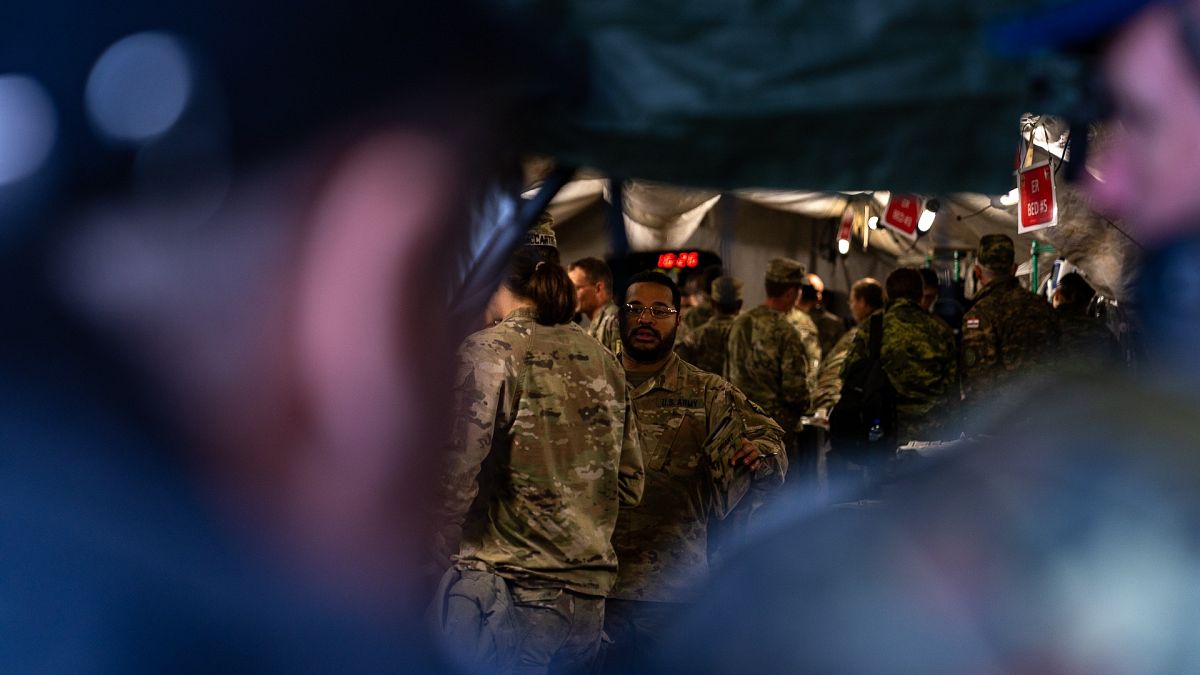
- Fully Functional Field Hospitals
Field Hospitals: The First Line of Defense
Field hospitals are crucial as the first line of defense, preventing death or major life-changing injuries.
These mobile medical facilities provide immediate care to wounded soldiers, stabilizing them until they can be transported to more thorough medical centers.
Drones: Revolutionizing Battlefield Medicine
Drones are playing an increasingly notable role in modern warfare, particularly in providing rapid medical assistance.
armies are now preparing for the widespread integration of drone technology into life-saving situations on the battlefield.
Drones will be used to transport blood directly to the injured soldier on the frontline, buying crucial time with blood transfusions until a soldier can receive more comprehensive care.
Baltic stronghold: lithuania’s Strategic Role
In Lithuania and across the Baltic states, armies are using former Soviet missile depots as control centers for NATO allies and for storing medical supplies and field and dental hospitals.
This strategic positioning enhances NATO’s ability to respond quickly to potential threats in the region.
Hospital 519: A Glimpse into battlefield Medicine
Hospital 519 is an American-led facility in the center of Lithuania with hypothetical patients displaying injuries common to the battlefield, especially the current frontline in Ukraine.
Medical staff react to drills and emergency life-saving treatments that are common to battlefield injuries.
Field hospitals are there to stabilise patients, with IV access, intubations and CT scanners for head trauma and brain injuries.
It’s part of the US Swift Response military exercise within NATO, which tests the ability of US battalions and military medical personnel to respond instantly to a potential Russian invasion in the Baltic states or other frontline countries in Europe.
Lessons from Ukraine: Adapting to Modern Warfare
The war in Ukraine is informing how NATO is preparing for battlefield injuries.
The injuries we’re seeing in Ukraine are different to the war in Iraq or Afghanistan,
said dental officer Major Frederick Dawson.
He further explained,
soldiers are wearing body armour and helmets so a lot of the injuries are to the extremities and to the face which highlights the need for a dentist on the battlefield. If a soldier has tooth injuries through trauma or disease, it might affect their ability to wear their helmet and then they can’t fight.
Major Frederick Dawson, Dental Officer
This highlights the importance of adapting medical strategies to address the specific types of injuries prevalent in current conflicts.
The US army medical leadership and dental corps leadership have been studying the trends in Ukraine very closely to try to see how we can modernise our army medical team to include the dental team to be better prepared for large scale combat operations,
Major Dawson added.
Red Cross symbol: A Shift in Protocol
US NATO soldiers also say they now conceal the Red Cross medical symbol at military hospitals or medical centers.
We try not to have our vehicles or tents with the cross. We try to hide that from sight,
said major Hong Duan,a pharmacist with the US military.
From what I’ve learned, yes, it’s not respected,
he said, referring to the symbol’s diminished recognition in conflict zones.
Hospitals and other critical civilian infrastructure have protected status under international humanitarian law.
However, according to several military experts, it is largely no longer respected in many current war zones.
