5 Morning Exercises to Ease Full-Body Stiffness After 60
Waking up with a stiff body is a common hurdle for older adults, as hours spent in one resting position reduce typical muscle and joint mobility. According to clinical insights provided by Gabriel Ettenson, MS, PT, Chief Medical Advisor at Hypervibe and Co-Founder of Sage Space, the biological pathogenesis of morning stiffness involves natural age-related thinning of cartilage and a decrease in synovial fluid production within the joints. Over time, the body's fascia, which is the connective tissue system, loses water content and elasticity, compounding discomfort after periods of prolonged nocturnal inactivity. To combat these physiological changes, targeted morning movements act as a natural physiological pump, stimulating the distribution of warming synovial fluid and rehydrating bound-up fascial tissues.
- Morning stiffness in older adults stems from reduced synovial fluid, thinning cartilage, and dehydrated fascia after prolonged rest.
- Gentle, low-intensity exercises under 10 minutes can restore elasticity, lubricate joints, and improve localized blood flow.
Understanding the precise mechanics of morning stiffness requires examining how connective tissues respond to movement. Ettenson explains that low-intensity activity increases localized blood flow, which warms up tight fascial structures and restores their natural elasticity. Building an efficient morning routine does not require exhaustive gym sessions; rather, performing five targeted exercises in under 10 minutes can effectively ease full-body stiffness for adults over 60.
Breath Work and Nervous System Regulation
Starting the day with structured breathing promotes a calm nervous system and enhances the mind-body connection. Dr. Milica McDowell, Doctor of Physical Therapy, AVP of Education, Author, and Exercise Physiologist at US Physical Therapy with more than 20 years of experience in sports and orthopedics, notes that box breathing helps regulate physical tension and can be paired with positive mental images. To perform this safely, lie flat on your back with bent knees, placing one hand on your chest and the other on your belly. Take a deep breath in for four seconds, pause for one to four seconds, and exhale for four seconds, gradually working up to a steady 4-4-4 rhythm.
Knee Hugs for Lumbar and Hip Mobility
Addressing lower back and hip restrictions is essential for early morning comfort. Dr. McDowell highlights knee hugs as an effective method to loosen the low back and hip region, noting that practitioners can adjust the movement by pulling the knee toward the midline in line with the belly button, or outward laterally toward the armpit. Begin by lying flat on a bed, yoga mat, or the floor, hug one knee toward your chest while breathing steadily, hold for 30 to 60 seconds, and complete two sets on each side.
Calf Raises to Stimulate Ankle Joints and Circulation
Preparing the lower extremities for daily ambulation requires dynamic activation of the lower leg. Dr. McDowell states that repeatedly raising both heels pumps blood through the calves and moves the ankle joint through its full range of motion. This movement prepares the body for daily walking while building calf strength to improve endurance and distance. To execute this, stand tall with feet hip-width apart while holding onto a wall or counter for support, engage the core, rise slowly onto your toes for a one-second lift, and lower back down over three or more seconds for two sets of 15 to 30 repetitions.
Vibration Plate Pushups for Upper-Body Stability
Upper-body stiffness often traps tension in the shoulders, chest, and neck. According to Ettenson, executing pushups with your hands positioned on a vibration plate activates your chest and shoulder girdle stabilizers, enhances upper-body core stability, prompts reflex relaxation within tight neck muscles, and alleviates stubborn tension in the torso.
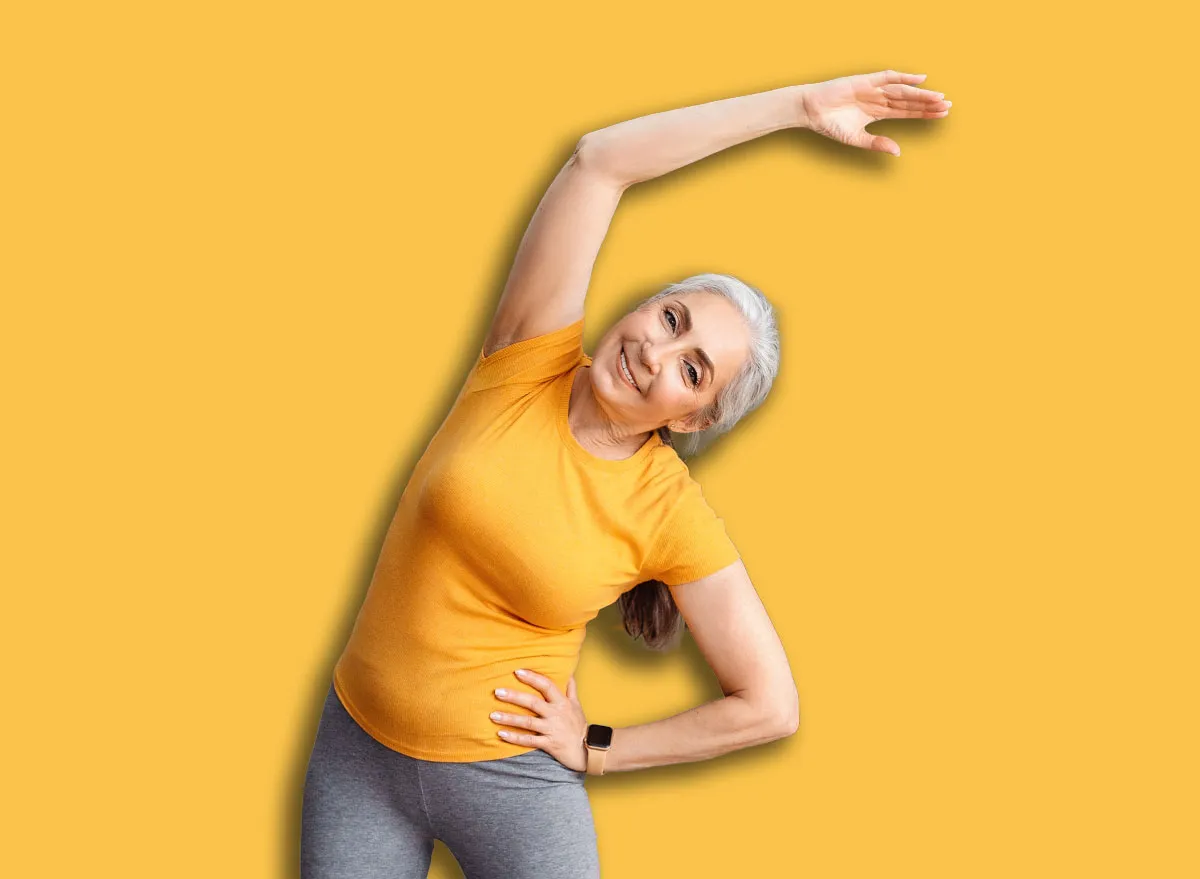
Standing Side Bends for Spinal Decompression
Lateral mobility and ribcage expansion are frequently compromised by overnight immobility. Ettenson notes that performing a standing side bend stretches out the intercostal muscles, waist, and ribcage, lengthens the lats, enhances lateral spinal flexibility, and relieves pressure on the vertebrae.
As clinical understanding of age-related fascial changes and joint lubrication evolves, incorporating structured, low-impact morning routines offers a pragmatic approach to maintaining functional independence.
*Disclaimer: The information provided in this article is for educational and scientific communication purposes only and does not constitute medical advice. Always consult with a qualified healthcare provider regarding any medical condition, diagnosis, or treatment plan.*