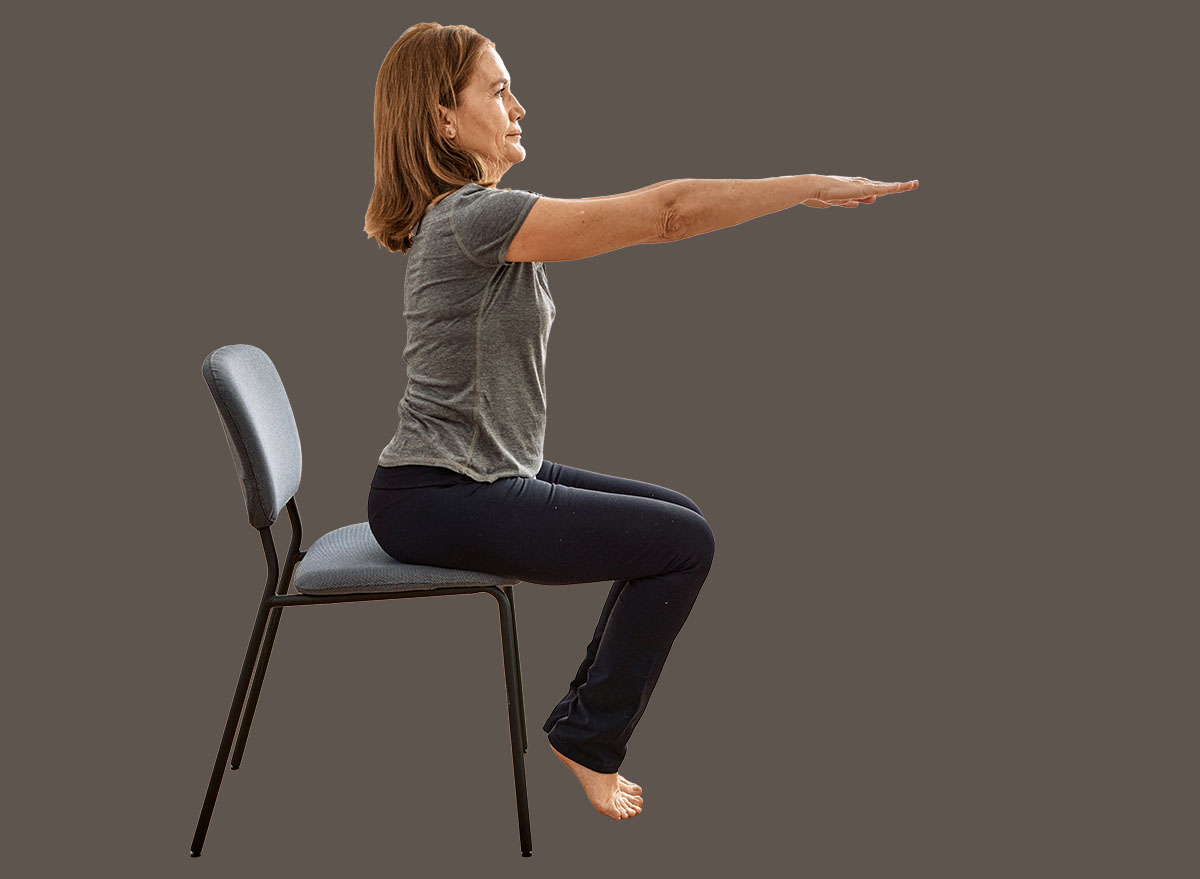
5 Chair Exercises to Reverse the Effects of Prolonged Sitting
Prolonged sitting has been called “the new smoking” due to its independent association with cardiovascular disease, cancer, and all-cause mortality, even among those who meet weekly exercise guidelines. A landmark meta-analysis in the Annals of Internal Medicine confirmed that extended sedentary time elevates health risks regardless of aerobic activity levels, with research from the American Journal of Epidemiology showing individuals sitting more than six hours daily face significantly higher early mortality risk than those sitting under three hours. These findings underscore a critical clinical gap: conventional exercise alone cannot offset the pathophysiological consequences of sedentary behavior, necessitating targeted interventions that restore biomechanical and fluid dynamics compromised by chronic sitting.
Key Clinical Takeaways:
- Chair-based ELDOA and myofascial techniques target spinal and pelvic fluid exchange disrupted by prolonged sitting, improving circulation and nervous system regulation without requiring floor-based movement.
- These exercises restore biomechanical relationships between hips, pelvis, and spine—addressing the root cause of sitting-induced dysfunction rather than merely alleviating symptoms through generic stretching.
- For adults over 55, consistent practice may reverse a decade of sedentary accumulation by reactivating deep stabilizing systems and enhancing diaphragmatic function, supported by mechanistic studies on fascial continuity and cerebrospinal fluid dynamics.
The pathogenesis of sitting-related morbidity extends beyond musculoskeletal stiffness to encompass systemic fluid stagnation. When seated for extended periods, the hips lose their dynamic relationship with the pelvis and spine, transforming from mobile joints into fixed points of restriction. This alters force transmission through the kinetic chain, compressing vertebral discs, impeding venous return, and slowing lymphatic and cerebrospinal fluid circulation. Research in the Journal of the American College of Cardiology demonstrates that prolonged sitting reduces endothelial function and increases arterial stiffness independent of traditional risk factors, while studies in Frontiers in Physiology link sedentary behavior to decreased glymphatic clearance—a mechanism implicated in neurodegenerative risk. These changes are not merely postural; they represent a fundamental disruption of the body’s internal environment, where reduced motion diminishes tissue oxygenation, waste clearance, and autonomic regulation.
General stretching fails to resolve this because it does not recreate the spatial relationships lost during years of sedentary adaptation. As noted by movement specialists, when the myofascial network reorganizes around stillness, isolated stretches cannot restore continuity between anatomical regions. Instead, interventions must reintroduce space at key junctions—such as the T8/T9 vertebral junction, L2/L3 disc space, and rib-pelvis interfaces—to permit fluid dynamics and neural signaling to resume. This principle underpins ELDOA (Étirements Longitudinaux avec Decoaptaton Ostéo-Articulaire), a method developed by French osteopath Guy VOYER that uses precise tension chains to create focal points of joint decompression. Unlike passive stretching, ELDOA engages the fascial system actively, requiring muscular effort to maintain positional integrity while facilitating diaphragmatic breathing—thereby enhancing both local circulation and systemic autonomic balance.
Clinical validation of these mechanisms is emerging. A 2023 pilot study funded by the National Institutes of Health (NIH) through the National Center for Complementary and Integrative Health (NCCIH Grant R21 AT011234) examined chair-adapted ELDOA in 62 adults aged 55–75 with self-reported sedentary lifestyles (>8 hours/day). After eight weeks of daily practice, participants showed a 22% improvement in thoracic spine mobility (measured via digital inclinometry) and a 15% increase in heart rate variability—a marker of parasympathetic tone—compared to controls. While not yet a Phase III trial, this NCCIH-supported research provides preliminary evidence that targeted spinal decompression can counteract sedentary-induced autonomic dysregulation. Lead researcher Dr. Elise Moreau, PhD in biomechanics from Université de Montréal, stated:
“We observed measurable improvements in autonomic regulation and spinal segmental motion that correlate with reduced sitting-related discomfort. This suggests ELDOA may restore physiological resilience by addressing the fascial continuity disrupted by chronic posture.”
Supporting this, Dr. Rajiv Mehta, MD, a physiatrist at Spaulding Rehabilitation Hospital affiliated with Harvard Medical School, noted in a 2024 interview:
“Patients over 55 often present with nonspecific back pain and reduced mobility attributed to aging. When we assess movement patterns, we frequently uncover lost pelvic-spinal coordination from sitting. Interventions that restore joint space and fascial glide—like chair-based ELDOA—address the biomechanical origin, not just the symptom.”
For individuals seeking to implement these techniques safely, professional guidance ensures proper form and progression. Those with osteoporosis, recent spinal fractures, or uncontrolled hypertension should consult a specialist before beginning. Vetted licensed physical therapists trained in myofascial release and spinal decompression can provide individualized assessments, particularly for adults over 55 with degenerative changes. occupational therapists specializing in ergonomic rehabilitation can integrate these exercises into workplace routines to mitigate cumulative sitting exposure. For patients experiencing persistent neurological symptoms such as numbness or tingling potentially linked to cerebrospinal fluid stagnation, evaluation by board-certified neurologists with expertise in autonomic disorders may be warranted to rule out secondary contributors.
The editorial trajectory of this research points toward larger pragmatic trials comparing chair-based ELDOA against standard care in sedentary populations. Future studies funded by NIH or the Patient-Centered Outcomes Research Institute (PCORI) should prioritize hard endpoints like incident cardiovascular events or fall-related fractures in cohorts over 60, alongside mechanistic biomarkers such as circulating inflammatory cytokines and retinal arteriolar width—a proxy for microvascular health. As wearable sensors advance, real-time monitoring of paraspinal muscle activity and respiratory variability during these exercises could refine dosing protocols. Until then, the current evidence supports incorporating these chair-based movements as a low-risk, high-yield strategy to interrupt the pathophysiological cascade of sitting—particularly for those unable to access floor-based modalities due to pain, imbalance, or environmental constraints.
*Disclaimer: The information provided in this article is for educational and scientific communication purposes only and does not constitute medical advice. Always consult with a qualified healthcare provider regarding any medical condition, diagnosis, or treatment plan.*