5 Chair Exercises That Restore Hip Strength Faster Than Yoga After 60
Maintaining musculoskeletal integrity after 60 is not merely a matter of wellness; it is a critical clinical necessity for preserving independence and reducing the morbidity associated with age-related falls. Hip strength serves as the primary stabilizer for the human frame, and its decline often signals a broader systemic transition toward sarcopenia.
- Key Clinical Takeaways:
- Strength training must precede mobility work for adults over 60 to ensure joint stability and safety.
- Progressive overload via resistance bands and controlled tempos is more effective for muscle activation than traditional flexibility-based yoga.
- Identifiable red flags for hip weakness include pelvic drops during gait, inward knee migration during squats, and chronic lower back pain.
The pathogenesis of age-related muscle loss involves a complex interplay of hormonal shifts, decreased protein synthesis, and a reduction in the recruitment of Type II fast-twitch muscle fibers. This degeneration often manifests first in the hip complex, leading to a compromised gait and an increased risk of fractures. For many seniors, the standard of care has traditionally leaned toward low-impact flexibility exercises. However, there is a widening clinical gap between simply “moving” and “building.”
While modalities like yoga are frequently recommended for their benefits to flexibility and stability, they often fail to provide the mechanical tension necessary for muscle hypertrophy in older adults. Terry Tateossian, Founder, Certified Lifestyle Medicine Coach, Trainer, and Nutritionist for Women 40+ at THOR – The House of Rose, argues that this distinction is vital. Yoga is great for mobility, flexibility, and stability, but it does not provide enough resistance or progressive overload to help build strength and better activation, control, and stability in multiple directions,
Tateossian explains. Mobility helps us move better. Strength keeps us stable. After 60, we need both, but strength needs to come first.
This shift toward resistance-based intervention is supported by broader geriatric research. According to guidelines frequently cited in PubMed and the World Health Organization, progressive resistance training (PRT) is the most effective non-pharmacological intervention to combat sarcopenia and improve proprioception in the elderly.
When hip strength is compromised, the body attempts to compensate, often shifting the load to the lumbar spine or the knee joints. This redistribution of stress is why patients frequently report lower back pain or instability when climbing stairs. For those experiencing these symptoms, immediate intervention is required to prevent a cascade of joint degeneration. It is highly recommended to consult with a [Board-Certified Physical Therapist] to establish a baseline of functional strength and ensure that resistance protocols are tailored to individual contraindications.
The Resistance Protocol: Five Targeted Chair Interventions
To address these deficits, a structured approach focusing on “progressive overload”—the gradual increase of stress placed upon the body during exercise—is essential. The following protocol utilizes a 3010 tempo (3 seconds for the eccentric phase, 0 seconds pause, 1 second for the concentric phase, and 0 seconds pause) to maximize time under tension and motor unit recruitment.
1. Seated Forward Lean to Stand Prep
This movement targets the hinge mechanism of the hips. Begin seated with feet flat on the ground. Lean forward, hinging at the hips while keeping the nose aligned over the knees. Hold briefly before returning to the start. Perform 3 to 4 sets of 10 to 12 reps. Rest for 60 seconds between sets.
2. Banded Seated Leg Press
This exercise introduces external resistance to simulate the load of walking. Begin seated, looping a resistance band under both feet and holding the ends with each hand. Engage the core and extend the legs, pressing the feet out against the resistance. Return to the start position with control. Perform 3 to 4 sets of 10 to 15 reps. Rest for 60 seconds between sets.
3. Seated Banded Hip Abductions
Crucial for lateral stability and preventing the “pelvic drop” during gait, this move requires a resistance band positioned just above the knees. Starting with knees hip-distance apart, press the knees outward against the band and release with control. Perform 3 to 4 sets of 25 to 39 reps. Rest for 60 seconds between sets.
4. Seated March
This intervention focuses on hip flexor activation and core stability. With feet hip-width apart, lift the left knee to hip height, hold momentarily, and lower. Maintain a rigid posture throughout the “march.” Perform 3 to 4 sets of 20 to 30 reps. Rest for 60 seconds between sets.

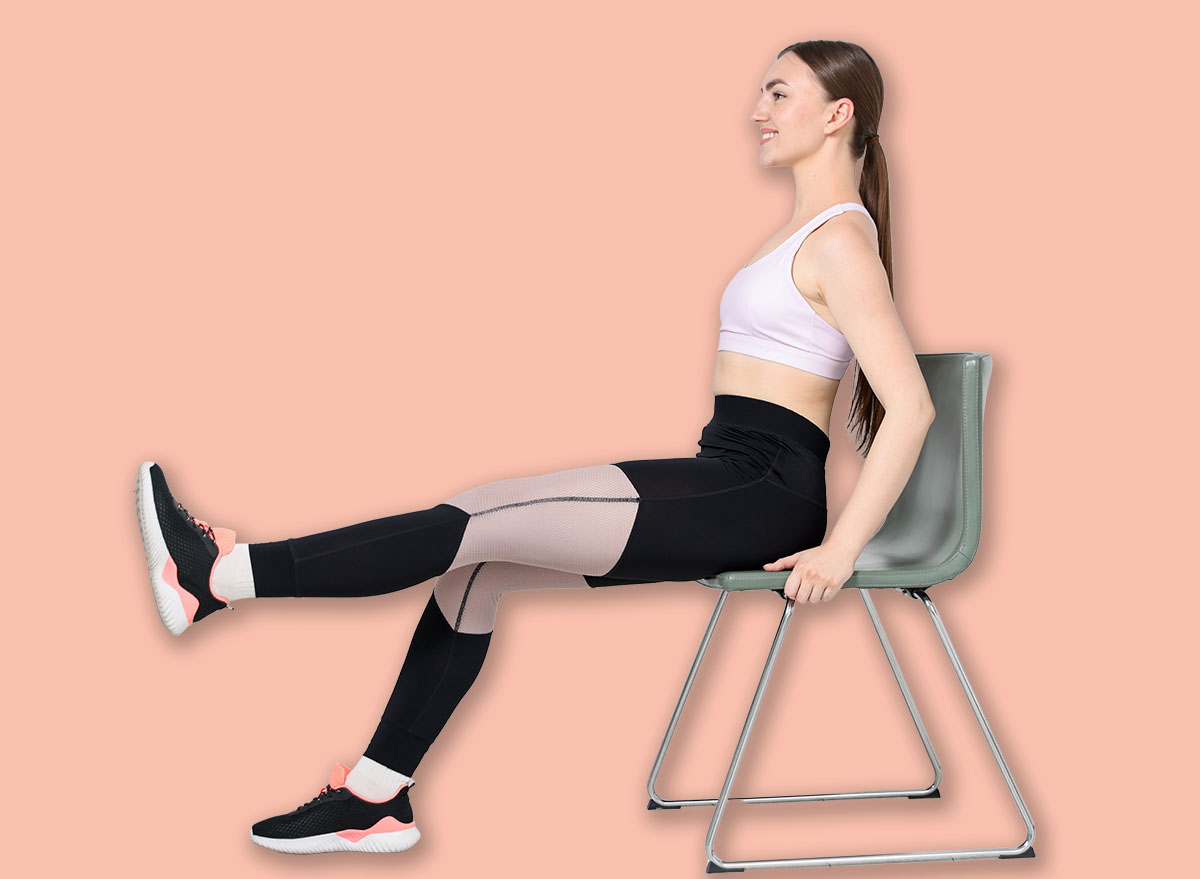
5. Seated Leg Extension
To target the quadriceps and support the knee joint, sit tall with the back supported and feet flat. Hold the chair sides for stability and straighten the left leg until the knee is fully extended, keeping toes flexed toward the shin for maximum engagement. Hold for 2 seconds at the top. Perform 3 to 4 sets of 12 to 15 reps per side. Rest for 60 seconds between sets.
The efficacy of these movements lies in the controlled tempo. By slowing the movement, the patient reduces the reliance on momentum and forces the neuromuscular system to engage the muscle fibers more deeply, which is the primary driver of strength restoration in the 60+ demographic.
Implementing these exercises without professional oversight can be risky for individuals with pre-existing joint replacements or severe osteoporosis. Those with complex comorbidities should seek a comprehensive evaluation from a [Geriatric Medicine Specialist] to ensure the resistance levels are safe and the form is clinically sound.
The future of geriatric care is moving away from passive stretching and toward active, resistance-based longevity protocols. By prioritizing strength as the foundation for mobility, patients can significantly lower their risk of disability and enhance their overall quality of life. For those navigating the complexities of age-related muscle loss, finding a vetted provider is the first step toward regaining autonomy. We encourage readers to utilize our directory to locate a [Specialized Rehabilitation Clinic] that focuses on evidence-based strength restoration for seniors.
Disclaimer: The information provided in this article is for educational and scientific communication purposes only and does not constitute medical advice. Always consult with a qualified healthcare provider regarding any medical condition, diagnosis, or treatment plan.