5 Bodyweight Exercises to Fix Poor Posture After 50
Adults over 50 seeking to correct a forward-head and rounded-shoulder slump can bypass temporary chiropractic adjustments in favor of five targeted bodyweight movements, according to a fitness industry perspective. Chronic postural deviation is fundamentally driven by decades of seated positioning rather than a lack of conscious effort, making structural strength training essential for sustained spinal alignment.
- Poor posture past age 50 stems primarily from muscle adaptation due to prolonged sitting and age-related deep postural muscle loss, rather than simple slouching habits.
- Manual joint adjustments provide temporary relief, but targeted bodyweight exercises structurally alter resting posture by strengthening supporting muscle groups.
- A routine consisting of Wall Angels, Doorway Chest Openers, Bird Dogs, Glute Bridges, and Prone Y-T-W movements requires just 15 to 18 minutes, three to four times weekly.
The visual profile of adult postural degradation is remarkably uniform by the sixth decade of life. The head migrates anteriorly relative to the shoulders, the thoracic spine rounds, the scapulae roll inward, and an anterior pelvic tilt accentuates the lumbar curve. This structural profile is the direct physical consequence of holding a seated configuration for six to eight hours daily over a span of thirty years or more. According to foundational biomechanical findings, these habits cause the hip flexors and pectoral musculature to undergo pathological shortening, while the deep retractor muscles of the upper back and the stabilizing core units lengthen and atrophy.
Concurrently, age-related sarcopenia diminishes the endurance and baseline tone of deep postural stabilization networks. Without active neuromuscular recruitment, gravity forces the skeletal framework into a default compressive slump.
Biomechanical Limits of Manual Manipulation Versus Active Retraining
Spinal manipulation alters joint play and temporarily relieves localized tension, but it does not address the underlying neuromuscular weakness governing skeletal alignment. Without adequate muscular tension to hold manipulated joints in place, soft tissues rapidly pull the skeletal structure back into its habitual configuration. Active physical conditioning directly addresses this pathogenesis by increasing strength in postural extensors and restoring compliance in shortened antagonists.
The daily time investment required for structural retraining remains low, yet its cumulative physiological impact surpasses periodic clinical visits. Performing ten minutes of bodyweight movements multiple times weekly creates a sustained stimulus for neuromuscular adaptation. Integrating these exercises with regular ambulation helps groove new movement patterns into daily life, allowing the central nervous system to adopt an upright posture as the unconscious baseline.
Five Bodyweight Exercises for Targeted Postural Restoration
Reversing decades of postural decline requires specific movements designed to target neglected muscle groups while lengthening shortened soft tissue structures.
- Wall Angels: Performed by standing with the back, glutes, and occiput against a vertical surface, this movement mobilizes the thoracic spine and engages the rhomboids and mid-trapezius fibers. Practitioners maintain a flattened lumbar curve while sliding the arms upward, avoiding any spinal extension off the wall.
- Doorway Chest Opener: By placing forearms against a doorframe and stepping forward, individuals stretch the shortened pectoral complexes. This passive release allows the shoulders to rest in a neutral posterior position without relying on active joint manipulation.
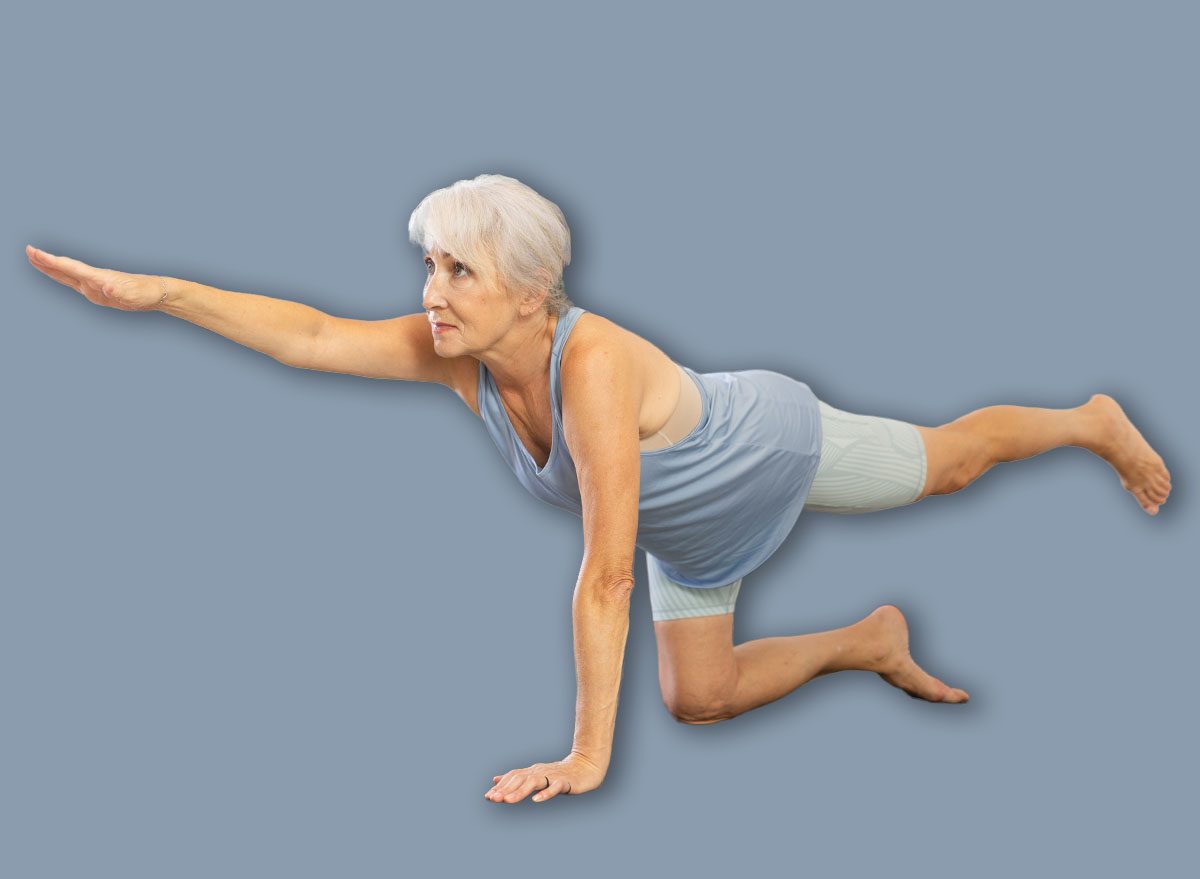
- Bird Dog: Executed from a quadruped position, this movement engages deep spinal stabilizers and transverse abdominis fibers without loading the vertebrae. Maintaining a rigid trunk while extending contralateral limbs challenges the motor control patterns most frequently degraded by prolonged chair sitting.
- Glute Bridge: Lying supine with knees flexed, the practitioner elevates the pelvis to neutral alignment by contracting the gluteal musculature. This counters the anterior pelvic tilt typical of sedentary populations, alleviating compensatory lumbar strain.
- Prone Y-T-W: Lying face down on a firm surface, the individual elevates the upper extremities through specific angular planes to activate the entire upper back and posterior shoulder complex. Avoiding upper trapezius elevation ensures the targeted rhomboids and rotator cuff stabilizers perform the work.
Clinical observation indicates that early neurological adaptations manifest within the first fortnight, as patients develop heightened proprioceptive awareness of their body alignment. Visible structural modifications typically emerge within four to six weeks, while automated postural integration commonly solidifies between six and eight weeks of consistent execution.
Disclaimer: The information provided in this article is for educational and scientific communication purposes only and does not constitute medical advice. Always consult with a qualified healthcare provider regarding any medical condition, diagnosis, or treatment plan.