4 Standing Exercises to Tone and Firm Arms After 50
<>
As muscle mass naturally declines after age 50, a biological process often manifests as loose, or “jiggly,” skin around the upper arms. While traditional fitness advice emphasizes isolated dumbbell curls, the article suggests that functional, multi-joint standing movements are more effective for improving muscle tone and metabolic health in aging populations. By engaging the shoulders, triceps, chest, and core simultaneously, these exercises leverage kinetic chains to build functional strength and improve posture, which can significantly alter the aesthetic profile of the upper arms.
- Targeted Muscle Activation: Multi-joint standing movements recruit the triceps, shoulders, and core simultaneously, promoting greater caloric expenditure and neuromuscular coordination than isolated arm curls.
- Addressing Sarcopenia: Consistent resistance training post-50 is the primary non-pharmacological intervention to counteract age-related muscle loss and metabolic slowing.
- Posture and Mechanics: Improved thoracic extension and core stability create a more defined upper-body silhouette, reducing the visual impact of skin laxity.
The Biological Mechanics of Arm Laxity Post-50
The appearance of “jiggly” arms in individuals over 50 is rarely the result of a single factor. According to research on body composition changes, this phenomenon is driven by a combination of muscle loss and shifts in adipose tissue distribution.
Functional Standing Exercises for Upper-Body Integrity
Clinical exercise programming for older adults emphasizes safety and joint integrity. The following movements, when performed with controlled, rhythmic precision, provide a stimulus sufficient to maintain lean mass without the excessive joint stress associated with heavy, isolated lifting.
1. Standing Overhead Press
This movement targets the deltoids and triceps while demanding significant isometric stabilization from the core and lumbar spine. By pressing weight overhead in a standing position, the body must manage the center of gravity, which enhances functional stability. Research indicates that such compound movements are essential for maintaining the ability to perform activities of daily living (ADLs), such as reaching and lifting, safely into later decades.
2. Standing Resistance Band Row
Targeting the posterior chain—specifically the rhomboids, latissimus dorsi, and rear deltoids—this exercise acts as a corrective for the kyphotic (rounded) posture often associated with sedentary screen time. By pulling the elbows back, the user engages the muscles responsible for scapular retraction, which naturally shifts the shoulders into a more upright, aesthetically balanced position.
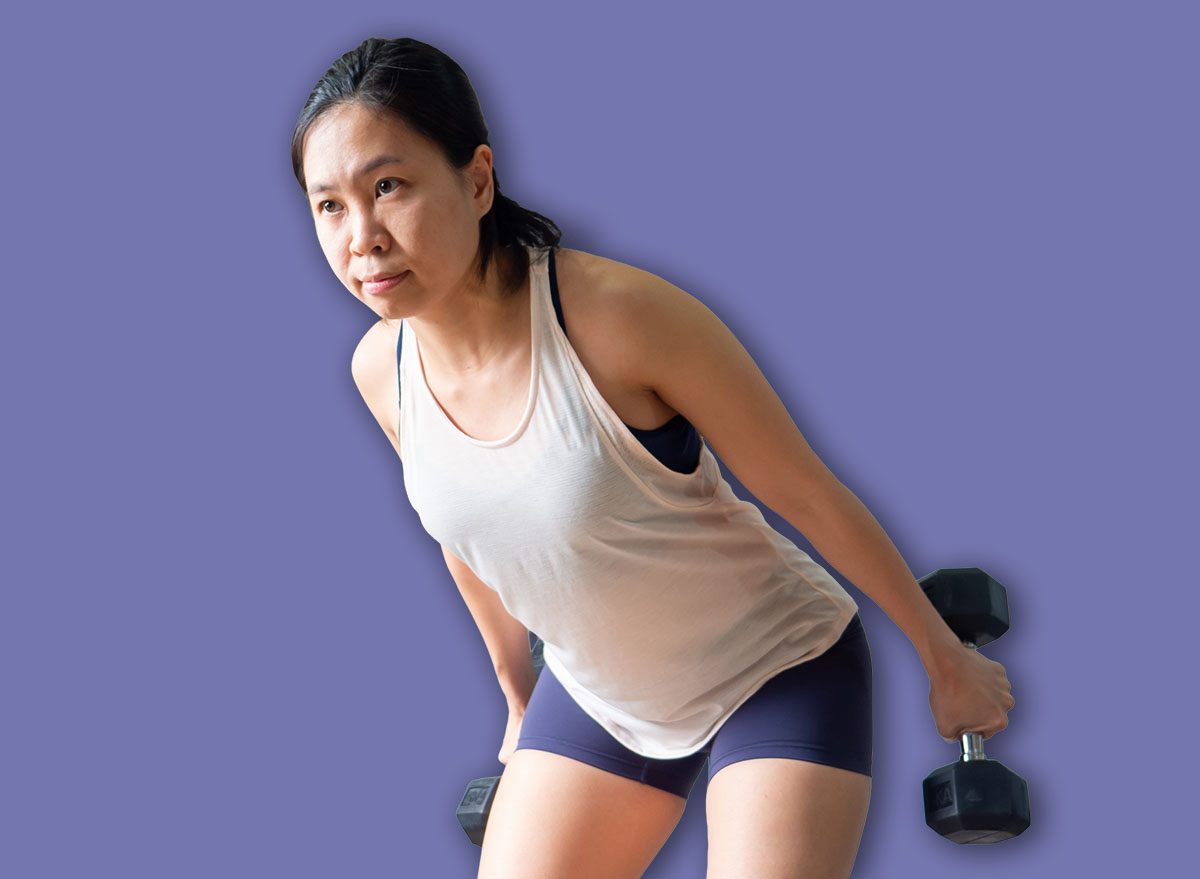
3. Standing Triceps Kickback
This movement isolates the triceps through a full range of motion. To maximize the efficacy of this exercise, the elbow must remain fixed as a fulcrum.
4. Standing Cross-Body Punches
Combining endurance with rotational stability, cross-body punches increase heart rate and promote blood flow to the upper extremities. This movement serves as an active recovery or a cardiovascular finisher, ensuring that the muscles remain under tension without requiring heavy equipment.
Clinical Considerations for Long-Term Maintenance
Achieving structural changes in body composition requires adherence to a consistent training frequency. Most clinical guidelines suggest that resistance training should be performed at least five days per week to see measurable improvements in muscle tone.

As the clinical understanding of the aging musculoskeletal system evolves, the shift toward functional, whole-body movement continues to show promise as a sustainable, low-risk strategy for maintaining upper-body strength. By prioritizing form over volume, individuals can effectively mitigate the signs of sarcopenia while enhancing their physical capacity for daily tasks.
Disclaimer: The information provided in this article is for educational and scientific communication purposes only and does not constitute medical advice. Always consult with a qualified healthcare provider regarding any medical condition, diagnosis, or treatment plan.