
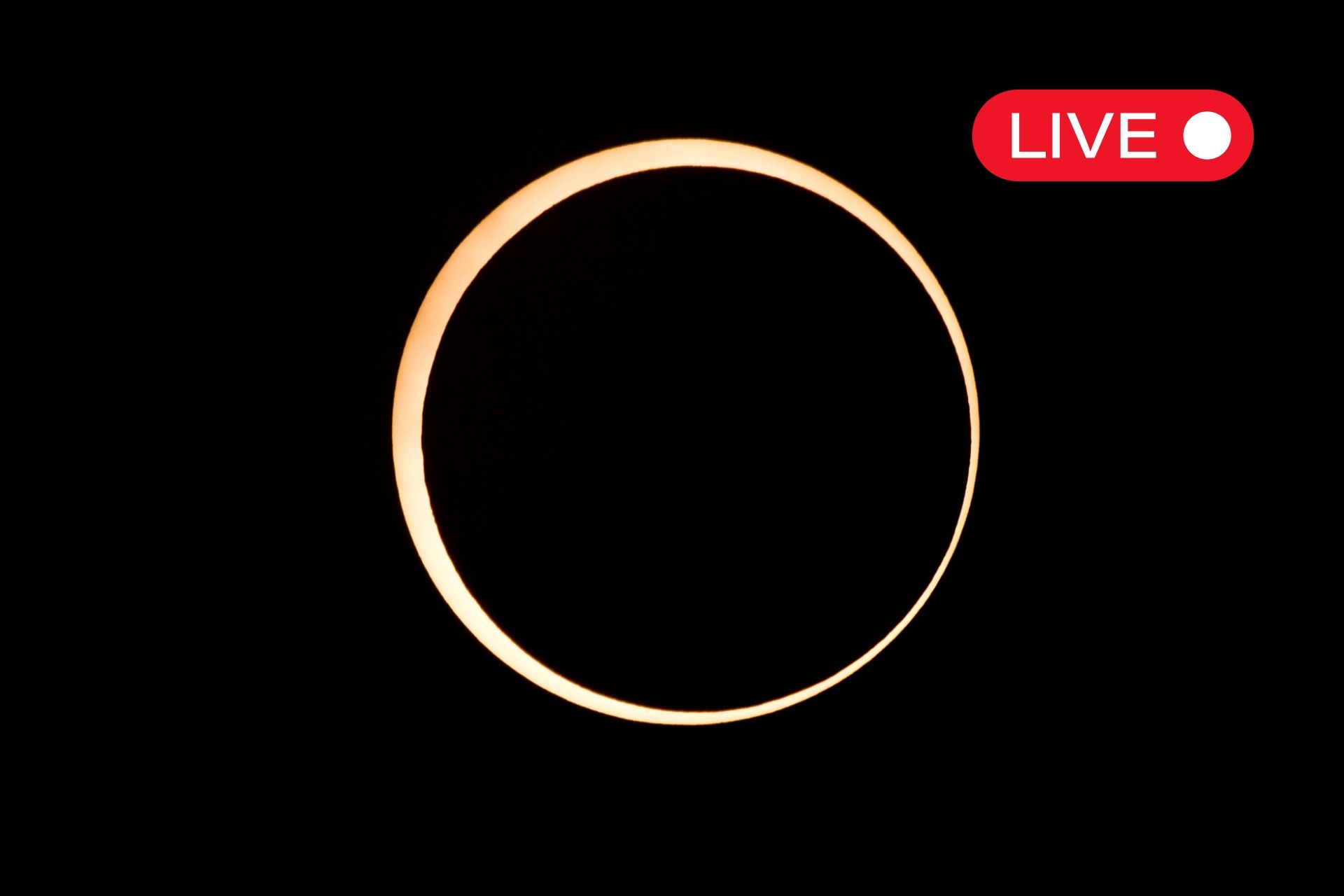
An annular solar eclipse will occur over Antarctica on February 17, 2026, creating a “ring of fire” effect as the moon passes between the Earth and the Sun, but does not fully obscure it.
The eclipse will be visible only from Antarctica, with the maximum duration of annularity lasting a little over two minutes. During this period, up to 96% of the sun will be eclipsed, according to space.com. Although the dramatic “ring of fire” will be largely unseen by humans due to the remote location, the event is expected to be noticeable to the millions of penguins inhabiting the region.
The Moon’s apparent diameter will be near average during the eclipse, occurring 6.8 days after apogee – its farthest point from Earth – and 7.5 days before perigee, its closest point, according to Wikipedia. This alignment contributes to the annular effect, where the moon appears smaller than the sun, leaving a bright ring visible around its silhouette.
Partial phases of the eclipse will be visible from the southern tips of Argentina and Chile, as well as portions of southern Africa, including South Africa, Mozambique, and Madagascar. The eclipse is one of several scheduled to occur in the coming years, with a total solar eclipse planned over Russia, Greenland, and Europe on August 12, 2026, and an annular eclipse over South America and Africa on February 6, 2027, as detailed by nationaleclipse.com.
The greatest eclipse will occur at 12:13:06 UTC on February 17th, with the center of the annularity located at 64°42′S 86°48′E, according to Wikipedia.
