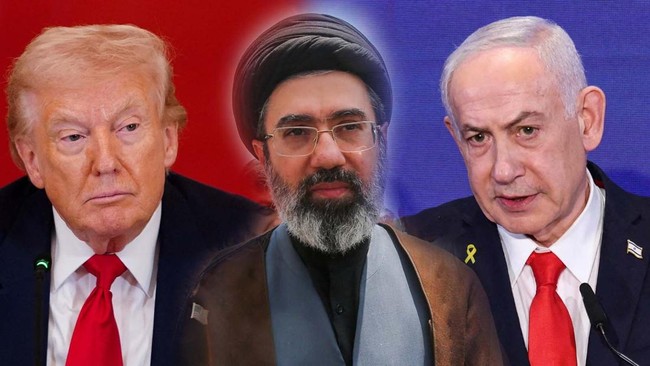
100 Days of US-Israel vs. Iran War: Who’s Winning So Far?
100 Days of US-Israel-Iran Conflict: Stalemate, Economic Fallout, and Geopolitical Reckoning
As the 100-day conflict between the US-Israel and Iran enters its third month, stalled negotiations and strategic posturing have entrenched regional instability, triggering global economic ripple effects and reshaping diplomatic alliances. The crisis, marked by Iran’s control of the Strait of Hormuz and US President Trump’s refusal to withdraw forces, underscores a broader shift in power dynamics across the Middle East.
Why This Matters: The Geopolitical Domino Effect
The protracted conflict has disrupted critical maritime trade routes, with Iran leveraging its dominance over the Strait of Hormuz to pressure global energy markets. According to CNBC Indonesia, the standoff has already driven oil prices to a 14-month high, while Kompas.id reports a 12% spike in global shipping costs. This economic strain is compounding inflationary pressures worldwide, with the World Bank warning of a potential 1.8% contraction in emerging market growth by 2027.

How the Asian Market Absorbs the Sanctions
Asian economies, particularly those reliant on Middle Eastern oil imports, are facing acute challenges. China, India, and Japan have all adjusted their energy procurement strategies, with Beijing reportedly increasing purchases from Russian and Saudi suppliers. Pluang notes that regional stock markets have seen a 7-9% decline in energy sector indices, while supply chain managers are scrambling to diversify logistics routes.
The Diplomatic Deadlock: Why Peace Remains Elusive
Negotiations between the US and Iran have reached a critical impasse, with both sides refusing to compromise on key demands. InvestorTrust reports that Trump’s administration has rejected Iran’s proposal to ease nuclear restrictions in exchange for relief from US sanctions, citing concerns over regional security. Meanwhile, Israeli officials have warned that any US troop withdrawal would leave the country vulnerable to Iranian-backed militias in Lebanon and Gaza.
Macroeconomic Fallout: A Global Supply Chain Crisis
| Region | Impact |
|---|---|
| Europe | 15% increase in manufacturing costs due to energy price volatility |
| North America | 22% rise in freight rates for trans-Pacific cargo |
| Sub-Saharan Africa | 30% spike in food import prices |
The conflict’s economic repercussions are accelerating shifts in global trade patterns. Bloomberg highlights that 40% of European companies are now reviewing their supply chain diversification strategies, while the International Chamber of Commerce warns of a potential 25% drop in cross-border trade by 2027.
Expert Analysis: The Long-Term Implications
“This conflict isn’t just about immediate military posturing—it’s a test of the post-2015 international order,” says Dr. Amina Al-Sadat, a senior fellow at the Carnegie Endowment. “The US’s reliance on unilateral action is eroding multilateral institutions, while Iran’s strategy of asymmetric warfare is reshaping regional power balances.”
Professor Elias Carter of the London School of Economics adds, “The economic costs are already staggering, but the real danger lies in the potential for this conflict to metastasize into a broader Middle East war. The lack of diplomatic engagement is a recipe for catastrophe.”
Corporate Solutions: Navigating the New Geopolitical Reality
As the crisis escalates, multinational corporations are turning to specialized firms to mitigate risks. Logistics giants are partnering with Global Risk Consultants to redesign