
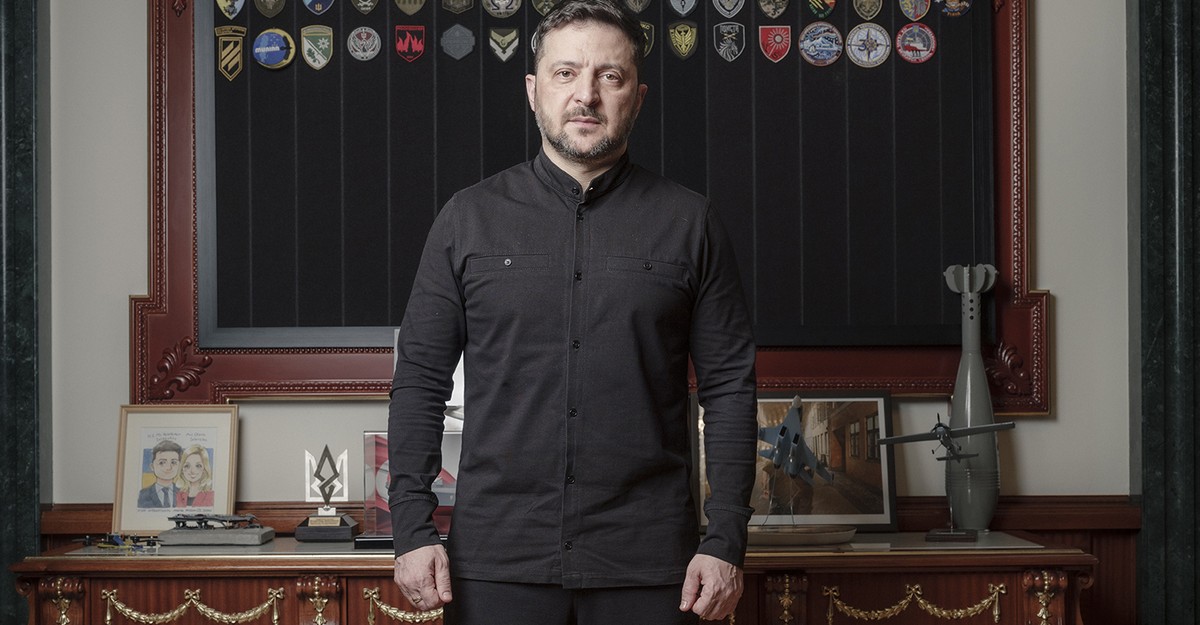
KYIV – Ukrainian President Volodymyr Zelensky is framing a potential finish to the war with Russia as a legacy-defining opportunity for a second Trump administration, appealing directly to Donald Trump’s political ambitions in a bid to unlock stalled military aid and secure a more favorable negotiating position, according to interviews and diplomatic sources.
Zelensky, in a recent conversation with reporters, argued that brokering peace in Ukraine would be “no greater victory” for Trump than securing his re-election, and suggested that a swift resolution to the conflict could bolster Republican prospects in the upcoming midterm elections. “The most advantageous situation for Trump is to do this before the midterms,” Zelensky said, acknowledging the political calculus at play. “Yes, he wants there to be less deaths. But if you and I are talking like adults, it’s just a victory for him, a political one.”
The overt appeal reflects a growing sense of urgency within Zelensky’s administration as the war enters its fourth year, with battlefield gains proving elusive and Western aid packages facing increasing political headwinds. While publicly maintaining a firm stance against territorial concessions, Zelensky is privately signaling a willingness to explore compromises, even on sensitive issues like the status of the Donetsk region, according to sources familiar with the ongoing negotiations.
However, Zelensky’s approach is not without internal dissent. Advisors acknowledge his well-known resistance to external pressure – “If you inform Zelensky he has to do something, he’s probably going to do the opposite,” one long-time advisor confided – and some within his inner circle fear that the window for a negotiated settlement is rapidly closing. Despite this, Zelensky has repeatedly stated his preference for no deal over a “bad deal,” emphasizing his commitment to securing a “dignified and lasting peace.”
The Ukrainian leader’s strategy coincides with a renewed diplomatic push led by the Trump administration. Trump met with Zelensky at Mar-a-Lago in December 2025, and has spoken by phone with Russian President Vladimir Putin, agreeing to a future face-to-face meeting. Trump has publicly stated his belief that both leaders “truly wish peace” and that a deal is “closer than ever,” while also suggesting a solution where both sides “stop where they are” and claim victory.
Zelensky, recalling the early days of the war, noted the shift in the atmosphere within his office. While remnants of the initial Russian onslaught remain – sandbags still guard the main doors – the wartime protocols have eased, a reflection of Ukraine’s resilience. He pointed to Ukraine’s success in slowing Russian advances using drones and inflicting heavy casualties, estimating Russian losses at over 100 soldiers per square kilometer occupied, and potentially reaching 35,000 casualties monthly. Ukraine’s recent Minister of Defense, Mykhailo Fedorov, has proposed increasing Russian losses to 50,000 per month.
Despite these battlefield realities, Zelensky acknowledged the attritional disadvantage Ukraine faces, given Russia’s larger population and economy. He emphasized the necessitate for continued Western support, particularly in the form of advanced weaponry like Tomahawk cruise missiles, which he discussed with Trump during their meeting at the White House in October 2025.
Central to Zelensky’s negotiating position is a guarantee of future security from the United States and Europe. He insists that any ceasefire must be backed by a firm commitment to defend Ukraine against future Russian aggression. However, details of such security guarantees remain unresolved, with questions lingering over whether the U.S. Would be willing to intervene directly in the event of renewed Russian attacks. Zelensky stated that a proposed agreement on security guarantees was “100 percent ready” last month, but the invitation to sign has not materialized.
Zelensky has also signaled a willingness to consider proposals that were previously off the table, including the possibility of holding a referendum on a peace plan that might involve territorial concessions. He has even entertained the idea of establishing a “free economic zone” in parts of the Donetsk region, a proposal initially put forward by the Trump administration. However, he maintains that any such concessions would require a direct meeting with Putin, a condition Russia has resisted by insisting that Zelensky approach to Moscow.
The Ukrainian government is currently preparing for potential elections and a referendum this spring, though Zelensky stressed that these would only proceed if security guarantees are in place. He dismissed reports suggesting a specific date, such as February 24th, the anniversary of the Russian invasion, as premature.
As negotiations continue, Zelensky’s administration is navigating a delicate balance between maintaining a firm stance and demonstrating a willingness to compromise. The outcome of these talks, and the role of the United States, remain uncertain, with the fate of Ukraine hanging in the balance.
