Young Adults Show Faster Aging and Higher Early-Onset Cancer Risk in New Study
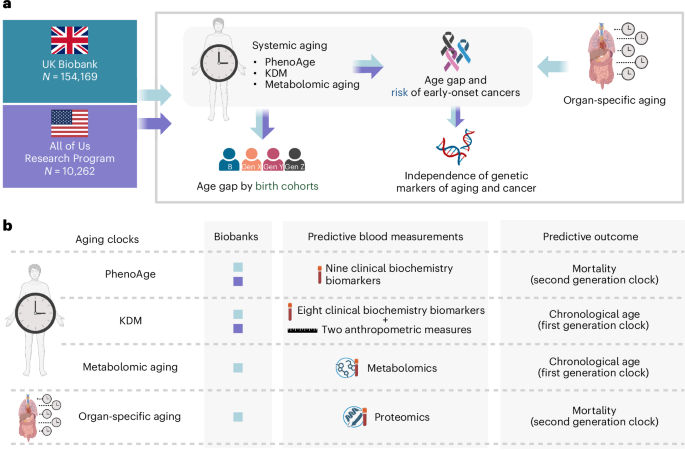
Young adults in the modern era are exhibiting markers of accelerated biological aging, a physiological shift that significantly elevates the probability of developing early-onset malignancies. Published online June 22, 2026, in Nature Medicine, a large-scale longitudinal analysis reveals that individuals born after 1965 demonstrate a faster rate of systemic and organ-specific senescence compared to previous generations, creating a measurable link to the rising incidence of cancers in populations under the age of 50.
Key Clinical Takeaways:
- Biological aging, or “phenotypic age,” is occurring at an accelerated rate in younger cohorts, independent of chronological age.
- Accelerated senescence is statistically correlated with a higher incidence of gastrointestinal, respiratory, and endocrine-related early-onset cancers.
- Clinical protocols for cancer screening may require recalibration to account for biological rather than chronological age metrics.
The Mechanism of Accelerated Senescence
Researchers analyzed data from over 140,000 participants to calculate phenotypic age, a biomarker composite based on nine blood-based indicators, including albumin, creatinine, and C-reactive protein. According to the study, which was supported by grants from the National Institutes of Health (NIH), the “biological clock” of younger adults is ticking faster than that of their predecessors at the same age. This phenomenon, termed accelerated aging, acts as a precursor to cellular dysfunction and oncogenesis.

The pathogenesis appears rooted in a combination of environmental stressors, metabolic dysregulation, and shifting epigenetic landscapes. While chronological age remains the primary factor for cancer risk, the researchers found that those with the highest phenotypic age scores faced a 15% to 20% increased risk of early-onset lung, stomach, and uterine cancers. This suggests that the internal environment of the body has become less hospitable to cellular homeostasis, facilitating the accumulation of mutations that lead to malignant transformation.
Epidemiological Shifts and Clinical Implications
The medical community has observed a steady rise in early-onset cancer cases over the last decade, a trend often documented by the World Health Organization. However, the Nature Medicine findings provide a biological explanation for why younger patients are presenting with disease profiles previously associated with older populations. The study emphasizes that “biological age” is a modifiable variable, yet current screening guidelines—which rely heavily on the patient’s birth year—often fail to capture those at heightened risk due to their physiological profile.
“This data forces a re-evaluation of our standard of care. If a 35-year-old patient presents with a biological age of 50, standard screening guidelines are insufficient. We need to shift toward risk-stratified, precision diagnostics that account for systemic senescence,” notes Dr. Elena Vance, an epidemiologist not involved in the study.
For patients concerned about systemic health markers or those with a strong family history of malignancy, identifying these risks early is essential. It is highly recommended to consult with board-certified oncologists and diagnostic centers to evaluate individual risk profiles through advanced biomarker testing rather than relying on age-based population averages.
Bridging the Gap: Diagnostics and Compliance
The implications for healthcare delivery are substantial. As the clinical community begins to integrate biological aging into risk assessments, diagnostic laboratories and clinical practices must standardize their reporting of these biomarkers. For providers, this means moving beyond basic metabolic panels to more nuanced assessments of inflammatory and metabolic health. Healthcare diagnostic centers are currently adjusting their testing protocols to provide more detailed longitudinal tracking of these aging markers for at-risk populations.

Furthermore, the pharmaceutical and biotechnology sectors are closely monitoring these trends to better target preventive therapies. Organizations involved in the development of senolytics—drugs designed to clear senescent cells—are increasingly looking at younger cohorts as potential clinical trial candidates. Navigating the regulatory and safety requirements for such interventions requires rigorous legal oversight. Healthcare compliance attorneys are currently assisting biotech firms in drafting protocols that meet the stringent requirements of the FDA for prophylactic oncology trials.
Future Trajectories in Oncology
The connection between accelerated biological aging and early-onset cancer suggests that the next frontier in cancer prevention will be “biological age reversal” or stabilization. Future research will likely focus on whether interventions—such as dietary changes, pharmacological stabilization of metabolic markers, or targeted epigenetic therapy—can effectively slow the aging process and mitigate cancer risk. The goal is to move from reactive oncology to a proactive, physiological preservation model.
As the scientific understanding of this link deepens, the importance of early intervention cannot be overstated. Patients and providers must prioritize comprehensive health monitoring that looks deeper than chronological age. Those seeking to understand their own biological baseline should prioritize a consultation with a preventive medicine specialist to discuss how current research can be applied to personal health optimization.
Disclaimer: The information provided in this article is for educational and scientific communication purposes only and does not constitute medical advice. Always consult with a qualified healthcare provider regarding any medical condition, diagnosis, or treatment plan.