
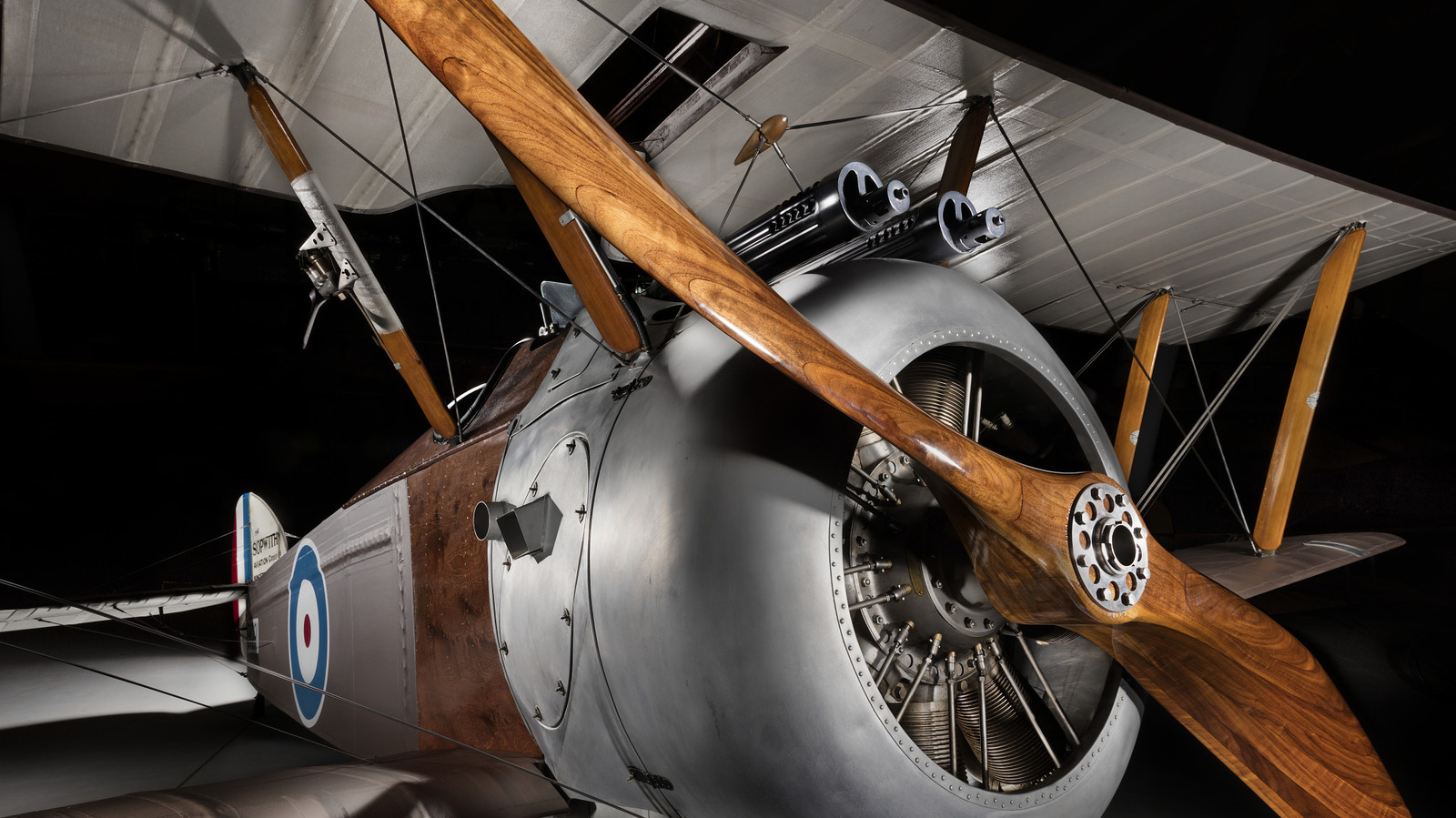
The Wright brothers made history on December 17, 1903, when they took to the air in their “wright Flyer.” Six years later, they sold the world’s first military plane (aptly named the Wright Military Flyer) to the Army for $30,000. The evolution of the warplane was rapid,and it didn’t take long to realise the most accurate place to mount front-firing machine guns was on the airframe,directly in line with the aircraft’s flight path.
Because their accuracy relied entirely on the pilot acquiring a target manually (no fancy targeting computers for them),the best place to put them was directly behind the propeller.At the time, this was a very challenging problem to solve because the rates at which propellers spun and guns fired fluctuated considerably. They somehow needed to be synchronized to miss each other entirely during their deadly dance. Early attempts at fixing this problem began in France and Germany in 1913 and 1914.
While some used crude mechanical hydraulic devices, others tried to make the propeller blades bulletproof by attaching armored steel plates that would deflect bullets. In the Spring of 1915, Dutch engineer Anthony Fokker custom-built a single-seat monoplane (the Fokker Eindecker) for the German Air Service, which featured a fully functional synchronization gear that, in effect, made the propeller shoot the gun instead of the pilot. This innovation immediately gave the germans the upper hand in the air so overwhelmingly that the summer of 1915 became known as the “Fokker Scourge.”
Timing is, quite literally — everything
