
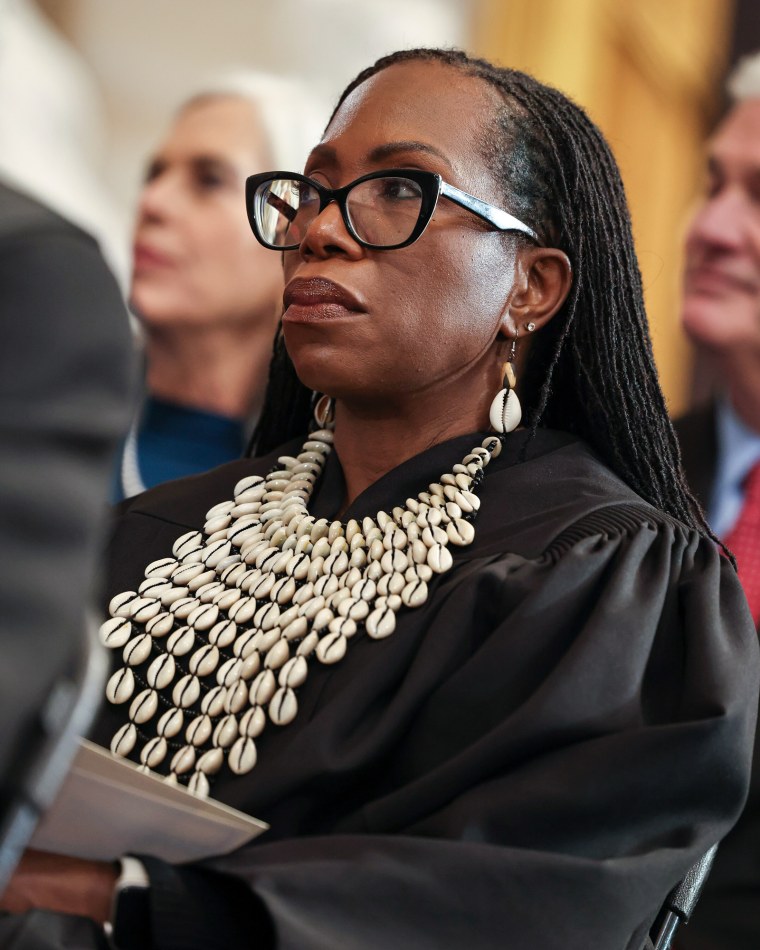
WASHINGTON – Justice Ketanji Brown Jackson subtly honored her lineage Monday as she returned to the Supreme Court bench for the new term,wearing a sweetgrass necklace gifted to her by a member of the Gullah Geechee community. The necklace, a tradition representing ancestral connection and spiritual protection, served as a poignant symbol of remembrance and resilience, drawing attention to the complex history of slavery in America.
Jackson’s choice to wear the necklace offers a unique opportunity to reflect on the dual history of slavery and slaveholding in the United States, and the discomfort that history continues to evoke as the nation evolves. Through her marriage, she has a platform to acknowledge this history.
The gesture aligns with Jackson’s broader engagement with history and culture, a characteristic noted by Malika Pryor, the chief learning and engagement officer at the International African American Museum (IAAM), who gave the Justice a private tour this summer. Pryor observed Jackson’s “immense understanding of its importance,” noting the Justice peppered her with ”pointed and attentive questions.” Pryor, a lawyer herself, pointed out that law necessitates a constant examination of the past, often including difficult truths, referred to as precedent.
Jackson’s public engagement - including book tours, student meetings, and museum visits – is itself notable, as Supreme court justices typically maintain more private lives.
In a period marked by what some describe as “willful and aggressive erasure” of historical truths, Jackson’s acknowledgement of history is being viewed as an act of courage and grace. The necklace,beyond its personal significance,demonstrates how fashion can serve as a vehicle for agency,legacy,and dialog.
As Justice Jackson herself embodies America’s progress through her education, accomplishments, and family, her actions on Monday served as a powerful statement: a recognition that those who came before continue to support and empower those who follow. It is often said that successful people stand on their ancestors’ shoulders; Jackson, in a sense, allowed her ancestors to rest atop hers.
