
Sending Enemies to the Sun: It’s Elaborate, Says Science
WASHINGTON D.C. – The seemingly straightforward act of launching a villain into the sun is surprisingly tough, requiring complex orbital mechanics and, counterintuitively, potentially less fuel to eject them from the solar system entirely. Despite the dramatic imagery, a direct “blast and point” mission faces notable hurdles due to the immense distances and velocities involved.
To reach the sun, a spacecraft – or unwanted passenger – can’t simply be fired directly at it. Rather, missions rely on “gravity assists,” utilizing the gravitational pull of planets to alter velocity. As explained in a video from the Johns Hopkins Applied Physics Laboratory,spacecraft can “leverage the gravity of other planets to speed up,like a slingshot,or to slow down,like tapping the brakes.”
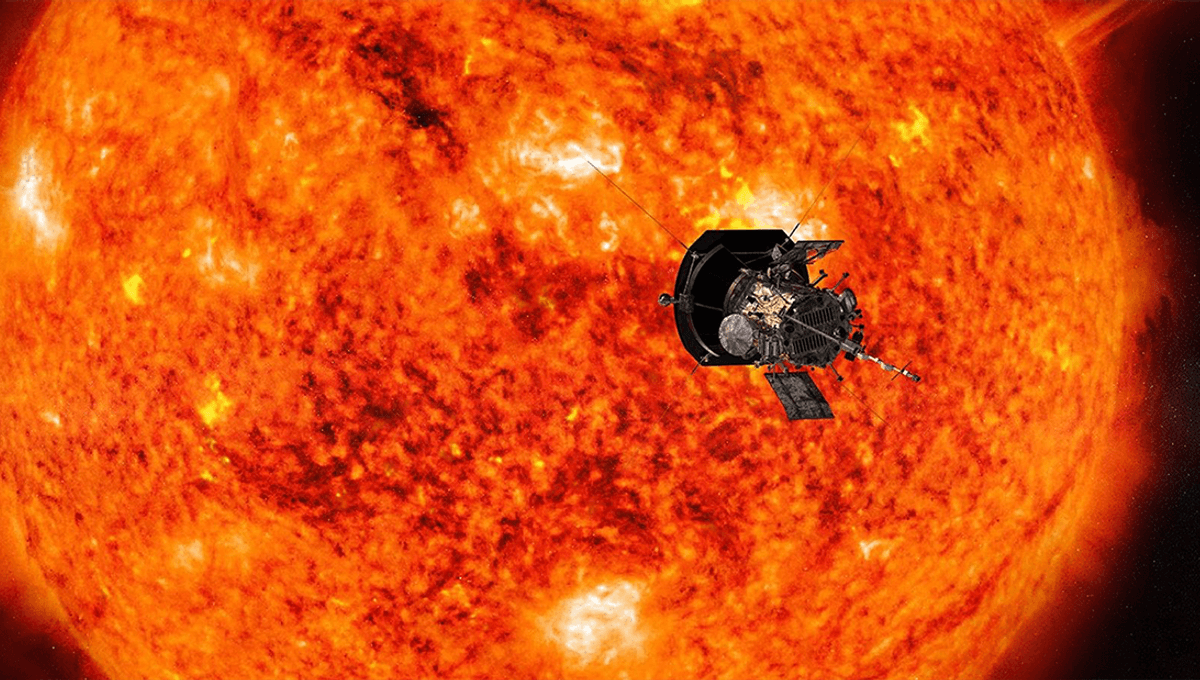
This technique alters a spacecraft’s heliocentric speed by rotating its flyby velocity. The Parker Solar Probe, for example, slows down as it flies in front of Venus, leaving some of its momentum with the planet and altering its orbit, sometimes by millions of miles, bringing it closer to the sun.
NASA noted that Parker Solar Probe will perform seven Venus gravity assists over its seven-year mission to draw its orbit closer to the sun, achieving a record approach of just 3.83 million miles from the sun’s visible surface.
Interestingly,a journey to incinerate someone in the sun,at a distance of 93 million miles,would take approximately 10 weeks. However, calculations show it would actually require less fuel to launch an enemy out of the solar system than to burn them up in the sun. The edge of our solar system is marked by a 30,000-50,000 Kelvin wall, as discovered by NASA’s Voyager spacecraft.
