
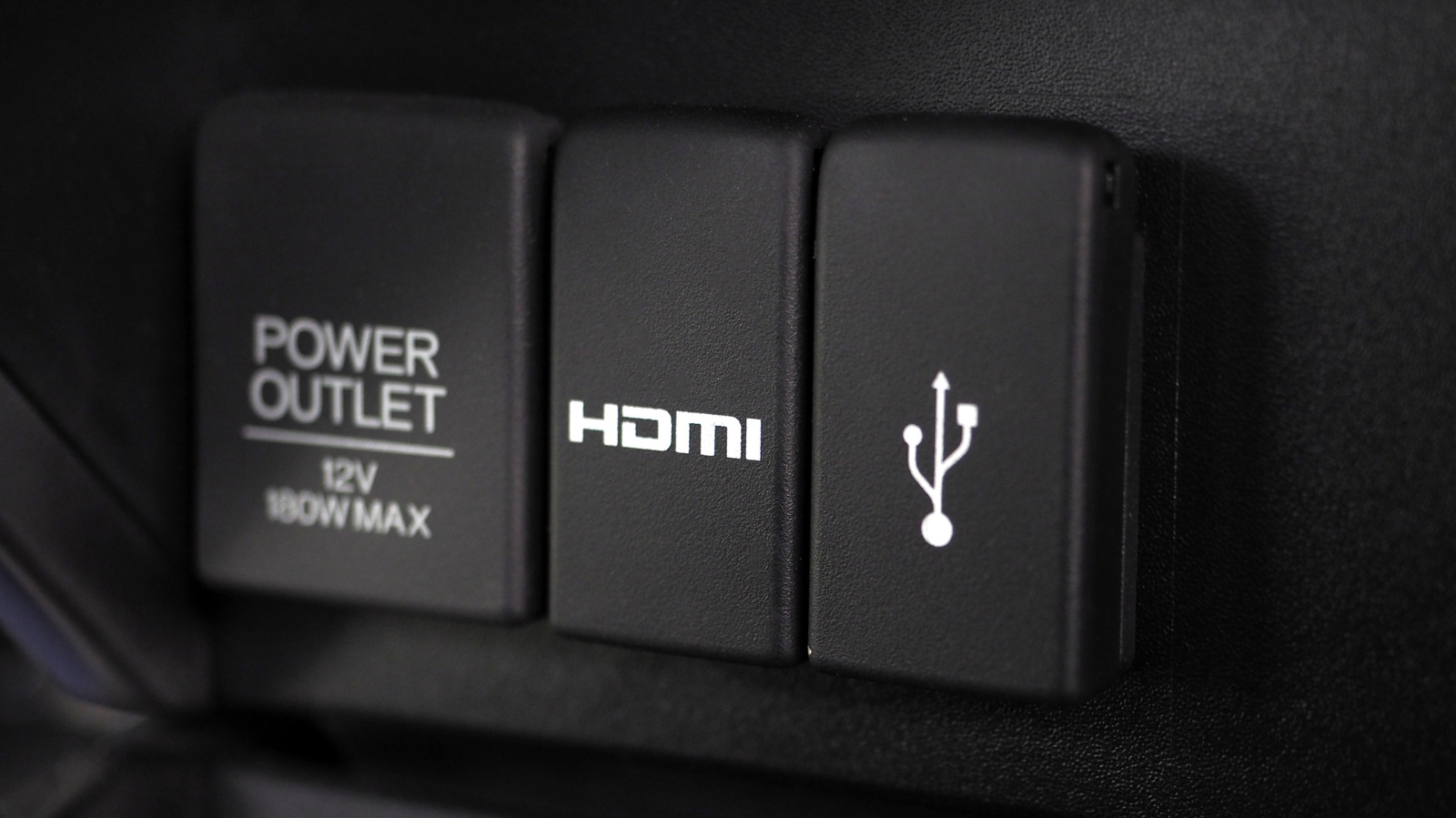
A decade ago, a curious feature began appearing in automobiles, primarily from Honda: HDMI ports. Initially met with discussion on online forums like Reddit, where users speculated about connecting gaming consoles like the Nintendo Switch and accessing cloud gaming services such as Google Stadia, the purpose of these ports wasn’t immediately obvious. While the ports generally allowed for video playback on the vehicle’s infotainment system, functionality was typically limited to when the car was in park.
Honda was not alone in experimenting with this technology, but the automaker was among the most prominent to include HDMI ports in its vehicles around 2010. However, the inclusion wasn’t driven by a desire to turn cars into entertainment centers. Instead, it was part of an early attempt to mirror smartphone functionality onto the car’s display, predating the widespread adoption of Apple CarPlay and Android Auto. The system, while innovative for its time, received mixed reviews and ultimately didn’t gain traction, as evidenced by the current dominance of CarPlay and Android Auto.
In the early 2010s, automakers were increasingly focused on integrating smartphones with their vehicles. Bluetooth and USB connectivity were becoming standard, but as smartphones evolved to offer features like turn-by-turn navigation via Google Maps, the need for deeper integration became apparent. Honda responded with HondaLink in 2012, a system designed to bridge the gap between smartphone features and the car’s infotainment system. While HondaLink has evolved over time, it now focuses on functions such as roadside assistance, remote vehicle access, maintenance reminders, and mileage monitoring.
HondaLink also allows drivers to send destinations from their smartphones directly to the car’s navigation system, offering an alternative to CarPlay and Android Auto. Other automakers, such as Ford with its Sync system, have developed similar solutions, but none have fully replaced the functionality offered by Apple and Google’s platforms. Interestingly, with some automakers now removing support for Android Auto and Apple CarPlay in certain models, systems like HondaLink may see renewed interest.
HDMI ports haven’t been limited to attempts at smartphone mirroring. Some vehicles, particularly those from Mercedes-Benz, have incorporated HDMI connectors into their rear entertainment systems. These ports allow passengers to connect Blu-ray players, gaming consoles, and other devices, enhancing the in-car experience, especially for families. Ford also previously offered vehicles with traditional AV ports for similar purposes.
While tech-focused brands like Tesla haven’t typically included HDMI ports as standard features, aftermarket solutions exist. Companies like OTB Mods offer systems to add HDMI connectivity to Tesla vehicles. The purpose of HDMI ports varies depending on the vehicle. Front-facing ports are more likely intended for mirroring or connectivity features, while ports located in the rear are generally geared towards entertainment purposes.
