
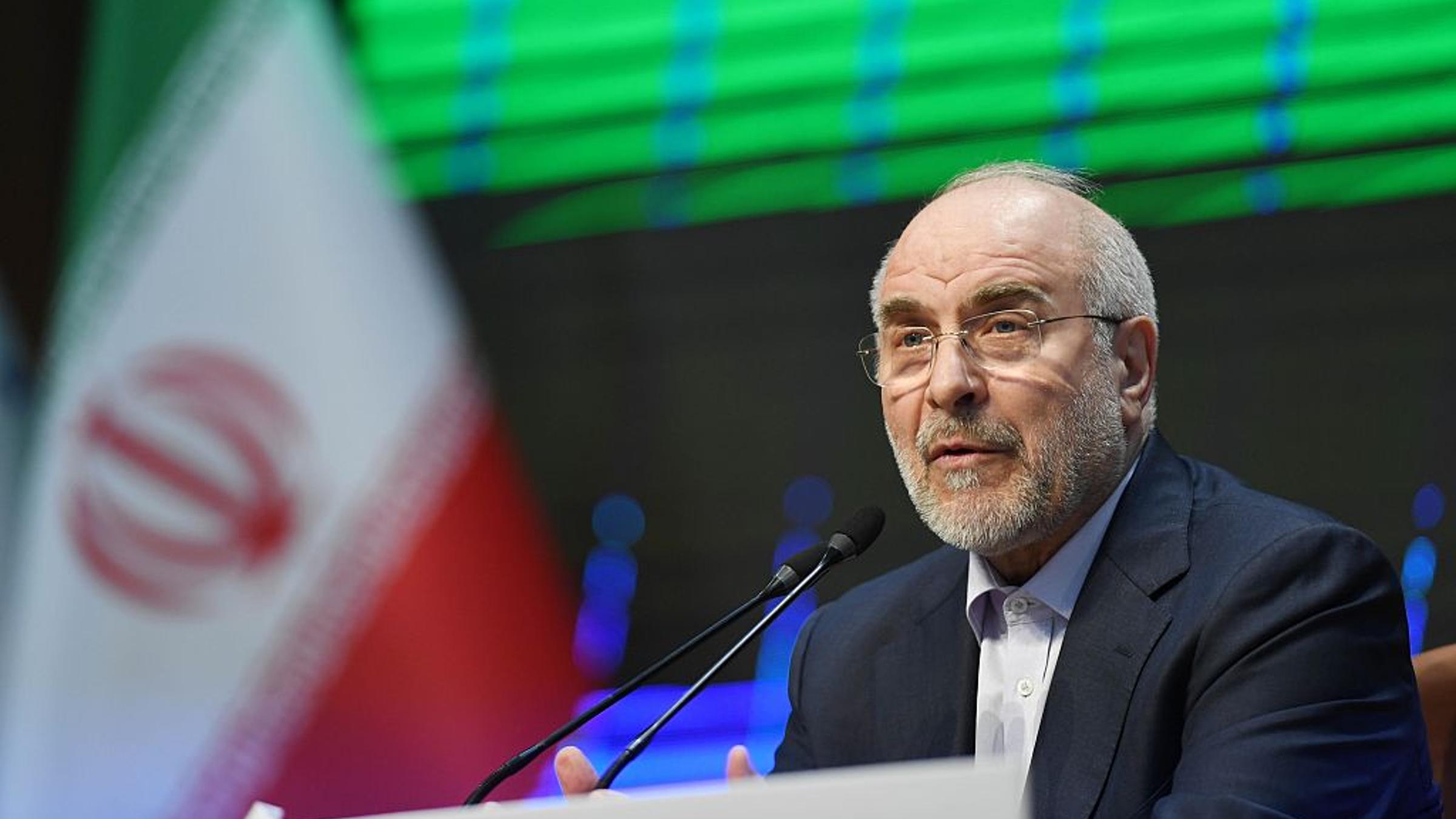
Who Is Mohammed-Baqer Qalibaf?
Mohammed-Baqer Qalibaf, the Speaker of the Iranian Parliament and former IRGC commander, recently ignited a geopolitical media firestorm by denying US negotiations on X, labeling reports as “fakenews” designed to manipulate oil markets. This incident underscores the critical intersection of statecraft and modern digital reputation management, where a single social media post can destabilize global financial sectors.
In the high-stakes arena of global influence, the difference between a corporate restructuring and a geopolitical pivot is often just a matter of press release timing. While Dana Walden recently unveiled a transparent, multi-platform leadership team at Disney Entertainment to streamline film and streaming operations, the machinery behind Mohammed-Baqer Qalibaf operates with a different kind of opacity. Qalibaf isn’t managing a slate of Marvel franchises; he is managing the brand equity of a nation-state amidst volatile market conditions. When Qalibaf took to X on Monday to categorically state, “No negotiations have been held with the US,” he wasn’t just issuing a denial; he was engaging in high-level crisis communication to arrest a narrative that threatened to spike oil prices and destabilize regional confidence.
The architecture of Qalibaf’s public persona is built on a foundation of military rigor rather than corporate synergy. Born in 1961 to a grocer near Mashhad, his origin story reads less like a political biography and more like the gritty backstory of an action protagonist. According to Iranian state-owned Press TV, Qalibaf’s entry into activism began during the Islamic Revolution, where he co-founded the Islamic Students’ Association. By age 18, he had joined the Islamic Revolutionary Guard Corps (IRGC), rapidly ascending to become a brigade commander during the Iran-Iraq war. His role in the 1982 recapturing of Khorramshahr remains a cornerstone of his “heroic” branding, a narrative asset that provides him with enduring legitimacy within the domestic power structure.
However, in the digital age, legacy credentials do not immunize a figure from the volatility of the 24-hour news cycle. The recent rumor mill regarding US negotiations presented a classic reputation management nightmare. For a figure like Qalibaf, whose authority relies on a perception of unwavering resolve, the suggestion of backchannel diplomacy with Washington acts as a brand liability. The immediate deployment of a denial via social media indicates a sophisticated understanding of the medium’s velocity. He bypassed traditional diplomatic cables to speak directly to the market and the public, attempting to short-circuit the speculation before it could solidify into financial fact.
This scenario highlights a critical vulnerability in modern leadership: the inability to control the information supply chain. When a public figure faces allegations that could impact financial markets or national security, standard press statements are often insufficient. The speed at which “fakenews” propagates requires a proactive defense strategy. In the corporate world, a scandal of this magnitude would trigger an immediate retainer with elite crisis communication firms and reputation managers. These specialists work to scrub negative sentiment, coordinate messaging across all channels, and provide legal cover for public statements. Qalibaf’s team, by contrast, relies on state-controlled narratives, which often lack the agility required to combat decentralized digital rumors.
“The velocity of misinformation in the current media landscape outpaces traditional diplomatic denial. When market-moving rumors surface, the window to correct the narrative is measured in minutes, not days. This requires a fusion of legal strategy and rapid-response media relations that most state actors are only beginning to understand.”
The implications of Qalibaf’s statement extend beyond immediate market correction; they touch on the broader theme of intellectual property regarding truth itself. In an era where deepfakes and AI-generated content can fabricate negotiations or statements, the verification of source material becomes paramount. TIME reached out to the White House for comment, illustrating the standard journalistic protocol of seeking on-the-record confirmation. Yet, in the absence of transparent data, the public is left to navigate a fog of war where every tweet is a potential market mover. This environment creates a lucrative demand for strategic media relations consultants who can audit a leader’s digital footprint and fortify their messaging against manipulation.
the logistical complexity of maintaining such a high-profile brand cannot be overstated. Qalibaf’s trajectory from a teenager in Mashhad to the Speaker of the Parliament involves a lifetime of calculated risk management. Much like a touring artist sourcing massive contracts with regional event security and A/V production vendors to ensure a flawless show, a political leader requires a seamless infrastructure of support. This includes security details, speechwriters, and digital analysts who monitor sentiment in real-time. The “quagmire” Qalibaf references in his post regarding the US and Israel is not just military; it is a narrative quagmire where every word is dissected for weakness.
As we move further into 2026, the lines between entertainment, media, and geopolitics continue to blur. The metrics used to measure a blockbuster film’s success—opening weekend gross, social sentiment, brand equity—are increasingly applied to political figures. Qalibaf’s denial of negotiations is a box office play; he is trying to ensure his “film” (his political tenure) does not flop due to terrible reviews (market instability). Whether he is a Revolutionary Guard veteran or a corporate chairman, the rule remains the same: control the story, or the story will control you.
For industry professionals observing these shifts, the lesson is clear. The demand for sophisticated narrative defense is growing. Whether protecting a celebrity’s image or a statesman’s legacy, the tools required are identical. The World Today News Directory connects you with the vetted professionals capable of navigating this complex landscape, from intellectual property lawyers who handle defamation to the PR architects who build the fortress around your brand.
Disclaimer: The views and cultural analyses presented in this article are for informational and entertainment purposes only. Information regarding legal disputes or financial data is based on available public records.