
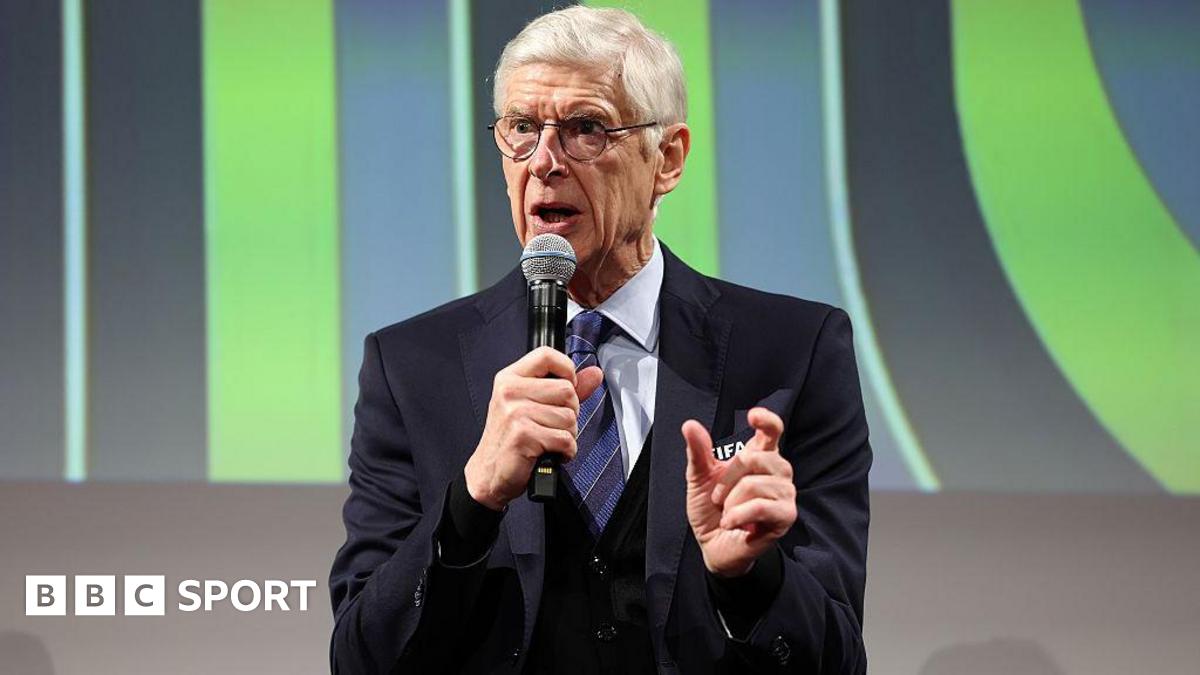
The Offside Rule: Is a revolution on the Horizon with ‘Wenger’s Law’?
For decades, the offside rule has been a constant source of debate in football.From agonizingly close calls decided by millimeters to controversies fueled by the speed of modern play and the precision of Video Assistant Referee (VAR), the rule continues to spark frustration among fans, players, and managers alike. Now, a potential overhaul, championed by former Arsenal manager Arsène Wenger, is gaining traction. But will “Wenger’s Law” truly revolutionize the game, or is it destined to join the long list of failed football experiments?
The Controversy Surrounding Offside and VAR
The introduction of VAR was intended to eliminate clear and obvious errors in officiating, and it has largely succeeded in that regard. However, the granular nature of offside decisions, often hinging on marginal calls persistent by analyzing lines on a screen, has led to a new wave of criticism. fans often find themselves dissecting replays, arguing over fractions of a second, and questioning the spirit of the game. The delays caused by VAR reviews also disrupt the flow of matches, adding to the frustration. As reported by SportsBuzz360,the aim of Wenger’s proposal is to address this very issue.
What is ‘Wenger’s Law’?
Arsène Wenger’s proposed change to the offside rule is surprisingly simple in concept. Instead of determining offside based on any part of the body, the rule would only consider a player offside if all parts of their body are beyond the last defender when the ball is played. Essentially, it introduces a margin for error, favoring the attacker. According to the BBC, Wenger first presented this idea to the International Football Association board (IFAB) in 2020, and it continues to be a recurring topic of discussion.
This means that if any part of an attacker’s body is level with the last defender when the ball is played, they would be considered onside.This subtle shift could dramatically increase the number of goals scored and potentially lead to more exciting, attacking football.
Trial Runs and Early Results
IFAB isn’t rushing into a full-scale implementation. Recognizing the potential for unintended consequences, they’ve opted for a cautious approach, beginning with trials in lower-level competitions. In 2023, trials were conducted in Italy’s under-18 championship and in youth competitions in the Netherlands. Early reports suggest the results have been largely positive, though concerns remain about giving an undue advantage to attackers.
These trials are crucial. As noted by sources, the game needs to understand how tactics would adjust and the impact properly assessed before any major changes are made. The goal is to avoid disrupting the balance of the game and ensure the rule change genuinely improves the spectator experience.
A History of Failed Experiments
football’s history is littered with rule changes that sounded good in theory but failed in practice. IFAB is acutely aware of this, and it informs their cautious approach to Wenger’s Law. The BBC highlights several past examples:
- 2000-01: A 10-yard advance for free kicks awarded for dissent proved confusing, particularly for leagues unfamiliar with rugby’s rules.
- 2017-18: The “ABBA” penalty shootout format, alternating kicks, was abandoned due to confusion among players and fans.
- 1987-88: Removing the offside rule for free kicks in the National League (then known as the Conference) led to overly defensive tactics, as teams packed the six-yard box.
These examples demonstrate that even well-intentioned changes can backfire, highlighting the need for thorough testing and careful consideration.
Potential Tactical Implications
Wenger’s Law could significantly alter tactical approaches. While it’s intended to encourage attacking play, it could also lead to unintended consequences. Defenders might be forced to drop deeper to prevent attackers from exploiting the new offside interpretation, particularly during set-piece situations. This could create more congested defensive lines and potentially stifle creativity in midfield.
The impact would likely be most pronounced inside the penalty area,where the margins are tightest and the potential for game-changing offside calls is highest. Attackers would have more leeway to position themselves in perilous areas, forcing defenders to be even more vigilant.
Option Solutions: The Torso Rule
While Wenger’s Law has garnered significant attention, it’s not the only proposed solution to the offside conundrum. another suggestion involves using the torso as the reference point for offside, ignoring the feet and head. However, implementing this change presents practical challenges for assistant referees, especially in crowded penalty areas. Determining the exact position of a player’s torso amidst a cluster of bodies would be incredibly difficult, even with VAR assistance.
What’s Next? A Long Road Ahead
Despite the promising early results from the trial runs, a widespread implementation of Wenger’s Law is still several years away. IFAB is taking a measured approach, prioritizing thorough testing and analysis. Realistically, as the BBC reports, it’s unlikely we’ll see the rule change rolled out across the game before the 2028-29 season.
The debate surrounding Wenger’s Law is far from over.Whether it will ultimately succeed in simplifying the offside rule and enhancing the beautiful game remains to be seen. For now, it represents a fascinating and potentially transformative moment in football history.
key Takeaways:
- Arsène Wenger has proposed a change to the offside rule that would give attackers more benefit of the doubt.
- Trials of the new rule have shown positive results, but concerns remain about giving too much advantage to attackers.
- IFAB is taking a cautious approach, prioritizing thorough testing and analysis before implementing any changes.
- A full-scale rollout of Wenger’s Law is unlikely before the 2028-29 season.
- Football has a history of failed rule experiments, highlighting the need for careful consideration and testing.
