Weather Regimes Drive Synchronous European Forest Fires, Study Finds
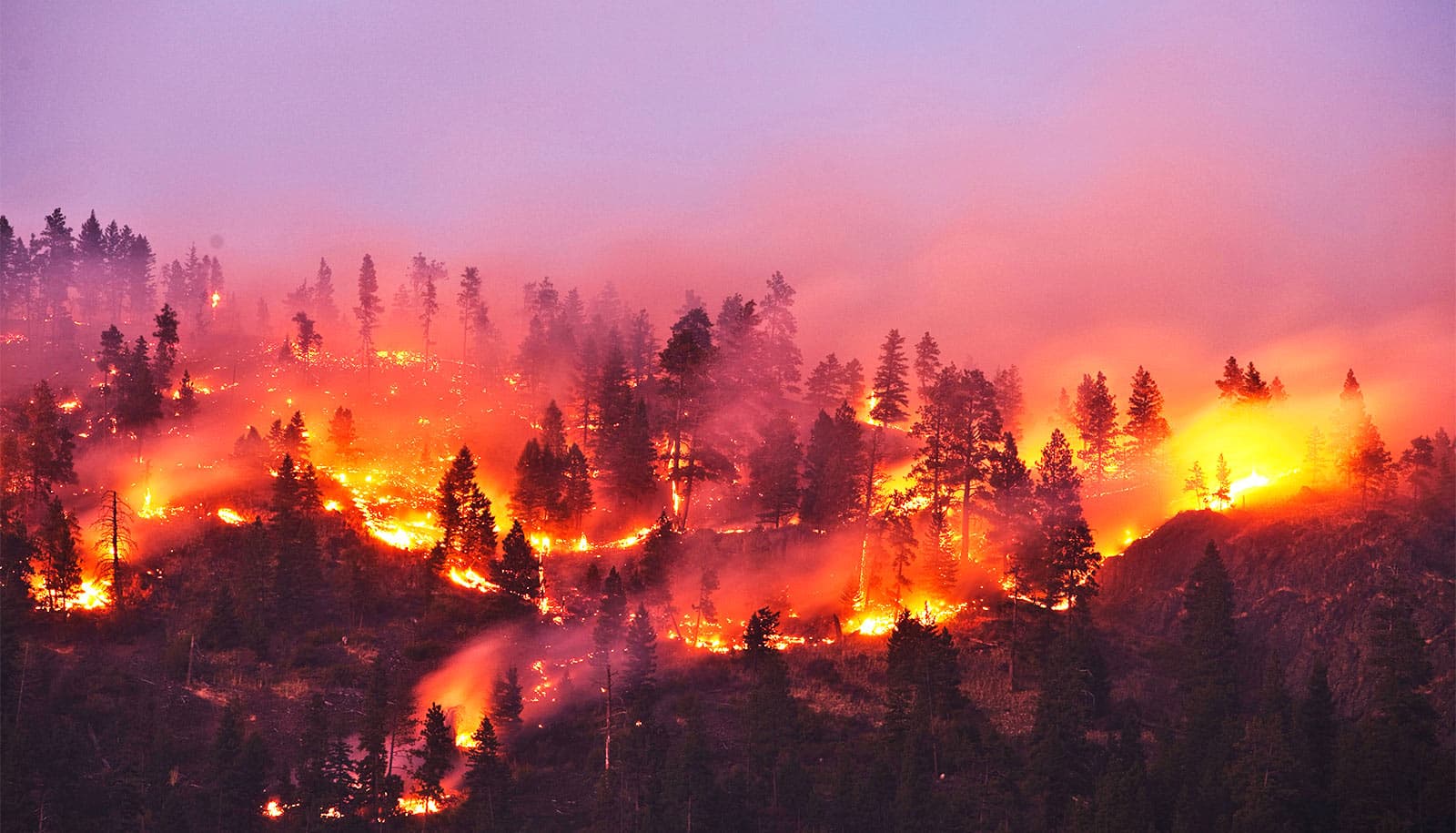
Synchronous forest fires across Europe are increasingly driven by specific, large-scale weather regimes that can be predicted weeks in advance.
A study published on September 17, 2026, in the journal Communications Earth & Environment reveals that these atmospheric patterns often dictate when and where multiple regions will face simultaneous wildfire outbreaks.
- Predictable weather patterns known as “weather regimes” are responsible for triggering synchronous wildfires across distant European regions.
- Early warning systems could extend the current forecast window from a few hours to as long as two weeks, allowing for better allocation of firefighting resources.
- Specific high-pressure and low-pressure systems over regions like Scandinavia and Greenland directly modulate wildfire risk in countries as far apart as Italy, Spain, and the United Kingdom.
Predicting Simultaneous Fire Risks
When forests across the continent burn simultaneously, the strain on emergency services becomes acute. Firefighting aircraft, helicopters, and ground crews must be deployed across vast distances, making the efficient allocation of limited resources a primary logistical challenge.
Researchers led by Manuela Brunner, professor of hydrology and climate impacts in mountain regions at ETH Zurich and the WSL Institute for Snow and Avalanche Research SLF in Davos, investigated the atmospheric links behind these events, according to ETH Zurich.
The study, which analyzed satellite data from 2001 to 2020, identifies “weather regimes” as the primary drivers. These are large-scale patterns that persist for several days or weeks, maintaining consistent weather conditions such as prolonged heat and dryness.
Lead author Xinhang Li, a forest fire expert in Brunner’s group, notes that these findings provide a mechanism to develop more effective early warning systems. “Our findings help with developing better early warning systems for synchronous forest fires,” Li told Futurity.
Atmospheric Patterns and Regional Impact
The research illustrates how weather systems over Northern Europe exert influence on fire-prone areas thousands of kilometers away. A stable high-pressure area over Scandinavia during the summer months increases fire risk not only in the north but also in Italy and the Balkans. Conversely, a stable low-pressure system over Scandinavia in the spring shifts the risk toward the Iberian Peninsula and the Balkans, as reported by Phys.org.
The study identified seven year-round weather regimes, finding that only one—high-pressure over Greenland, known as “Greenland Blocking”—typically suppresses synchronous fires by bringing cooler, damp conditions to mainland Europe. “Such synchronous fires across multiple regions aren’t something we’re inventing—they already exist,” Li explained to Futurity. The research highlights that while southern regions and Scandinavia face peak fire risk in summer, forests in the United Kingdom, Germany, and Central Europe are more susceptible to fire activity during the spring.
“While Scandinavia and Southern Europe mainly experience fires in summer, forests in Germany, the UK, and Central Europe burn more often in spring,” Xinhang Li said, referring to these periods as “fire seasons,” while noting that she did not observe such distinct fire seasons in the Alps and France.
Satellite Data Misses Small Fires and Human Causes
While the study provides a framework for subseasonal forecasting, the researchers acknowledge limitations in their data. Satellite observations, the primary source for the 20-year analysis, only detect fires once they reach a significant size. “From space, you can only see forest fires once they’re large enough,” the researcher said.
Consequently, many smaller, localized fires are absent from the dataset. The researchers also excluded fires on agricultural land and in built-up areas, noting that it is often unclear whether such fires are started deliberately or occur accidentally.
The predictive power of these regimes was tested against real-world events. During the summer of 2026, when simultaneous fires in France and Spain necessitated the evacuation of tens of thousands of people, conditions were driven by a high-pressure system over the North Atlantic.
This system generated persistent winds and hot, dry weather, consistent with the patterns identified in the research. These results suggest that as global temperatures rise, the frequency of such synchronous events may increase, necessitating a more coordinated approach to emergency management.
Managing Emergency Resource Allocation
The ability to forecast wildfire synchronicity on a subseasonal timescale allows for proactive mobilization of specialized equipment and personnel.
The institution conducting this research, ETH Zurich, was founded by the Swiss federal government in 1854 as a polytechnic institute. Over the decades, it has established a global reputation for excellence in science, technology, engineering, and mathematics, counting 22 Nobel laureates among its affiliated researchers and faculty.
The research was funded by ETH Zurich.