
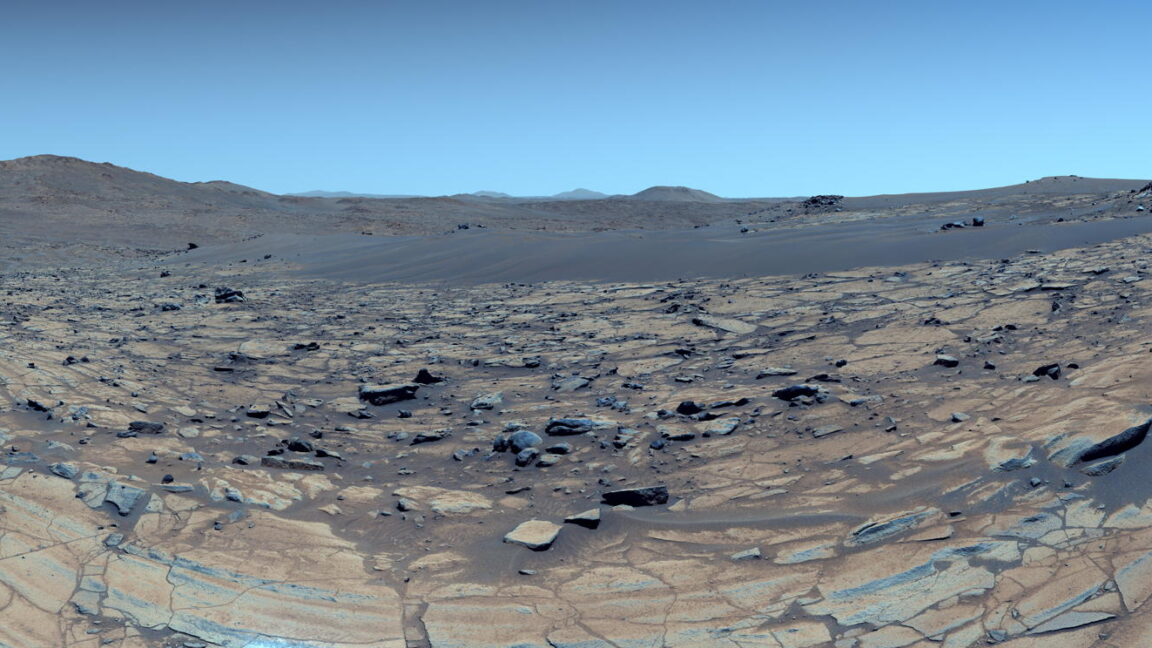
Analysis of clay pebbles discovered by NASA’s Perseverance rover within Jezero crater on Mars suggests the region experienced prolonged periods of high rainfall and a potentially habitable climate billions of years ago, according to research published in April 2025. The findings, detailed in a paper analyzing data from the rover’s explorations, indicate conditions comparable to “past greenhouse climates on Earth.”
The pebbles, composed of kaolinite – a type of clay mineral – were found to have formed under conditions of modest temperatures and persistent rainfall, rather than the scalding hydrothermal activity previously considered a primary driver of alteration on the red planet. This distinction is crucial, as hydrothermal environments are often transient, while sustained rainfall implies a more stable and potentially long-lasting habitable environment.
Researchers found striking similarities between the chemical composition of the Martian clay pebbles and similar clays found on Earth dating from warmer, wetter periods in our planet’s history. The study suggests these conditions on Mars may have persisted for thousands to millions of years, creating extended intervals of habitability within Jezero crater.
The discovery builds on previous findings from Perseverance, which last year identified potential biosignatures in samples collected from the crater floor. These samples, encased in sealed containers, were intended for return to Earth for detailed analysis as part of a Mars sample return mission. However, that mission was recently cancelled by NASA, potentially delaying comprehensive examination of the samples for many years.
Any future analysis of the cached samples will be guided by the “Knoll criterion,” formulated by astrobiologist Andrew Knoll. This criterion stipulates that evidence of life must be inexplicable without invoking biological processes. Whether the Jezero crater samples meet this standard remains uncertain without Earth-based laboratory analysis.
The findings also have implications for understanding the potential for past life on Mars, particularly in the context of impact-induced hydrothermal systems. A study published in 2025 in Nature Geoscience, stemming from an international drilling expedition off the Norwegian coast, confirmed that methane emissions from hydrothermal vents were responsible for global warming approximately 55 million years ago. Similarly, research suggests that impact events can generate hydrothermal systems capable of sustaining aqueous environments on Mars for extended periods, as evidenced by alteration minerals found within impact craters.
The current research focuses on alteration minerals – serpentine, chlorite, and magnesium carbonate – discovered in fractured bedrock and veins within Ritchey crater. These minerals are not associated with post-impact fluvio-lacustrine processes or pre-impact bedrock, but rather with the emplacement of hot impact melt and subsequent groundwater percolation. This suggests that impact cratering can create extensive habitable environments on Mars.
The implications of a potentially habitable, wetter Mars billions of years ago are profound, conjuring an image of a drastically different planet than the desolate, wind-swept landscape observed today. The fate of the Perseverance samples, and whether they will ever be subjected to the rigorous scrutiny required to confirm the presence of past life, remains an open question.
