WAN-IFRA Carbon Audit Report: Managing Emissions in Newspaper Printing
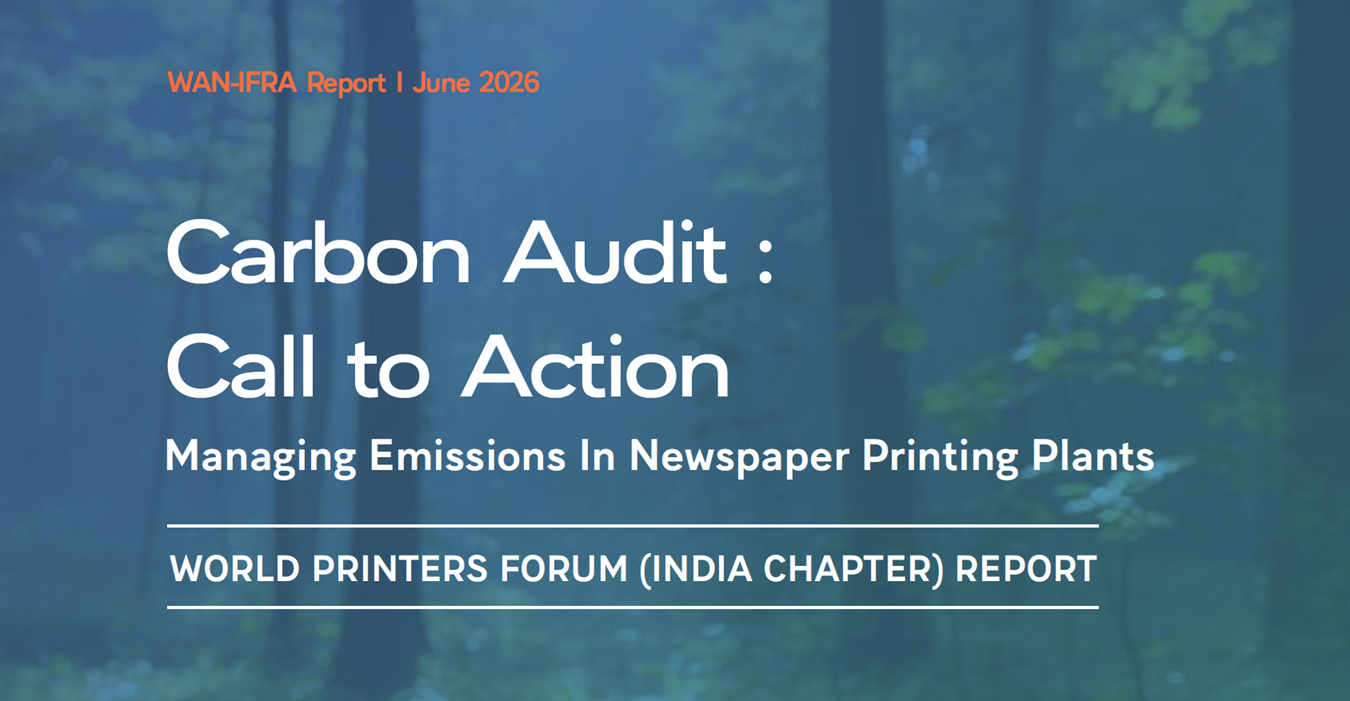
WAN-IFRA released a special report titled “Carbon Audit: Call to Action – Managing Emissions in Newspaper Printing Plants,” providing a roadmap for publishers to measure and reduce greenhouse gas (GHG) emissions. The guide establishes a systematic approach for printing facilities to align operational footprints with international climate frameworks.
The printing industry faces a challenge. While newspapers are essential to democratic societies and public discourse, the physical act of production—spanning energy consumption, transportation, raw material usage, and production processes—creates a carbon footprint. This report provides a practical and systematic approach to identifying, measuring, and managing emission sources.
Standardizing Emissions Accounting Across the Value Chain
The WAN-IFRA report introduces a methodology to categorize direct and indirect emissions. This allows printing plants to assess environmental impact and identify opportunities for emissions reduction and operational improvement. By utilizing carbon budgeting and the concept of “planetary boundaries,” the report moves beyond simple compliance.

Debarshi Ray, Chairman of the World Printers Forum (India Chapter) and Technical Director at Bennett Coleman & Co. Ltd., stated that sustainability cannot be a “siloed compliance exercise” but must instead be “woven into the fabric of daily operational excellence.”
The report is available to members and media organisations seeking to benchmark their operations, minimise resource waste, and build trust with modern, climate-conscious readers and regulators.
Alignment With International Climate Frameworks
The report draws upon globally recognised sustainability concepts and international climate frameworks, including:
- The United Nations Framework Convention on Climate Change (UNFCCC)
- The Kyoto Protocol
- The Paris Agreement
By adhering to these standards, newspaper organizations can contribute meaningfully to national and global climate goals while strengthening long-term operational resilience.
Operational Resilience and the Bottom Line
The WAN-IFRA report emphasizes operational resilience. Resource waste is a financial drain.
A carbon audit reveals inefficiencies. Optimizing the transportation route of newsprint can lower a plant’s emissions and reduce logistics costs.
The Path to Transparency
The “Carbon Audit: Call to Action” is available immediately via the WAN-IFRA Knowledge Hub for members and media organizations. The report serves as a tool, allowing publishers to benchmark their operations.
The industry has been at the forefront of informing the public about climate change; now, it has the precise accounting mechanisms to transparently manage its own footprint. The transition from reporting on the crisis to managing emissions is the new operational mandate. WAN-IFRA members can download the report from the Knowledge Hub.