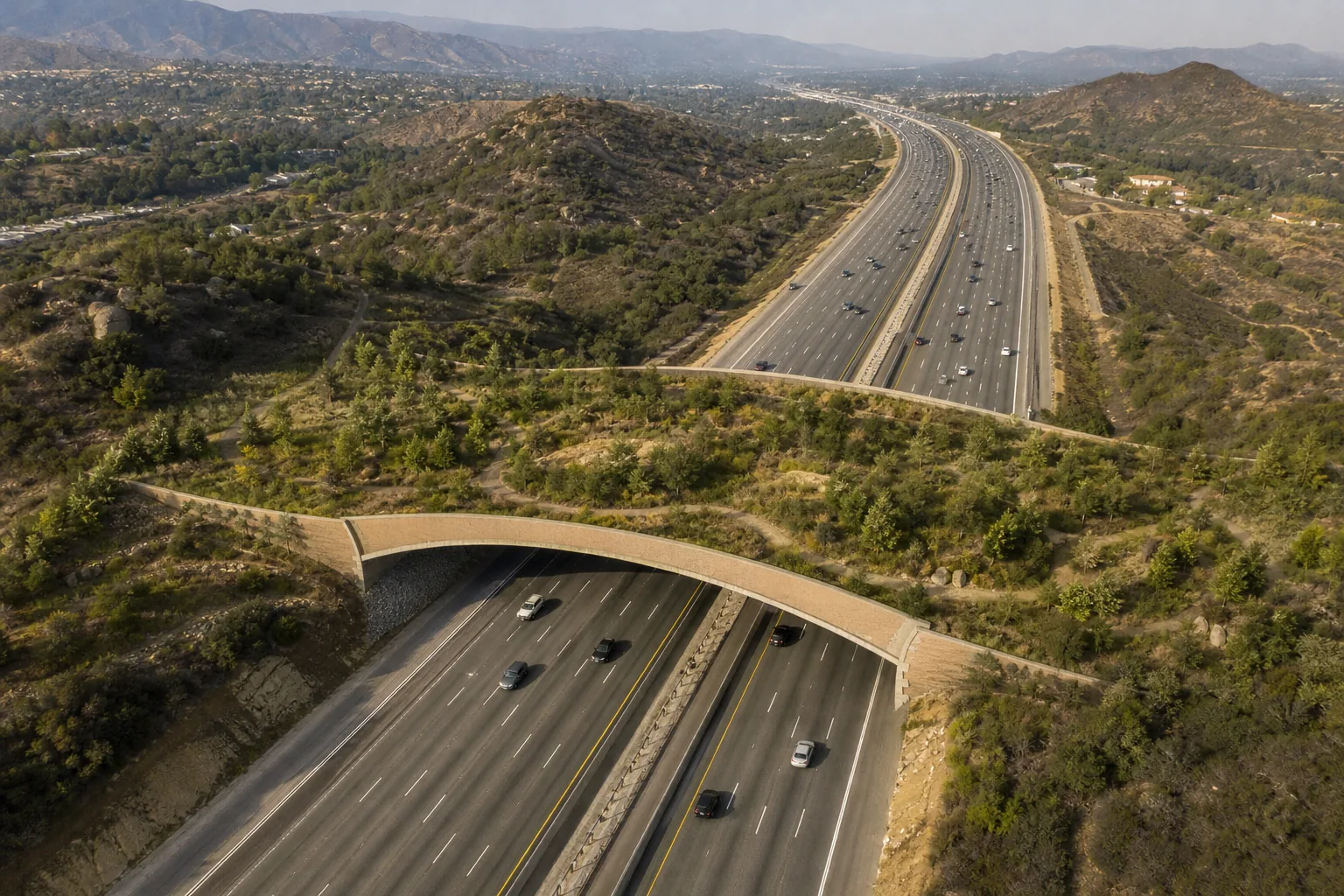
Wallis Annenberg Wildlife Crossing California World’s Largest Vegetated Wildlife Bridge
The Wallis Annenberg Wildlife Crossing, the world’s largest wildlife bridge, will open on Wednesday in California, according to Leonardo.
The 380-meter-long structure spans the U.S. Highway 101, a roadway carrying over 300,000 vehicles daily, and is designed to reconnect fragmented habitats.
The crossing, located in Agoura Hills about 55 kilometers northwest of Los Angeles, will feature a vegetated surface covering approximately 4,000 square meters. It will be covered in soil, shrubs, and native plants to replicate the surrounding environment of the Santa Monica Mountains.
Highway 101 has long acted as a barrier, isolating wildlife populations. This fragmentation has led to genetic isolation, particularly among mountain lions, and numerous fatalities as animals attempt to cross. The crossing aims to restore connectivity between the mountains and northern habitats.
The Wallis Annenberg Wildlife Crossing project documentation states that the structure is a forest suspended above the Highway 101, according to Insella.
The project, which began construction in 2022, cost approximately $114 million, with funding from a coalition including public agencies, private foundations, and individual donors. The Annenberg Foundation contributed $25 million, and Leonardo DiCaprio was a key figure in fundraising efforts.
Despite the official opening date, the bridge is already in use. On October 28, 2026, researchers from the National Park Service captured a coyote on camera using the structure. Subsequent images showed three young coyotes on the crossing. The National Park Service will install additional cameras to monitor which species use the passage and track its long-term impact on genetic diversity.
Wildlife crossings exist elsewhere, but the Wallis Annenberg Wildlife Crossing stands out for its size and design, creating a corridor wide enough for multiple species to move simultaneously while reducing human-induced stress.
Leonardo DiCaprio helped raise private donations that supplemented public and philanthropic funds. The Annenberg Foundation contributed $25 million, with the structure named after Wallis Annenberg, its president and CEO, who supported the project decisively.

Despite the official opening date, wildlife has already begun using the structure. Subsequent images showed three young coyotes on the crossing. The National Park Service will install additional cameras to monitor which species use the passage and track its long-term impact on genetic diversity.
The crossing is a forest suspended above Highway 101, designed to replicate the surrounding environment of the Santa Monica Mountains. Its surface is covered in soil, shrubs, and native plants, while barriers are in place to reduce noise and light from the highway, creating a corridor wide enough for multiple species to move simultaneously.
Highway 101 has long acted as a barrier, isolating wildlife populations and leading to genetic isolation, particularly among mountain lions. The crossing seeks to allow animals to move between territories, reducing inbreeding and crossing fatalities.
With a cost of $114 million, the crossing’s price tag is significant.
Whether this model can be replicated elsewhere, and at what cost, remains an open question as the project prepares to officially open to the animals on December 2.
Worth a look
- Premier League Round 12: Seven Matches This Weekend Including Forest–Chelsea, United–Brentford, Everton–Liverpool
- Berau Regency Fire Response Overlooks Volunteer Safety, JurnalPost Reports
- California Announces New Homekey+ Projects and Funding to Address Homelessness and Veteran Housing (newsdirectory3.com)