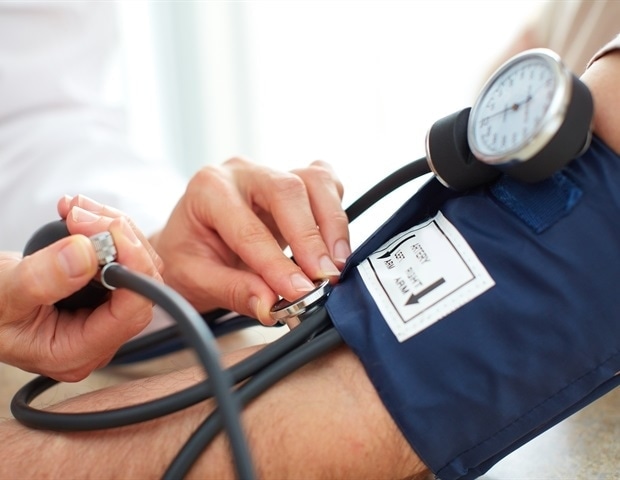
VR and Classical Music Lower Blood Pressure in ER Patients
A virtual reality landscape of a flowing river and trees, paired with classical music, significantly reduces blood pressure within 15 minutes of patient arrival in an emergency department, according to a randomized controlled trial presented at the European Emergency Medicine Congress. The study evaluated 130 adult patients experiencing hypertensive urgency and demonstrated that immersive nature scenes combined with structured audio successfully lowered both blood pressure and state anxiety.
Key Clinical Takeaways:
- Rapid Intervention: Patients using virtual reality headsets and classical music playlists achieved a statistically significant drop in mean arterial pressure within the first 15 and 30 minutes.
- Anxiety Reduction: The intervention targeted the physiological stress response, cutting state anxiety scores that typically drive up stress hormones and tighten blood vessels during acute medical visits.
- Controlled Trial Design: Researchers at Ankara City Health Application and Research Center and Ankara Bilkent City Hospital randomized 130 participants into equal intervention and control groups, comparing outcomes against standard antihypertensive medications.
Addressing Hypertensive Urgency and Environmental Stress
Patients arriving at emergency departments with markedly elevated blood pressure readings of 180 mmHg or higher on the systolic scale, or 110 mmHg or higher on the diastolic scale, represent an exceptionally common clinical presentation. Dr. Safa Dönmez, an associate professor of emergency medicine at the University of Health Sciences, Ankara City Health Application and Research Center, Ankara, Turkey, and the first author and principle investigator of the study, noted that while standard medication protocols are routinely administered, the emotional state of patients demands clinical attention. As Dr. Dönmez explained prior to the congress, many patients arrive anxious and frightened. This emotional distress triggers the release of stress hormones that constrict blood vessels and elevate blood pressure further, a physiological cascade exacerbated by the bright lights, noise, and uncertainty of the emergency room environment.
Trial Methodology and Group Comparison
To test whether mitigating environmental anxiety could accelerate blood pressure reduction, Dr. Dönmez and co-investigator Dr. Kadir Yenal, an emergency medicine specialist at Ankara Bilkent City Hospital, Ankara, conducted a randomized controlled trial involving 130 adult patients diagnosed with hypertensive urgency. Hypertensive urgency is defined clinically as severely high blood pressure unaccompanied by acute signs or symptoms of organ damage. Participants were divided evenly into an intervention group of 65 patients and a control group of 65 patients. All participants received standard blood pressure-lowering medications. While the control group received no additional intervention, patients in the intervention group were fitted with gaming-style virtual reality headsets that displayed a tranquil natural environment featuring a forest, tall trees, a wooden suspension bridge, and a flowing river. Simultaneously, these patients listened via smartphone to a curated classical music playlist featuring works by Bach, Mozart, Debussy, Vivaldi, Tchaikovsky, Saint-Saëns, Hadyn, and Corelli, chosen specifically for their structured and calming qualities.
Blood Pressure and Anxiety Outcomes
Investigators measured blood pressure across five distinct intervals at 15, 30, 60, 90, and 120 minutes. Primary metrics focused on mean arterial pressure, which calculates the average arterial pressure during a single heartbeat by combining systolic and diastolic values. While normal mean arterial pressure ranges between 70 and 100 millimeters of mercury, participants in the trial presented with baseline readings between 130 and 138 millimeters of mercury. Anxiety levels were quantified using the State-Trait Anxiety Inventory, where STAI-I evaluates immediate state anxiety and STAI-II assesses general trait anxiety on scales from 20 to 80.

Although baseline blood pressure values were slightly lower in the virtual reality cohort upon study entry, researchers evaluated both absolute readings and percentage reductions to adjust for the variance. At the 15-minute mark, mean arterial pressure values in the control group dropped from 138 millimeters of mercury to 126 millimeters of mercury, and further to 119 millimeters of mercury at 30 minutes. In contrast, the virtual reality group experienced a drop from 132 millimeters of mercury to 116 millimeters of mercury at 15 minutes, and down to 112 millimeters of mercury at 30 minutes. Beyond the 30-minute mark, the differences between the two cohorts leveled off. Percentage reductions in mean arterial pressure at 15 and 30 minutes reached 8 percent and 14 percent respectively for controls, compared to more pronounced reductions of 12 percent and 15 percent for the virtual reality group. Dr. Yenal noted that after 15 minutes, patients utilizing the virtual reality intervention demonstrated both lower absolute readings and greater percentage drops from baseline, confirming a statistically significant outcome.
Future Trajectory of Acute Care Innovations
Related reading
- The Wolverine Stack: Are Recovery Peptides Safe for Cyclists?
- GLP-1 Weight Loss Drugs Face Lawsuits Over Sudden Vision Loss Risks
- Can Virtual Reality and Music Lower Blood Pressure During Emergencies? (newsy-today.com)
- Going Out: The Best of Theatre, Cinema, Music, Art and Comedy This Autumn (archyde.com)