
Venezuela Deploys 15,000 Troops to Colombian border Amidst Guerrilla Concerns & Drug Seizure Efforts
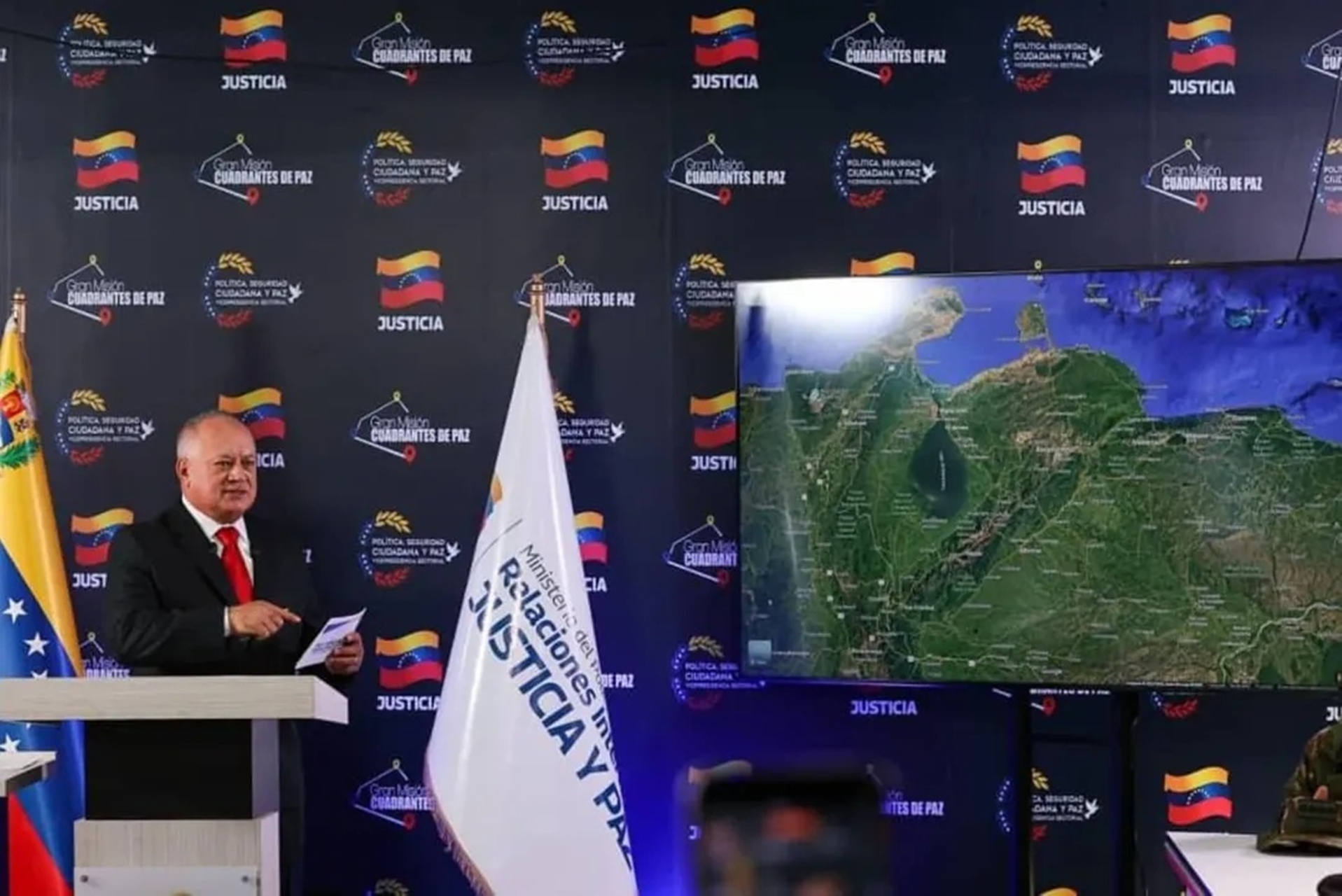
CARACAS, Venezuela – Venezuela is significantly bolstering its military presence along its border with Colombia, deploying 15,000 troops in a move officials say is designed to combat crime and ensure security. The deployment, announced by Diosdado Cabello, a high-ranking Venezuelan official, comes after Colombian President Gustavo Petro requested the Venezuelan government address the presence of armed groups operating near the border – specifically, the Second Marquetalia (dissidents of the Revolutionary Armed Forces of Colombia) and the National Liberation Army.Cabello detailed the reinforcement will include troops, air support, river patrol vessels, and drones, aiming to “evict” individuals attempting to establish a foothold on the border for criminal activities. “The deployment of 15,000 men and women will begin instantly and will extend to the limit with Táchira,” Cabello stated. “We ask the Colombian government to do the same to ensure peace throughout the border axis.”
The operation, dubbed “Catatumbo Lightning,” is also linked to the activation of “Peace Zone No. 1.” Cabello highlighted the creation of rapid response units (UROS) throughout the country, equipped with personnel, aircraft, and ships, and under the operational control of the CEOFANB (Bolivarian national Armed Forces). “It is an efficient combat unit to respond quickly to any eventuality,” he assured.
Alongside the troop deployment,Venezuelan authorities reported notable success in anti-drug operations. Through August of this year, they have seized 52,769 kilograms (over 52 tons) of drugs and 153,000 kilograms of chemical precursors used in narcotics production. Moreover, over 480 rifles, short and long weapons, loaders, and cartridges have been confiscated, many reportedly abandoned in dismantled criminal camps in the states of Zulia, Táchira, Falcón, and Delta Amacuro.
Cabello also reported the destruction of 400 aircraft, 92 clandestine airstrips, 28 logistics structures, 5 semi-submersible vessels, and 80 high-powered engines used for illicit trafficking. “Here we combat the root of the drug problem, not just the symptoms,” he emphasized.
