
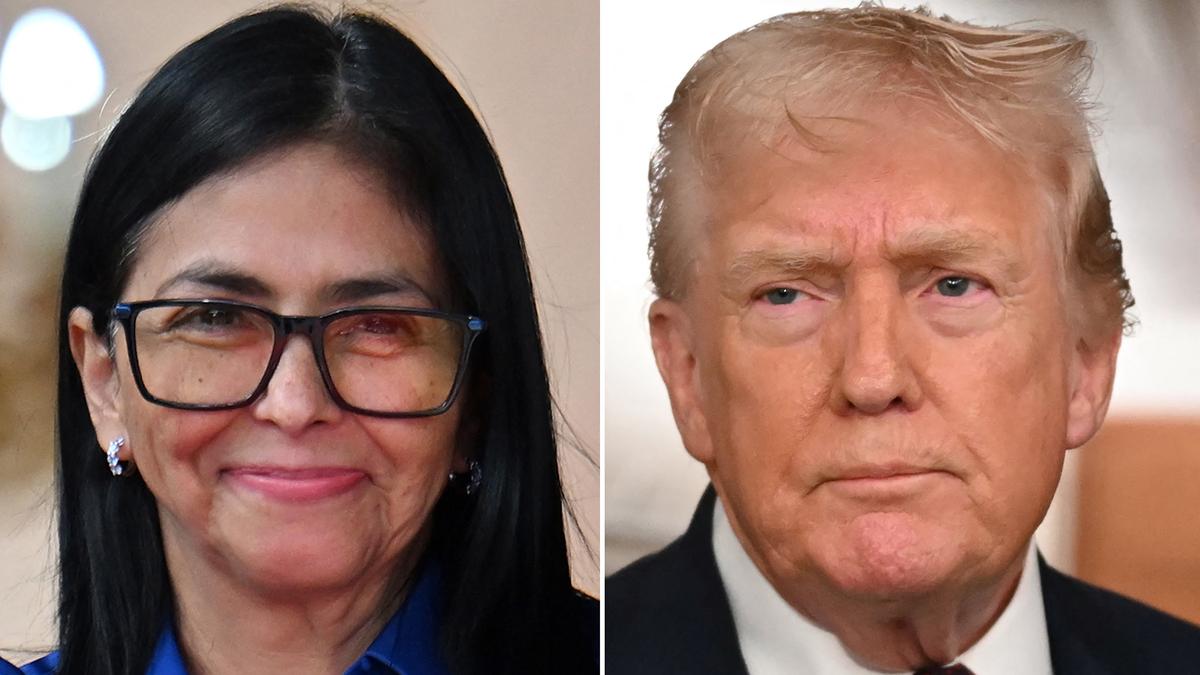
Venezuela’s Rodriguez Calls for End to foreign Intervention,Emphasizes Domestic Resolution of Political Conflicts
Caracas,Venezuela – In a strong statement delivered on January 27,2026,Venezuelan Vice President Delcy Rodríguez urged an end to foreign interference in the nation’s internal political affairs,asserting that Venezuela is capable of resolving its own challenges. Addressing oil workers in Anzoategui state, a key region for Venezuela’s crucial petroleum industry, Rodríguez specifically called out what she described as undue influence from Washington.Reuters reported on the address, highlighting the government’s increasing frustration with external pressures.
This declaration comes amidst a complex and often turbulent period in Venezuelan history, marked by political polarization, economic hardship, and ongoing international scrutiny. The call for self-determination reflects a long-standing narrative within the ruling socialist government, which frequently accuses the United States and other Western nations of attempting to destabilize the country. Though, critics argue that the government’s policies have been the primary driver of Venezuela’s crisis, and that international pressure is necessary to promote democratic reforms and human rights.
Historical Context of Foreign Involvement in Venezuela
Venezuela’s relationship with the United States has been fraught with tension for decades, evolving from close economic ties during the oil boom of the 20th century to increasing antagonism following the rise of Hugo Chávez in 1999. Chávez, a staunch critic of U.S. foreign policy, implemented socialist programs and forged alliances with countries like Cuba and Iran, leading to a deterioration in relations with Washington. Council on Foreign Relations provides a detailed timeline of this evolving relationship.
Under subsequent administrations,the U.S. has imposed sanctions on venezuelan officials and entities, citing concerns over human rights abuses, corruption, and undemocratic practices. These sanctions, while intended to pressure the government to reform, have also been criticized for exacerbating the country’s economic woes, contributing to widespread shortages of food, medicine, and other essential goods.
The situation escalated dramatically in 2019 when Juan guaidó, then the president of the National Assembly, declared himself interim president, challenging the legitimacy of Nicolás Maduro’s government. The U.S.and several other countries recognized Guaidó as the legitimate leader, further intensifying the political crisis.While Guaidó’s claim to the presidency ultimately failed to garner sufficient support to oust Maduro, the episode underscored the deep divisions within Venezuelan society and the extent of foreign involvement in the country’s affairs.
The Current Political and Economic Landscape
Venezuela continues to grapple with a severe economic crisis, characterized by hyperinflation, declining oil production, and widespread poverty. The country possesses the world’s largest proven oil reserves, yet its production has plummeted in recent years due to mismanagement, underinvestment, and U.S. sanctions. OPEC data illustrates the dramatic decline in Venezuelan oil output.
While the Venezuelan government has implemented some economic reforms in recent years, including dollarization and limited privatization, these measures have had a mixed impact. The economy remains heavily reliant on oil revenues, making it vulnerable to fluctuations in global oil prices.
Politically, the situation remains highly polarized. Maduro’s government maintains control of the executive and legislative branches, but faces ongoing opposition from various political factions. concerns over human rights and democratic freedoms persist, with reports of political repression, arbitrary arrests, and restrictions on freedom of expression. Human rights Watch regularly documents these concerns.
Rodriguez’s Specific Criticism of Washington
Vice President Rodríguez’s address specifically targeted the United States, accusing Washington of meddling in Venezuela’s internal affairs and attempting to dictate the country’s political future. She argued that Venezuela’s challenges are best addressed through dialog and negotiation among Venezuelans, without external interference.
“Venezuelan politics resolve our differences and internal conflicts. Enough of foreign powers,” Rodríguez stated, according to reports. this sentiment resonates with a significant portion of the Venezuelan population who view foreign intervention as a violation of national sovereignty.
However, the U.S. government maintains that its policies are aimed at supporting the Venezuelan people and promoting a peaceful transition to democracy. U.S. officials argue that sanctions are targeted at individuals and entities responsible for human rights abuses and corruption, and that they are not intended to harm the Venezuelan population.
Implications of Rodriguez’s Statement and Future Outlook
Rodríguez’s statement signals a continued resistance to external pressure and a reaffirmation of the government’s commitment to resolving its challenges on its own terms. It also suggests that Venezuela is unlikely to substantially alter its political course in response to foreign demands.
Looking ahead, the future of Venezuela remains uncertain. The country faces significant economic and political hurdles, and the path to recovery will be long and arduous. A key factor will be the ability of Venezuelans to engage in meaningful dialogue and find common ground to address the country’s deep-seated problems.
The role of the international community will also be crucial. While Venezuela’s government insists on non-interference, constructive engagement from the U.S. and other countries could potentially facilitate a peaceful and democratic resolution to the crisis. This engagement, however, must be predicated on respect for Venezuelan sovereignty and a genuine commitment to supporting the
