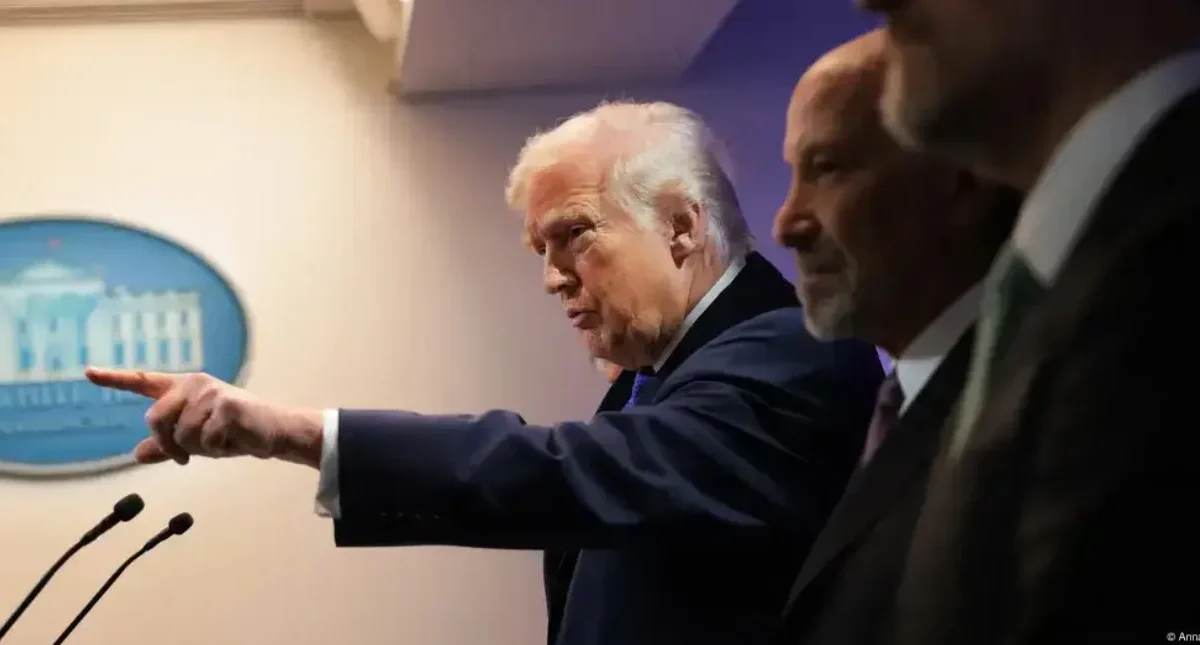
USTR Announces Up to 20% Tariffs on 14 Economies, China May Face 40%
The United States announced tariffs of up to 20 percent on 14 economies Wednesday, with Chinese imports potentially facing 40 percent duties.
The measures target China, Japan, the European Union, India, Bangladesh, Indonesia, South Korea, Malaysia, Singapore, Switzerland, Taiwan, Thailand, and Vietnam, according to the Office of the United States Trade Representative (USTR).
The Representante de Comercio de Estados Unidos announced this Wednesday (25.11.2026) new tariffs on fourteen economies, including China, Japan and the European Union, of up to 20 percent for tariff practices that it considers unfair and that unbalance the bilateral trade balance.
The administration of President Donald Trump justified the move by claiming that foreign subsidies and state support create industrial overcapacity that harms American manufacturers, as reported by El Confidencial. While the base tariff is set at 20 percent, USTR Jamieson Greer said that duties on Chinese products could rise to 40 percent if negotiations regarding a trade truce established last summer fail to produce results, La Prensa reported.
The block and the United States “share a real concern” over this phenomenon, “largely driven by States and concentrated in third countries,” recalled Olof Gill. The spokesperson asserted that the EU will continue “collaborating with the US Administration in the application of the EU-US Joint Declaration” and, in particular, “exploring new products for tariff exemptions or reductions and other possible areas of enhanced cooperation.”
For decades, foreign governments have created, sustained, or contributed to structural excess capacity and production by pursuing industrial strategies built on wage suppression, illegal subsidies, non-market inputs, and other market-distorting practices. Today, after lengthy… pic.twitter.com/UbaaF8tuhS
Implementation and Legal Framework
The proposed tariffs are not effective immediately. The USTR must first complete a formal process that includes public consultations and hearings, which Greer estimates will take approximately two months, according to DW. The administration is invoking Section 301 of the Trade Act of 1974 to support the action, a move intended to withstand potential legal challenges following previous court rulings against earlier tariff announcements, El Confidencial reported.
| Target Economy | Initial Tariff Rate | Potential Maximum Rate |
|---|---|---|
| China | Up to 20% | 40% |
| EU, Japan, and Others | Up to 20% | Varies by agreement |
Greer said that the proposed rates for allies like the EU, Japan, South Korea, and Taiwan are intended to remain in line with existing bilateral agreements, such as the 15 percent cap negotiated during meetings in Turnberry, Scotland, in August 2025, El Progreso reported. Mexico and Norway are currently excluded from the new wave of tariffs.
Greer explained on CNBC that these new tariffs are in line with bilateral trade agreements already reached, such as the 15% limit agreed with the EU, Japan, South Korea, or Taiwan, according to Elprogreso.
The tariffs will also affect allied economies such as those of the European Union, India, Japan, Singapore, and South Korea, while for the moment the United States has decided to exclude Mexico and Norway from the increase in levies.
Jamieson Greer brings extensive experience to his current role as United States Trade Representative, having served as chief of staff to the USTR from 2017 to 2020. During that tenure, he collaborated on key trade policies including the initiation of a trade war with China and the establishment of the United States–Mexico–Canada Agreement.
Additionally, Greer’s background includes service as an officer in the United States Air Force Judge Advocate General’s Corps, where he acted as the chief of military justice at Joint Base Balad in Iraq.

International Response and Disputed Claims
The European Union formally rejected the premise that the bloc contributes to structural overcapacity. "We firmly reject that idea," said Olof Gill, spokesperson for the European Commission, as noted by La Prensa.
Gill added that the EU is actually one of the regions most exposed to the effects of excess capacity from third countries, according to DW. "We firmly reject that idea," assured Olof Gill, spokesperson for the European Commission. The block of the 27 also expressed regret over "the lack of joint action."
Worth a look
- Trump’s Russian Diesel Agreement Aims to Stabilize U.S. Fuel Costs
- Poundland Enters Administration as Directors Blame Owner for Withholding Funds
- Tariffs Added 2.9 Points to Goods Inflation, About 0.6 to All Prices (daybreakwire.com)
- China, Russia, US Reaffirm Spheres of Influence at Shenzhen Summit Without New Global Order (archyde.com)