
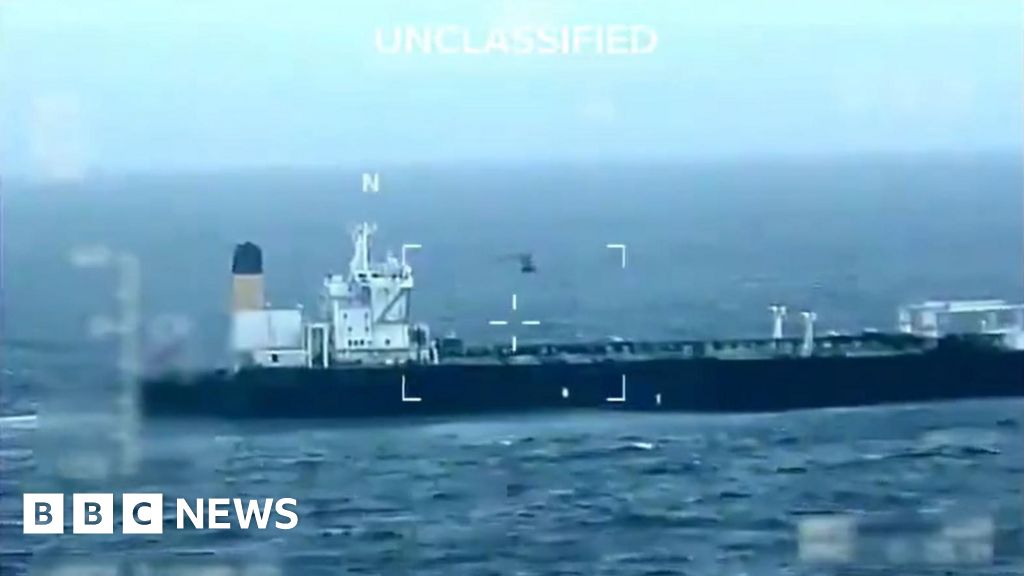
The United States is now at the center of a structural shift involving Venezuela’s oil‑export financing. the immediate implication is a heightened risk of maritime escalation that could constrain Venezuela’s revenue stream and reverberate through regional energy markets.
The Strategic Context
Venezuela’s economy has been dependent on oil exports for decades, with the state‑run PDVSA providing the bulk of fiscal revenue. International sanctions imposed after 2014 have forced Caracas to develop a “shadow fleet” that uses flag‑hopping and opaque ownership structures to evade restrictions. the United States,pursuing a policy of maximum pressure,has increasingly leveraged maritime interdiction as a tool to enforce sanctions,especially in the Caribbean where U.S. naval assets are proximate. This dynamic sits within broader trends: a multipolar contest over energy resources, the erosion of conventional sanction‑evasion norms, and a U.S. strategic focus on curbing illicit finance linked to narcotics‑related groups in the Western Hemisphere.
Core Analysis: Incentives & Constraints
Source Signals: The raw text confirms that the U.S. Coast Guard seized a Panamanian‑flagged tanker carrying PDVSA oil in international waters,marking the second seizure this month. The operation was publicly broadcast, the cargo was described as “sanctioned” and part of a “shadow fleet” used to fund the Maduro regime. venezuela has condemned the action as theft, announced intent to file a UN Security Council complaint, and framed the seizures as kidnapping. U.S.officials have reiterated a blockade policy and pledged continued interdictions.
WTN interpretation: The timing aligns with President Trump’s explicit ”blockade” directive, suggesting a shift from purely financial sanctions to kinetic enforcement. The United States leverages its naval superiority and legal authority under the International Maritime Organization to create a de‑facto exclusion zone, increasing the cost of illicit oil transport for Venezuela. Caracas, constrained by limited access to formal financing and a deteriorating domestic economy, relies on the shadow fleet to sustain cash flow; thus, interdictions directly target its fiscal lifeline. However, the U.S. faces constraints: congressional scrutiny over Caribbean strikes, the need to maintain legitimacy under international law, and the risk of provoking retaliatory actions from allied regional actors or non‑state actors. Venezuela’s limited diplomatic leverage means its primary recourse is multilateral protest, which carries modest weight given the prevailing U.S. influence in the hemisphere.
WTN Strategic Insight
“When a great power turns maritime interdiction into a sanction‑enforcement tool, it reshapes the economics of illicit oil flows as fundamentally as it does the diplomatic calculus of the targeted state.”
Future Outlook: Scenario Paths & Key Indicators
Baseline Path: If the United States maintains its current interdiction tempo and Congress does not curtail caribbean operations, Venezuela’s shadow‑fleet capacity will erode, forcing PDVSA to seek alternative, less efficient financing channels. Regional oil markets may see modest price support from reduced illicit supply, while diplomatic friction remains contained within the Western Hemisphere.
Risk Path: If congressional pressure forces a scaling back of U.S. maritime actions, or if Venezuela secures alternative logistical support (e.g., through allied non‑Western ports), the shadow fleet could rebound, restoring illicit oil flows. This could embolden Maduro’s regime, increase funding for illicit networks, and raise the probability of retaliatory asymmetric actions against U.S. assets in the region.
- Indicator 1: Upcoming U.S.congressional hearings on Caribbean maritime operations (scheduled within the next 90 days).
- Indicator 2: Any formal filing or vote by the UN Security Council concerning the seizures (expected agenda item within the next 4‑6 months).
- Indicator 3: Changes to the U.S. Treasury’s Specially Designated Nationals (SDN) list that would include the seized vessel’s owners or flag states.
- Indicator 4: reported movements of Venezuelan oil cargoes through alternative routes (e.g., via the gulf of Mexico or Caribbean islands) as tracked by satellite AIS data.
