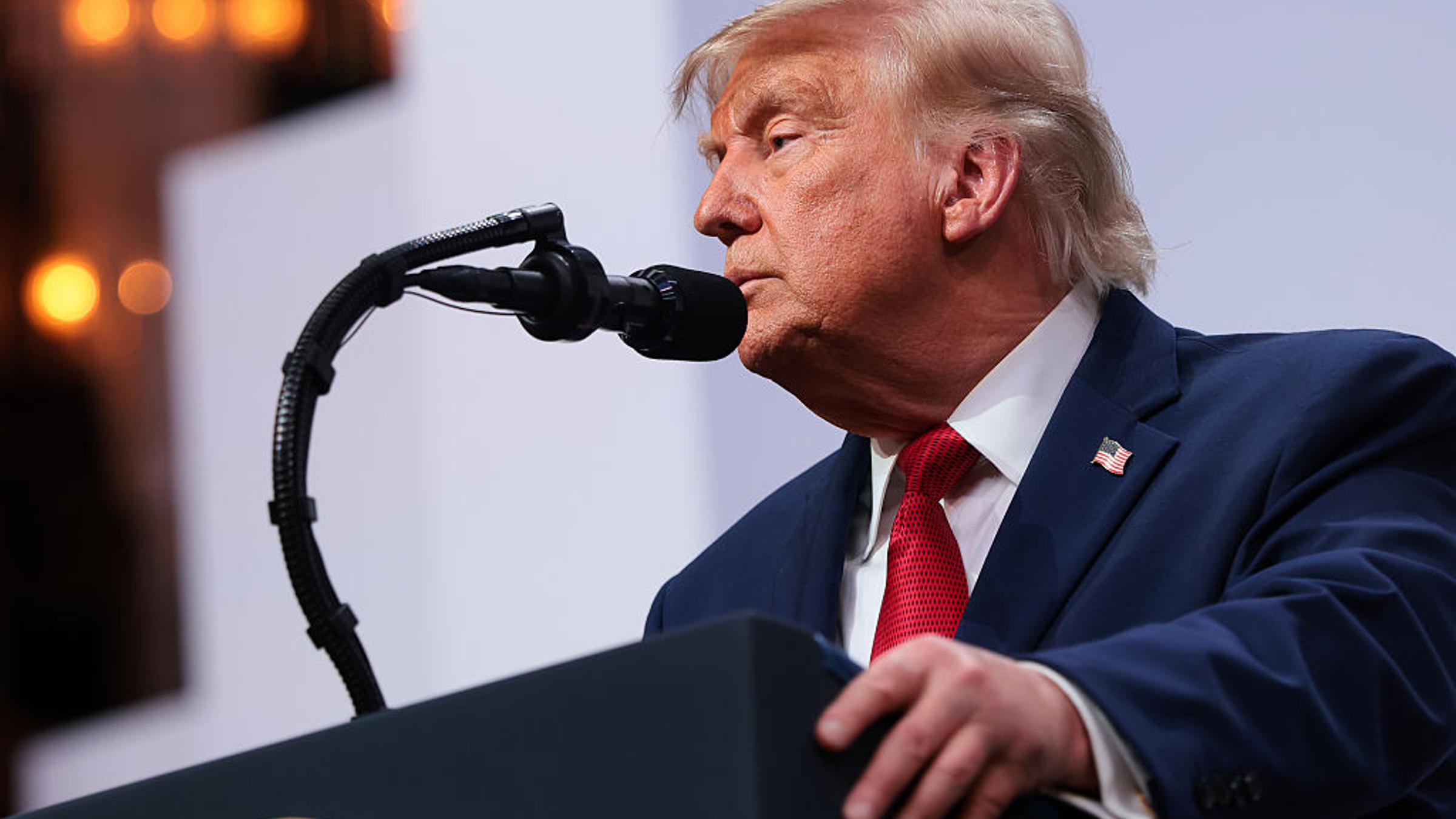
US President Trump Threatens to Restart War with Iran If Peace Deal Falls Apart
President Donald Trump threatened to resume bombing Iran if it fails to comply with a 14-point Memorandum of Understanding (MOU) signed at the G7 summit, citing a 60-day cease-fire framework to negotiate a nuclear deal. The agreement, set for formal signing in Switzerland, includes provisions for reopening the Strait of Hormuz and halting nuclear enrichment. Trump’s remarks, made June 17, 2026, mark a pivotal moment in Middle East diplomacy, with unresolved tensions in Lebanon and Israel-Hezbollah conflicts complicating the pact’s stability.
Trump’s Ultimatum: Bombing or Compliance?
Speaking at the G7 summit in France, Trump warned Iran that non-compliance with the MOU would trigger a return to military action. “We’ll go back to bombing,” he said, emphasizing that the deal’s terms—particularly the 60-day cease-fire—must be strictly followed. The President did not specify the “certain things” beyond the written framework that could trigger this threat, leaving analysts to speculate about unaddressed conditions.

The MOU outlines a commitment to “maintain the status quo” on Iran’s nuclear program, a clause experts say could be exploited. Hamidreza Azizi, a fellow at the German Institute for International and Security Affairs, noted that “the ambiguity of the status-quo language might lead to miscalculations.” Iran currently holds both highly-enriched and lower-enriched uranium, a stockpile that could serve as leverage if not addressed in the final agreement.
Strait of Hormuz and Economic Implications
The MOU’s focus on reopening the Strait of Hormuz—a critical global shipping lane—has drawn praise from G7 leaders. Trump claimed maritime traffic had “increased substantially,” though the U.S. Department of Energy reported a 12% rise in oil shipments through the strait as of June 2026. The agreement also mandates the “minimum methodology” for down-blending Iran’s enriched uranium, with IAEA inspectors monitoring the process.

Economists warn that the deal’s success hinges on resolving regional instability. The Strait of Hormuz, which handles 20% of global oil trade, saw a 40% drop in traffic during Iran’s 2024 closure. Reopening it could stabilize energy prices, but the $300 billion development fund for Iran’s reconstruction remains conditional on meeting “final deal” commitments. “This is a high-stakes gamble,” said Dr. Amina Khalid, a Middle East economist at the London School of Economics. “If Iran fails to comply, the economic ripple effects could devastate global markets.”
Lebanon’s Role in the Broader Conflict
The MOU’s provision to end military operations “on all fronts, including Lebanon” has raised concerns about Israel’s ongoing war with Hezbollah. Despite Trump’s call for a “softer touch,” Israeli Prime Minister Benjamin Netanyahu has refused to withdraw from southern Lebanon, citing security threats. The U.S. State Department confirmed that Lebanon’s President Joseph Aoun will visit Washington this month to discuss the truce, but his office has not commented on the specifics of the agreement.
Since March 2026, Israeli strikes in Lebanon have killed 3,783 and injured 11,699, according to the country’s Health Ministry. Local officials in Beirut, including Mayor Marwan Abboud, have criticized the lack of U.S. pressure on Israel. “The deal is a step forward, but without addressing Lebanon’s safety, it’s incomplete,” Abboud said. “We need [Relevant Service/Organization Type] to mediate between the U.S. and Israel to prevent further civilian casualties.”
Legal and Diplomatic Challenges
The MOU’s legal framework faces scrutiny from international law experts. The agreement’s ninth point, which mandates a “status quo” on Iran’s nuclear program, conflicts with the 2015 Joint Comprehensive Plan of Action (JCPOA), which required Iran to dismantle its enrichment infrastructure. “This is a regression,” said Professor Laura Chen of Yale Law School. “The lack of enforceable mechanisms increases the risk of renewed hostilities.”
Trump’s mention of “cameras on every inch” of Iran’s nuclear facilities aims to deter cheating, but the plan relies on U.S. and IAEA surveillance. The U.S. has already deployed Patriot missile systems near Iran’s borders, a move criticized by the United Nations as “provocative.” The IAEA’s Director-General, Rafael Grossi, stated that “transparency is critical, but so is mutual trust.”
Directory Bridge: Navigating the Fallout
The agreement’s ambiguity underscores the need for specialized legal and diplomatic services. [Relevant Service/Organization Type] in Geneva are already advising clients on compliance with the MOU’s terms, while [Relevant Service/Organization Type] in Washington are monitoring U.S.-Iran sanctions. For regions like Lebanon, [Relevant Service/Organization Type] are preparing for potential escalations, citing the 2024 Beirut port explosion as a cautionary example.

Energy companies reliant on the Strait of Hormuz, such as Saudi Aramco and BP, are consulting [Relevant Service/Organization Type] to assess supply chain risks. “This deal is a fragile peace,” said Michael Torres, a risk analyst at McKinsey & Company. “Our clients need [Relevant Service/Organization Type] to navigate the uncertainty.”
What Happens Next?
The MOU’s success depends on Iran’s adherence to its terms and the U.S.’s ability to manage regional allies. Trump’s threat to resume bombing, while vague, signals a willingness to escalate if negotiations falter. With the Strait of Hormuz’s reopening and the $300 billion fund dangling as incentives, the pressure on Iran is immense.
As the June 20, 2026, signing date approaches, the world watches. “This is a moment of reckoning,” said Azizi. “If the deal holds, it could redefine Middle East geopolitics. If not, the consequences will be dire.”