
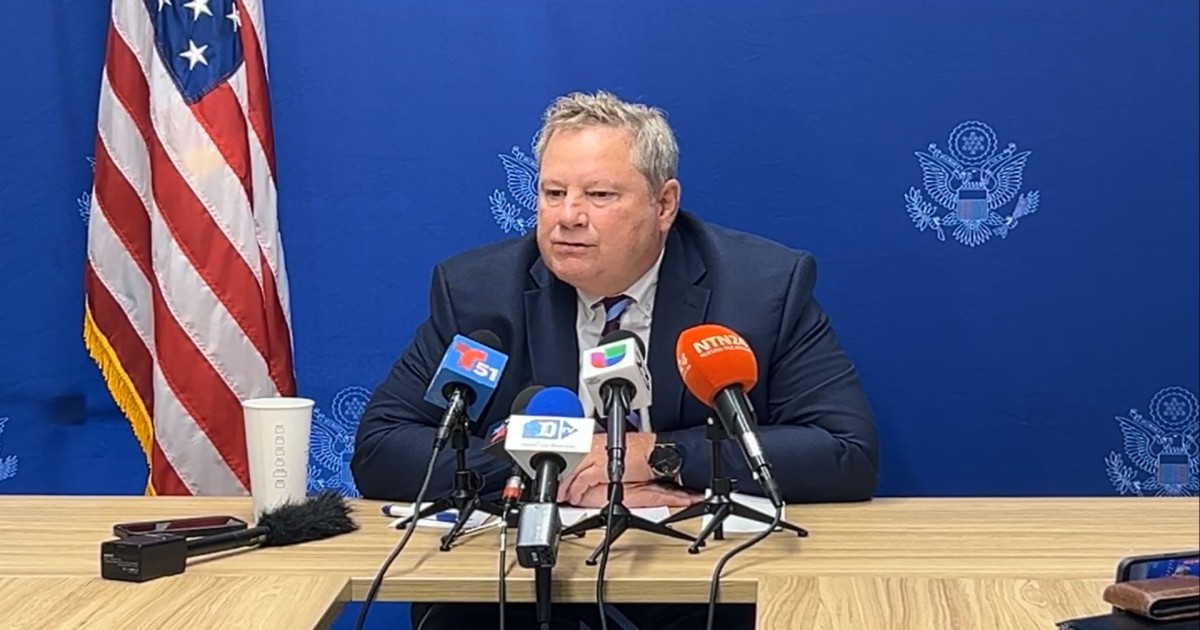
The United States’ top diplomat in Cuba, Mike Hammer, signaled Tuesday the possibility of a political transition on the island, revealing ongoing conversations with high-ranking members of the Cuban government although suggesting some officials within the regime may be unaware of these contacts. Hammer’s remarks, made during an interview with Telemundo in Miami, come as Washington continues to assess the stability of the Cuban government amid deepening economic hardship.
“Obviously there are conversations with some exceptionally high within the regime. Others won’t be aware,” Hammer stated, according to a translation of the interview. He alluded to the existence of a figure within the Cuban government comparable to Delcy Rodríguez, the vice president of Venezuela, without naming the individual. “Yes, there is a Delcy Rodríguez,” he confirmed when pressed by the interviewer.
These statements align with recent comments from former President Donald Trump, who has twice in recent months indicated that dialogue with Havana is underway and that announcements are forthcoming. However, the Cuban government has consistently denied any negotiations beyond routine exchanges regarding migration and drug trafficking, as recently affirmed by Vice Foreign Minister Carlos Fernández de Cossío. Cossío asserted that any discussions must be based on “mutual respect” and dismissed claims of internal divisions as “malicious,” according to reports from EFE news agency.
Hammer indicated that the U.S. Has a contingency plan should current diplomatic efforts stall. “If it doesn’t advance in weeks, there will be a plan B,” he warned, drawing a parallel to the situation in Venezuela, where a similar approach preceded the political shift there. He declined to specify a timeline, but pointed to 2026 as a potential horizon for change.
The U.S. Diplomat described a rapidly deteriorating quality of life in Cuba, citing a collapsing energy infrastructure, declining tourism, and increasing insecurity. “The Cuban revolution has failed,” Hammer asserted, stating that citizens he has spoken with across several provinces express a similar sentiment. He noted widespread shortages, including difficulties in distributing goods due to a lack of fuel, despite the absence of restrictions on food and medicine imports under the U.S. Embargo. According to Hammer, resources are being diverted to “a repressive machine of the State,” with fuel and vehicles allocated to law enforcement while the general population struggles with electricity and transportation.
Hammer rejected the notion that the current crisis is a direct result of policies implemented by the Trump administration, including recent tariffs on countries supplying oil to Cuba. He maintained that the deterioration predates these measures. He emphasized that the U.S. Priority is a peaceful resolution, stating, “No one wants to see bloodshed, but it is very important that a change takes place,” and called on the international community to support this process.
Hammer likewise highlighted the potential for reconstruction and investment in a democratic Cuba, envisioning support from Cuban expatriates and foreign investors. He estimated that rebuilding the country’s electrical system alone would require $10 billion, a significant undertaking given Cuba’s limited natural resources. He acknowledged facing acts of protest during his time in Cuba, but also noted expressions of support from citizens seeking assistance.
“Anyone within the leadership… knows that This represents coming to an end,” Hammer concluded, reiterating the U.S.’s commitment to supporting the Cuban people without legitimizing the current regime. The U.S. State Department has not commented on the specifics of Hammer’s remarks as of Wednesday afternoon.
