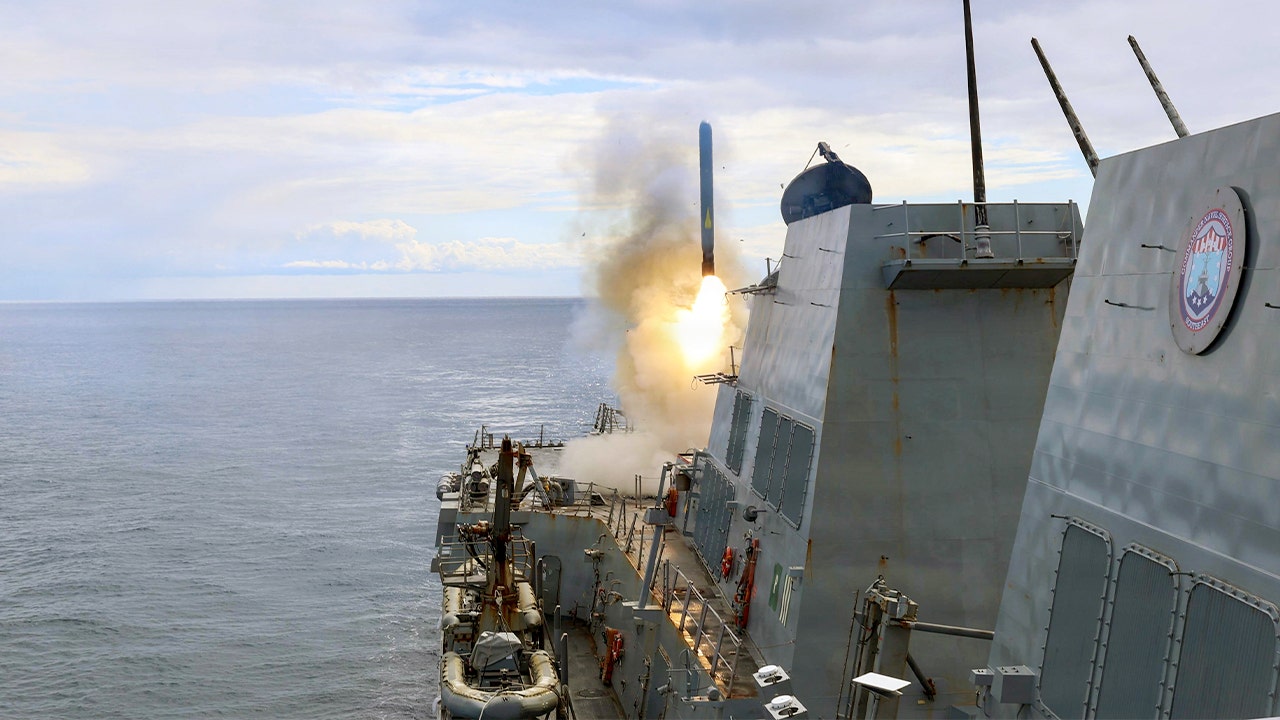
US Navy Awards Raytheon $22.9 Billion Contract to Boost Tomahawk Missile Production
On August 17, 2026, the U.S. Navy awarded Raytheon a $22.9 billion seven-year contract to accelerate production of Tomahawk missiles. Announced by the Department of War, the deal aims to rebuild depleted high-tech weapons inventories resulting from global military operations, including the Iran conflict, while expanding long-range strike capabilities to deter aggression from China.
Industrial Expansion and the Seven-Year Tomahawk Production Scaling
The agreement firms up a framework agreement originally signed in February between the military and RTX unit Raytheon, according to reporting by Reuters. Under the terms of the deal, manufacturing output will surge. Raytheon currently produces 60 Tomahawk missiles annually, but the contract will allow the defense contractor to increase annual production to more than 1,000 missiles, according to a statement from Raytheon.
President Donald Trump’s administration is currently negotiating extended agreements with major American defense contractors, assuring these firms that they can safely inject billions of dollars into fresh machinery and facilities. Under Secretary of War for Acquisition and Sustainment Michael Duffey emphasized the urgency of the scale-up in an official statement, noting that RTX answered the call to expand munitions capacity to increase the ability to equip the Joint Force.
Acting Secretary of the Navy Hung Cao reinforced that sentiment publicly, highlighting the critical nature of the procurement. Cao noted that the investment will accelerate Tomahawk missile delivery to warfighters at unprecedented speed to deter aggression and protect the homeland. The sea-launched Tomahawk serves as a mainstay of the Navy’s surface fleet, offering precision strike capabilities against land targets from ships and submarines positioned hundreds of miles away.
Weapons Stockpile Debate and Broader Defense Logistics
The injection of federal capital into Raytheon’s manufacturing lines arrives amid concerns over the strain the Iran conflict might be placing on U.S. weapons stockpiles. Questions have mounted over whether munitions usage threatens readiness for China aggression.

President Donald Trump dismissed concerns over supply chain exhaustion during an exclusive phone interview with Fox News’ Trey Yingst on August 17, 2026. Describing current munitions usage as “peanuts,” Trump asserted that the country has “a lot of mid-level weapons.”
To mitigate these supply chain bottlenecks, the Department of War has instituted an Acquisition Transformation Strategy. This initiative is aimed at accelerating weapons deliveries and reducing procurement lead times. Beyond the Tomahawk deal, the military signed deals earlier this month to ramp up production of Patriot and THAAD interceptor missile parts, as detailed by Reuters reporting.
Economic and Regional Impacts on Defense Manufacturing Hubs
By providing RTX with this $22.9 billion allocation, the agreement aims to furnish the corporation with the necessary stability to scale up its workforce, boost production figures, and fortify supply chains while expediting shipments of the long-range cruise missile to American military personnel.
As Raytheon prepares to scale operations over the seven-year lifecycle of the contract, the broader defense apparatus faces the ongoing challenge of balancing active-duty operational demands with long-term industrial readiness. The success of this multi-year procurement framework will ultimately dictate whether the United States can successfully rebuild its strategic arsenals without straining the domestic industrial workforce or compromising deterrence postures abroad.