US Life Expectancy vs. Comparable Wealthy Nations: 2024 Analysis
The United States has reached a historic milestone in public health, with life expectancy at birth hitting an all-time high in 2024. While this recovery signals a critical rebound from the volatility of the early 2020s, a stark epidemiological gap persists when comparing American longevity to that of other wealthy, industrialized nations.
Key Clinical Takeaways:
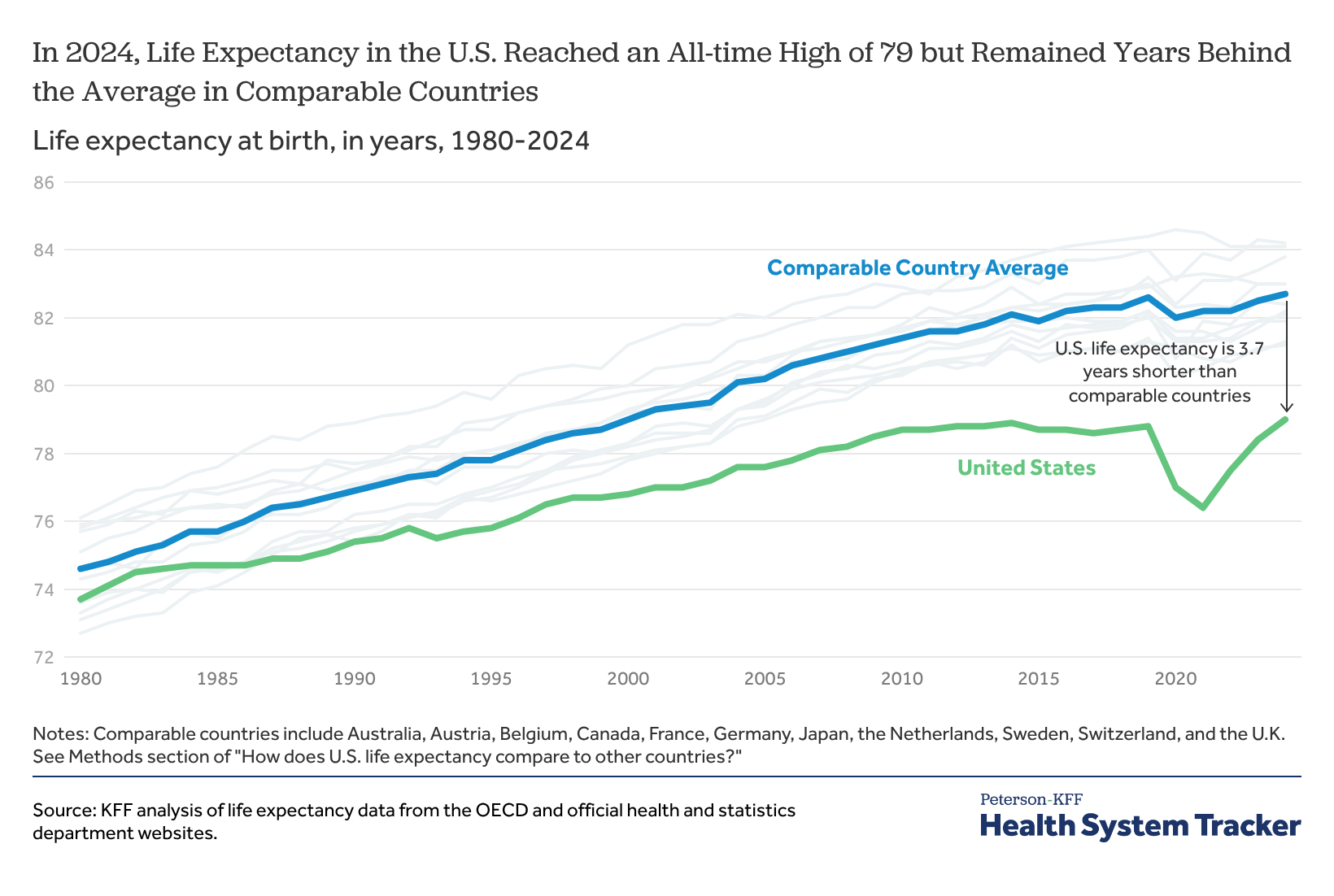
- U.S. Life expectancy rose to 79.0 years in 2024, a 0.6-year increase from 2023 and the highest level recorded since 1900.
- Despite this record, a significant “longevity gap” remains, with comparable wealthy nations averaging a life expectancy of 82.7 years—3.7 years longer than the U.S. Average.
- The recent upward trend is primarily attributed to a decline in mortality rates associated with the COVID-19 pandemic and a reduction in deaths resulting from drug overdoses.
The latest data from the National Center for Health Statistics (NCHS), a division of the Centers for Disease Control and Prevention (CDC), reveals a complex picture of American health. The reported increase to 79.0 years represents more than just a statistical fluctuation. it is a recovery of the nation’s baseline health after years of unprecedented morbidity. This research, funded through federal appropriations for the CDC and NCHS, utilizes comprehensive mortality data tables to track the trajectory of the U.S. Population. For clinicians and public health administrators, these figures highlight a critical transition from pandemic-era crisis management to a focus on chronic disease and systemic health disparities.
The Mechanics of the 2024 Longevity Surge
Analyzing the shift from 78.4 years in 2023 to 79.0 years in 2024 requires an understanding of the specific drivers of mortality. The surge is not the result of a single medical breakthrough but rather the cumulative effect of declining death rates in two primary categories: viral respiratory infections and substance abuse. As the population achieved greater stability following the COVID-19 pandemic and interventions in the opioid crisis began to show measurable impact, the aggregate life expectancy shifted upward.
“We seem to have rebounded from the pandemic. This may just signal that we’re back to some semblance of normal post-pandemic.” — Robert Anderson, Chief of the Statistical Analysis and Surveillance Branch, NCHS.
The gender-specific data further illuminates the current state of U.S. Health. Life expectancy for females stands at 81.4 years, while males lag significantly at 76.5 years. This 4.9-year disparity underscores the differential impact of cardiovascular disease, occupational hazards, and behavioral health risks across genders. Addressing these variances requires targeted intervention through preventative care clinics that prioritize gender-specific screening and early diagnostic protocols.
Analyzing the Global Longevity Gap
While the domestic record is cause for optimism, the comparative data is sobering. The average life expectancy in comparable wealthy nations is 82.7 years. This 3.7-year deficit suggests that the U.S. Is not merely recovering from a pandemic but is struggling with systemic issues that affect long-term survival. When comparing the U.S. To other high-income countries, the difference often stems from disparities in healthcare access, the prevalence of chronic comorbidities, and the socioeconomic determinants of health.
“We should celebrate. It’s very encouraging to see that mortality is declining and life expectancy is increasing in the United States.” — Ali Mokdad, Epidemiologist at the University of Washington.
Despite the celebration, experts like Dr. Mokdad emphasize that significant disparities remain. The “standard of care” in the U.S. Often focuses on tertiary, high-cost interventions rather than the primary prevention models seen in other wealthy nations. This systemic gap often leads to higher rates of preventable morbidity. To bridge this divide, there is an urgent require for integrated care models. Patients struggling with the very factors that depress U.S. Life expectancy—such as chronic substance use disorders—should be triaged immediately to board-certified addiction specialists to mitigate the risk of premature mortality.
Clinical Implications and Future Trajectories
The trajectory of U.S. Life expectancy is a lagging indicator of the nation’s overall health infrastructure. The fact that the 2024 peak surpasses the previous 2019 high suggests that the U.S. Has not only recovered lost ground but has established a new ceiling. But, the persistence of the 3.7-year gap compared to peer nations indicates that the U.S. Has yet to solve the underlying pathogenesis of its public health crisis. Factors such as metabolic syndrome, obesity-related comorbidities, and inadequate primary care coverage continue to act as anchors on the national average.

For healthcare providers, the focus must now shift toward personalized longevity medicine. The ability to increase the average life expectancy further depends on moving beyond the “one size fits all” approach. This involves leveraging longitudinal data to identify high-risk cohorts and implementing aggressive early-intervention strategies. Organizations tasked with managing large-scale health populations are increasingly relying on healthcare compliance attorneys to navigate the regulatory complexities of implementing new, data-driven population health initiatives while adhering to strict privacy and medical guidelines.
The recovery seen in 2024 is a victory for public health resilience, but it is not a final destination. The goal for the coming decade is not simply to return to “normal,” but to close the gap with other wealthy nations by addressing the root causes of premature death. By integrating advanced diagnostic screenings and expanding access to specialized care, the U.S. Can move toward a future where a record-high life expectancy is the floor, not the ceiling. Finding the right team of vetted professionals is the first step in this journey toward optimized health and longevity.
For more detailed epidemiological data, clinicians can refer to the CDC FastStats portal, the World Health Organization, or peer-reviewed longitudinal studies available via PubMed.
Disclaimer: The information provided in this article is for educational and scientific communication purposes only and does not constitute medical advice. Always consult with a qualified healthcare provider regarding any medical condition, diagnosis, or treatment plan.