
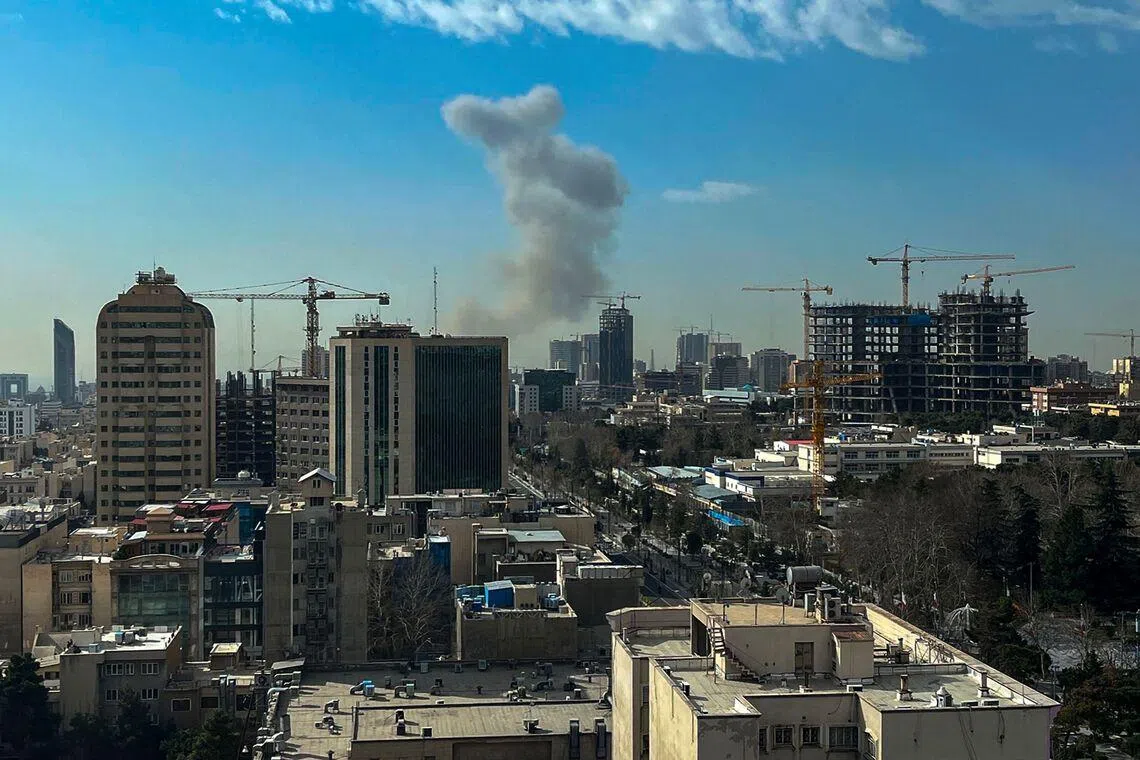
The United States and Israel launched coordinated military strikes against Iran on Saturday, February 28, 2026, targeting Iranian leadership and infrastructure in a move that dramatically escalated tensions across the Middle East. The attacks, dubbed “Operation Epic Fury” by the Pentagon, prompted immediate retaliatory strikes from Tehran against Israel and U.S. Allies in the Gulf region.
The strikes began with attacks on Iranian officials, according to a source familiar with the matter. Israeli officials stated that Supreme Leader Ali Khamenei and President Masoud Pezeshkian were among the targets, though the extent of any impact on those leaders remained unconfirmed. Iran’s Defence Minister Amir Nasirzadeh and Revolutionary Guards commander Mohammed Pakpour were reported killed in the Israeli attacks, according to three sources with knowledge of the situation.
Tehran responded swiftly, launching missiles toward Israel and several Gulf Arab nations hosting American military bases. Explosions were reported in Abu Dhabi and Dubai in the United Arab Emirates, and Bahrain confirmed a missile attack targeting the service center of the U.S. Fifth Fleet. Qatar stated it intercepted and downed missiles targeting the country, asserting its right to respond. Kuwait similarly confirmed a missile attack on a U.S. Military base within its borders. Iranian state television reported that the initial retaliatory strikes utilized “scrap missiles,” with a promise of more advanced weaponry to be unveiled soon.
U.S. Air defenses intercepted a drone over a military base near Erbil, Iraq, according to reports. Kataib Hezbollah, an Iran-aligned armed group in Iraq, announced its intention to attack U.S. Bases in the region in the coming days.
President Donald Trump, in a video message, defended the joint operation as necessary to address decades of conflict with Iran, referencing the 1979 seizure of the U.S. Embassy in Tehran and subsequent attacks attributed to Iran. He stated the operation aimed to prevent Iran from acquiring a nuclear weapon and to “eliminate imminent threats from the Iranian regime,” urging Iranians to “stay sheltered” and, following the military action, to “seize over your government.”
Israeli Prime Minister Benjamin Netanyahu echoed this sentiment, asserting the attacks would “create the conditions for the brave Iranian people to take their destiny into their own hands” and “remove the yoke of tyranny.” Israeli Defence Minister Israel Katz characterized the operation as a pre-emptive strike to neutralize threats against Israel.
The attacks occurred after indirect talks mediated by Oman earlier in the week failed to yield a breakthrough regarding Iran’s nuclear program. The strikes also follow a period of heightened domestic unrest in Iran, stemming from mass anti-government demonstrations in January that were met with a forceful crackdown by Iranian authorities. Protests resumed in recent days, commemorating those killed during the January unrest.
Oil markets are closely monitoring the situation, with analysts at Rystad Energy suggesting that Brent crude could rise by $10 to $20 per barrel if de-escalation is not evident over the weekend. Iran is the third-largest producer within the Organization of the Petroleum Exporting Countries, accounting for approximately 4.5 percent of global oil supplies, and a significant portion of global oil shipments transit through the Strait of Hormuz near its coast.
Saudi Arabia’s Crown Prince Mohammed bin Salman discussed the Iranian attacks with UAE President Sheikh Mohammed bin Zayed Al Nahyan, expressing solidarity with the UAE, according to the UAE state news agency.
Singapore’s Ministry of Foreign Affairs expressed regret over the failure of negotiations and advised Singaporeans to defer travel to Israel, Iran, and the wider Middle East region, citing the volatile security situation and disruptions to air travel.
Iran’s Revolutionary Guards stated that all U.S. Bases and interests in the region are within its reach and that retaliation would continue until “the enemy is decisively defeated.”
