US-Israel-Iran War: Latest News and Middle East Updates
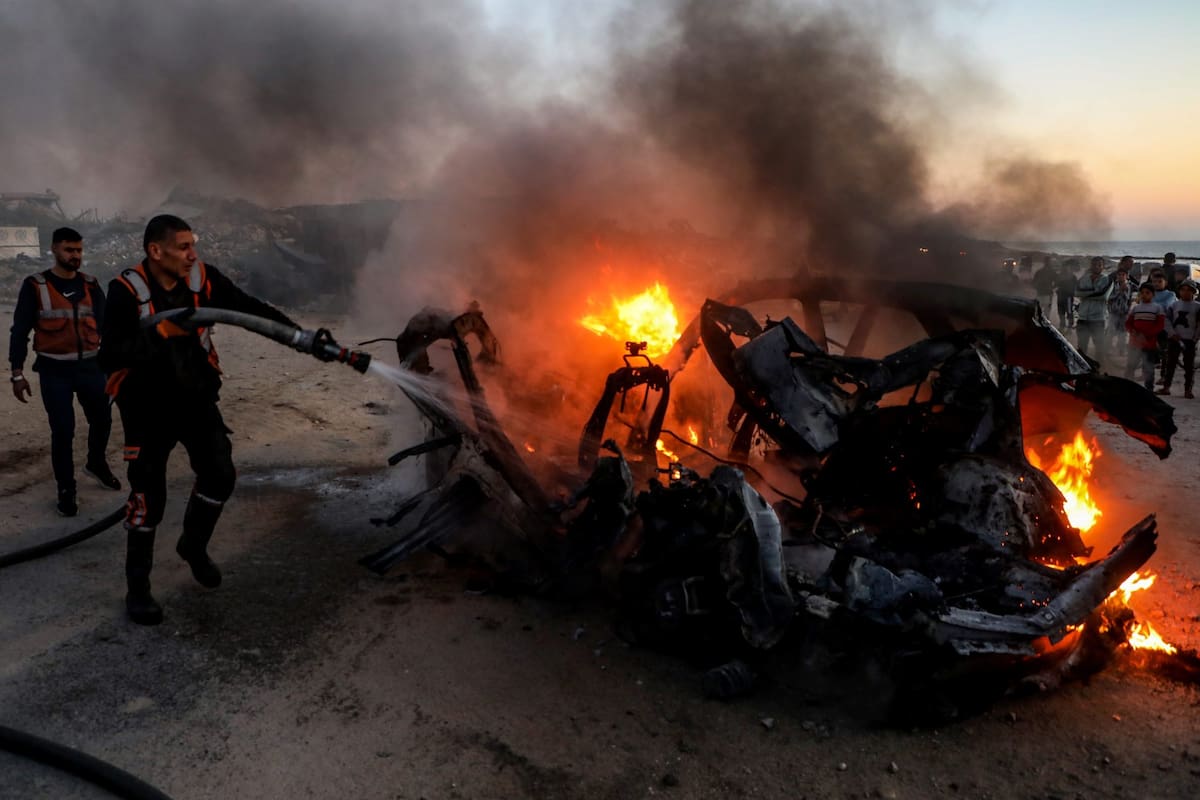
On the 49th day of the escalating conflict between the United States, Israel, and Iran, regional stability hangs in the balance as naval skirmishes in the Strait of Hormuz intensify, disrupting global oil flows and triggering urgent recalibrations across energy markets, supply chains, and defense postures. What began as targeted strikes has evolved into a protracted proxy confrontation with far-reaching implications for global trade, regional alliances, and the strategic calculus of powers from Beijing to Brussels. The crisis now tests the resilience of international institutions and exposes vulnerabilities in interconnected economic systems.
The Strait of Hormuz, through which approximately 20% of the world’s oil supply passes daily, has become a flashpoint as Iranian naval forces increase intermittent closures and mine-laying operations, prompting escorted convoys by U.S. Fifth Fleet vessels. This directly threatens just-in-time energy delivery to Asia’s industrial hubs—particularly Japan, South Korea, and China—where refineries operate on minimal inventories. Any sustained disruption risks cascading into manufacturing slowdowns, inflationary pressure on petrochemical feedstocks, and renewed volatility in global benchmark crudes like Brent and WTI.
Historical context deepens the urgency: the 1980s Tanker War during the Iran-Iraq conflict saw similar disruptions, but today’s stakes are amplified by China’s reliance on Gulf oil for over 40% of its imports and India’s growing dependence as it diversifies away from Russian supplies. Unlike past episodes, current tensions unfold amid a fragmented global order, with BRICS nations advocating for alternative payment mechanisms in local currencies, challenging the petrodollar system’s dominance.
“We are witnessing the erosion of maritime norms that have governed Gulf transit since the 1988 ceasefire. When chokepoints become bargaining chips, the cost isn’t just in higher premiums—it’s in the fracturing of trust that underpins global just-in-time logistics.”
The economic ripple extends beyond energy. Containerized trade through the Suez Canal—already strained by Red Sea Houthi attacks—faces compounded risk if Hormuz closures force longer detours around the Cape of Good Hope, adding 10–14 days to Asia-Europe routes. This impacts not only oil but also electronics, pharmaceuticals, and automotive supply chains, where delays amplify working capital costs and inventory buffers.
In response, multinational corporations are accelerating nearshoring and friend-shoring strategies, particularly in sectors like semiconductors and rare earth processing. Simultaneously, demand is surging for specialized risk mitigation services. Firms with exposure to Gulf-dependent operations are increasingly consulting global political risk consultants to model escalation scenarios and supply chain resilience advisors to reroute freight through alternative corridors such as the International North–South Transport Corridor (INSTC) or emerging Arctic routes.
Diplomatically, the conflict has exposed fractures within traditional alliances. Even as the U.S. Maintains its commitment to Israel’s security, European allies express growing concern over being drawn into a conflict not of their making, particularly as energy prices strain household budgets across the EU. Meanwhile, Russia and China have deepened coordination with Iran, framing U.S. Actions as hegemonic overreach—though both avoid direct military involvement, preferring to leverage the crisis for diplomatic gains in forums like the Shanghai Cooperation Organisation.
Financial markets reflect the unease. Sovereign wealth funds in Singapore and Abu Dhabi are rebalancing portfolios away from Gulf equities, while commodity traders report widening spreads in forward freight agreements (FFAs) for VLCCs. The World Bank has warned that prolonged Gulf instability could shave 0.5–0.8% off global GDP growth in 2026, disproportionately affecting emerging markets reliant on energy imports.
“The real danger isn’t a single battle—it’s the normalization of using maritime chokepoints as levers in great-power competition. Once that precedent sets, no trade route is safe.”
Looking ahead, the conflict’s resolution will likely hinge not on battlefield outcomes but on backchannel negotiations involving Oman and Qatar, historic mediators in Gulf disputes. Any durable de-escalation must address Iran’s security concerns, Israel’s deterrence requirements, and the U.S. Need to preserve freedom of navigation—all while preserving the credibility of international maritime law.
For global enterprises navigating this volatility, the imperative is clear: build adaptive strategies grounded in real-time intelligence, diversify transit dependencies, and engage expert partners who understand the intersection of geopolitics and commerce. In an era where conflict zones dictate commodity prices and alliance shifts rewrite trade rules, the right advisory support isn’t optional—it’s existential. Visit the global professional services directory to connect with vetted specialists in risk analysis, trade compliance, and logistics resilience equipped to steer operations through uncertainty.