
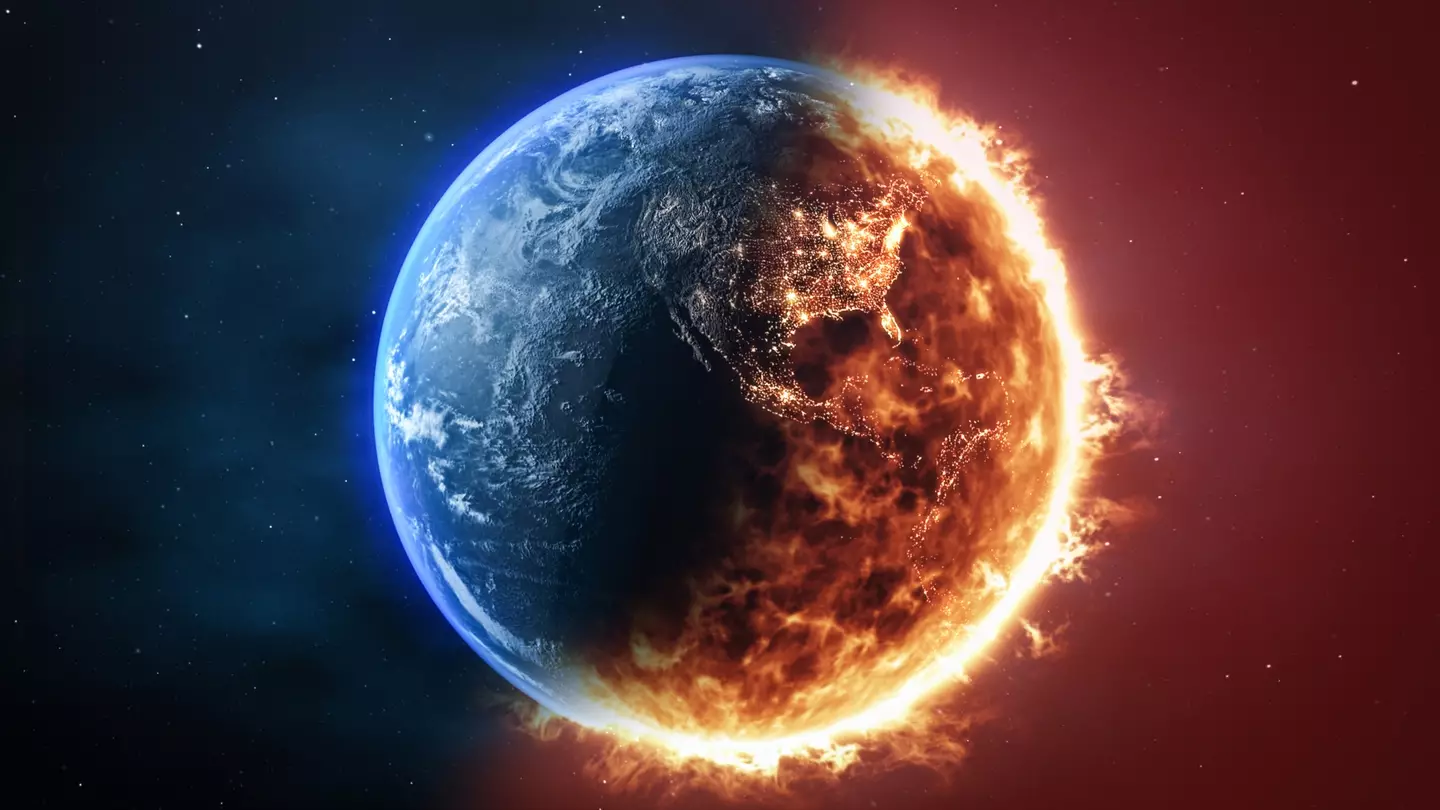
Earth’s Biosphere Faces Extinction in Approximately One Billion years, Supercomputer Analysis Predicts
WASHINGTON D.C. – A collaborative study utilizing a NASA supercomputer and led by researchers in Japan has determined the Earth’s biosphere – all life on the planet – will likely become uninhabitable in roughly one billion years due to the Sun’s increasing luminosity. The findings, published recently, considerably revise previous estimates of Earth’s remaining lifespan.
While the planet won’t face immediate peril, the research underscores the long-term, unavoidable consequences of stellar evolution and its impact on planetary habitability. The study’s implications extend beyond Earth, informing the search for life elsewhere in the universe and refining models used to assess the potential longevity of habitable zones around other stars. This prediction isn’t a sudden catastrophe, but a gradual decline in conditions necessary for life as we know it.
Kazumi Ozaki, the study’s lead author, explained that prior estimates suggested Earth could sustain life for around two billion years. Though, more complex modeling, accounting for the Sun’s projected brightening, has effectively halved that timeframe. “For many years, the lifespan of Earth’s biosphere has been discussed based on the steady brightening of the Sun,” Ozaki stated.
The core issue is the increasing solar radiation. As the sun ages, it will grow hotter and brighter, leading to a runaway greenhouse effect. This will cause Earth’s oceans to evaporate, ultimately depleting atmospheric oxygen levels. “If true,” Ozaki wrote, “one can expect atmospheric O₂ levels will also eventually decrease in the distant future.”
The research indicates that within approximately one billion years, the oxygen levels will fall to a point where complex life – anything requiring oxygen to survive – will no longer be viable. This doesn’t mean the Earth will be destroyed, but rather transformed into a drastically different, uninhabitable world.
