
US and Denmark Reach Historic Agreement on Greenland Military Presence
President Trump announced that the United States has reached an agreement with Denmark to expand the U.S. military presence in Greenland. The pact grants the U.S. permanent security control over the autonomous Danish territory while keeping the island under Danish sovereignty, following months of behind-the-scenes negotiations among U.S., Danish, and Greenlandic officials.
The Path to a Strategic Arctic Accord
The announcement follows months of intense diplomatic friction. Earlier, President Trump had openly called on Denmark to sell the vast, mineral-rich island, repeatedly declining to rule out military acquisition to counter perceived security threats from Russia and China. Those initial demands provoked sharp pushback from European allies, Greenlandic leaders, and Danish officials, who insisted the territory was not for sale.
Behind the public rhetoric, however, quiet diplomacy took shape. Officials from the United States, Greenland, and Denmark spent months negotiating solutions to address American defense priorities without violating regional sovereignty. The breakthrough culminates a turbulent period of foreign policy maneuvering for the White House, coming as the administration simultaneously managed military operations in Venezuela and a six-month conflict with Iran.
For lawmakers in Washington, the announcement provides a tangible foreign policy milestone just ahead of midterm elections. The protracted conflict with Iran has heavily strained congressional margins, making diplomatic wins vital for the administration’s domestic standing.
Terms of the Pact and Security Guarantees
Under the emerging framework, the United States will immediately begin the process of enlarging its military footprint on the island. A State Department official, speaking anonymously, confirmed the agreement bans any non-NATO military bases in Greenland. Furthermore, the pact restricts adversarial investments and explicitly bars both China and Russia from establishing a foothold on the territory.
Secretary of State Marco Rubio praised the agreement as a historic milestone for North American defense. Greenland will permanently form part of the strategic defense perimeter of North America, keeping adversaries entirely outside the surrounding region.
Local leaders emphasized that the terms respect local governance. The office of Danish Prime Minister Mette Frederiksen noted that the formal agreement will be signed next week during the United Nations General Assembly. However, the accord still requires formal parliamentary action by both the Danish Parliament and the Greenlandic legislature before it achieves full legal enforcement.
Prime Minister Frederiksen stated that the agreement explicitly recognizes the sovereignty and territorial integrity of Greenland and Denmark while upholding the right of both populations to self-determination. Greenland Prime Minister Jens-Frederik Nielsen added that the deal protects local interests and provides mutual benefits for all three participating governments.
Geopolitical Realities and Local Infrastructure Impact
Managing large-scale military expansion in an Arctic environment with roughly 56,000 residents presents immense logistical hurdles.
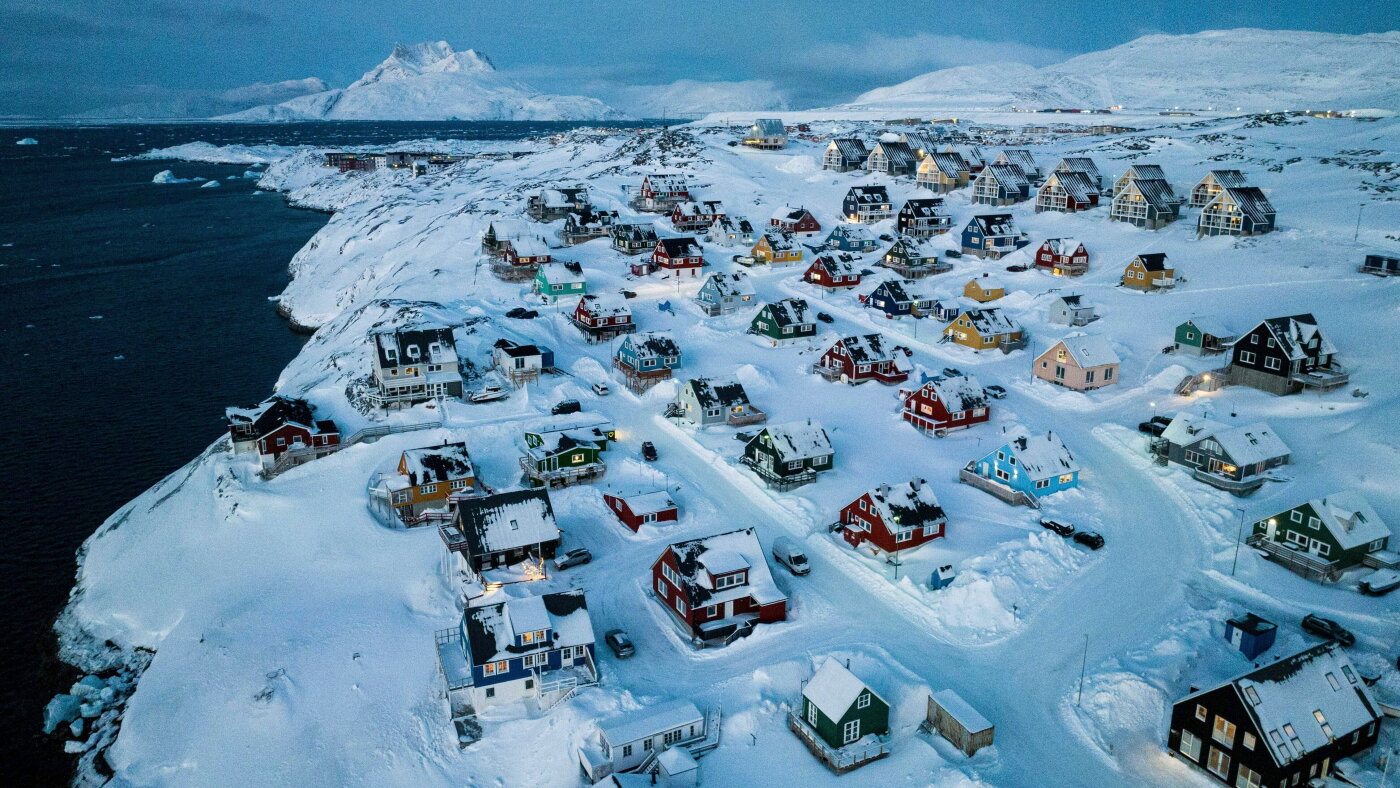
While the U.S. government views the island as an indispensable buffer against northern threats, regional stakeholders remain focused on ensuring that economic development and defense upgrades align with local self-determination.
As the United Nations General Assembly approaches next week, attention turns to Copenhagen and Nuuk, where lawmakers will review the final text. The outcome of those parliamentary votes will determine how quickly the permanent security framework transitions from a diplomatic announcement into concrete Arctic infrastructure.