Ukraine War: 4 Years of Military Revolution & Lessons for Future Conflicts
On February 22, 2026, the Idaho Army National Guard concluded a series of field training exercises at the Orchard Combat Training Center, marking the first firing of a Javelin portable anti-tank missile by soldiers from Charlie Company, 2-116th Combined Arms Battalion, 116th Cavalry Brigade Combat Team. The event, while routine in its execution, arrives as the four-year mark of the full-scale invasion of Ukraine prompts a reassessment of modern warfare, with analysts increasingly drawing parallels to past conflicts, notably Vietnam.
The Ukraine war, now entering its fifth year, has fundamentally altered military tactics and weapons development more profoundly than any conflict since the Second World War. Unlike previous engagements – Israel’s successes in 1956, 1967, and 1973 relied on established WWII-era strategies, and lessons from Vietnam and Afghanistan were largely rooted in earlier guerrilla warfare traditions – the conflict in Ukraine is being fought with comparable weaponry, training, and troop numbers on both sides, offering a unique testing ground for modern military doctrine.
Initial Russian miscalculations, stemming from flawed intelligence and a dismissive assessment of Ukrainian resolve, mirrored historical failures. The underestimation of President Volodymyr Zelensky and the belief in a swift Ukrainian collapse echoed the British defeat at Isandlwana in 1879, a lesson highlighted in a satirical Punch magazine cartoon urging commanders not to “despise your enemy.” The failure to secure Kyiv and establish a functioning Plan B further compounded these initial errors. Russia’s subsequent inability to deploy sufficient troops, even to hold captured territory, underscored a critical manpower deficit.
Yet, the first month of the war revealed a crucial tactical shift: the effectiveness of Ukrainian hand-held anti-tank and anti-aircraft missiles in neutralizing Russia’s armored vehicles, attack helicopters, and ground-attack aircraft. This challenged decades of Soviet, Russian, and U.S. Military planning centered around combined arms offensives.
As the war progressed, the defensive advantages became increasingly pronounced. Satellite intelligence, accessible to both sides – with U.S. Assistance bolstering Ukraine’s capabilities – allowed for the anticipation and countering of troop concentrations. This dynamic contributed to the failure of the Ukrainian counteroffensive in the summer of 2023 and has since limited Russian advances. While reconnaissance aircraft introduced this capability in World War I, satellites currently offer a more secure platform, proving resistant to attack.
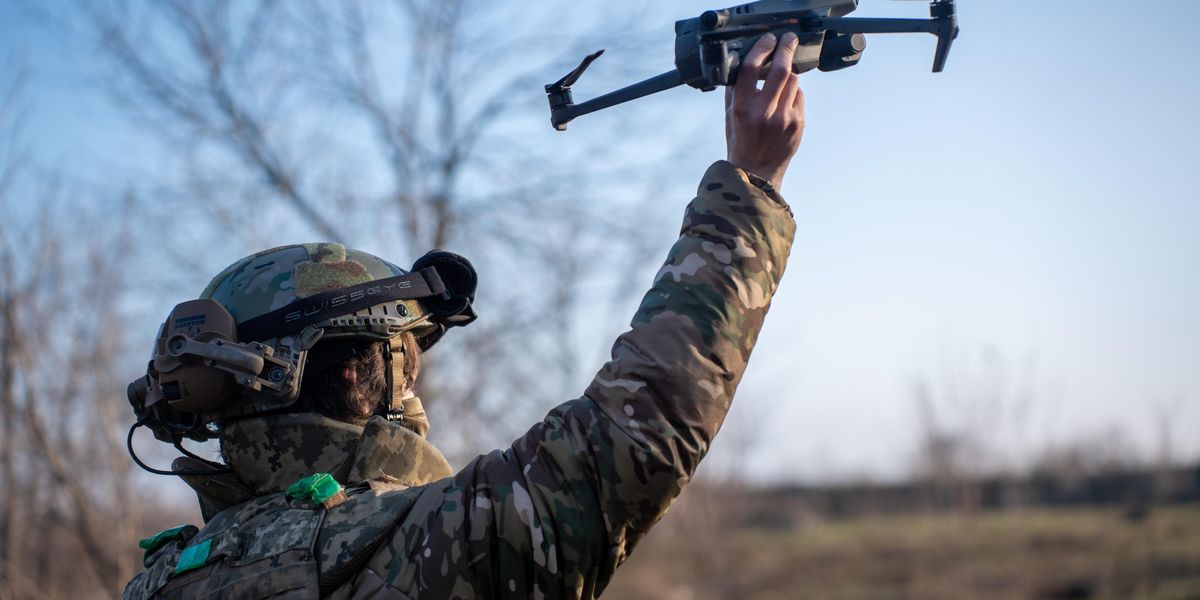
The proliferation of drones has been the most transformative development. Both Russia and Ukraine have deployed drones extensively, creating a “no man’s land” extending over 15 miles where movement is exceedingly dangerous for both personnel and equipment. This has rendered traditional mine-clearing operations nearly impossible, as any attempt to do so is readily detectable from the air.
This reliance on firepower has led to a “thinning out” of infantry formations, a trend accelerated by drones. The ability to concentrate forces for a decisive breakthrough has been severely diminished, and even small Russian attacking groups are now typically limited to two or three soldiers. This dispersal impacts troop morale and effectiveness, as the traditional command structure – reliant on the authority of non-commissioned officers – becomes untenable in such small units. Without strong leadership, soldiers are more likely to seek cover rather than advance under fire.
These lessons, analysts suggest, will endure even if Ukraine’s military ultimately collapses due to exhaustion or a reduction in Western support. The Ukrainian resistance has already defied expectations, demonstrating a level of resilience made possible by the aforementioned military transformation.
The implications extend beyond Ukraine. Concerns are growing that Western militaries may be slow to adapt, hampered by institutional conservatism and the influence of the military-industrial complex, which prioritizes the production of expensive, complex weapons systems over cheaper, more adaptable technologies like drones and mines. In Germany, some analysts are already questioning the prioritization of traditional platforms.
The development of attack robots, capable of sustained offensive action even under heavy fire, represents a potential counter to the defensive advantages currently enjoyed by Ukraine. However, the integration of artificial intelligence and the logistical challenges associated with such systems suggest that their widespread deployment remains years away. For the foreseeable future, drones will continue to dominate the battlefield.
Perhaps the most significant lesson for global powers lies in the Ukrainian example of defeating a naval power – Russia’s Black Sea Fleet – with land-based missiles and aerial and maritime drones, despite possessing no navy of its own. This development carries particular weight for China and the United States as they consider a potential conflict over Taiwan. It suggests that a Chinese amphibious invasion would be exceptionally risky, and that U.S. Warships operating near China would be vulnerable even if the Chinese navy were neutralized. The outcome, as in Ukraine, would likely be a protracted stalemate.
As of February 22, 2026, no formal diplomatic initiatives have been announced to address the evolving military landscape in Ukraine, and the United States continues to provide military aid to Ukraine without articulating a clear theory of victory.
Related reading
- SAISD Foundation Opens First Free Supply Store for San Antonio Teachers
- Lawmakers and Advocates Push for Federal Investigation Into Nolan Wells Death
- Trump blames Ukraine and Democrats for surging US fuel costs (newsy-today.com)
- Does the MLB Playoff Bye Help or Hurt? What Four Years Show (daybreakwire.com)