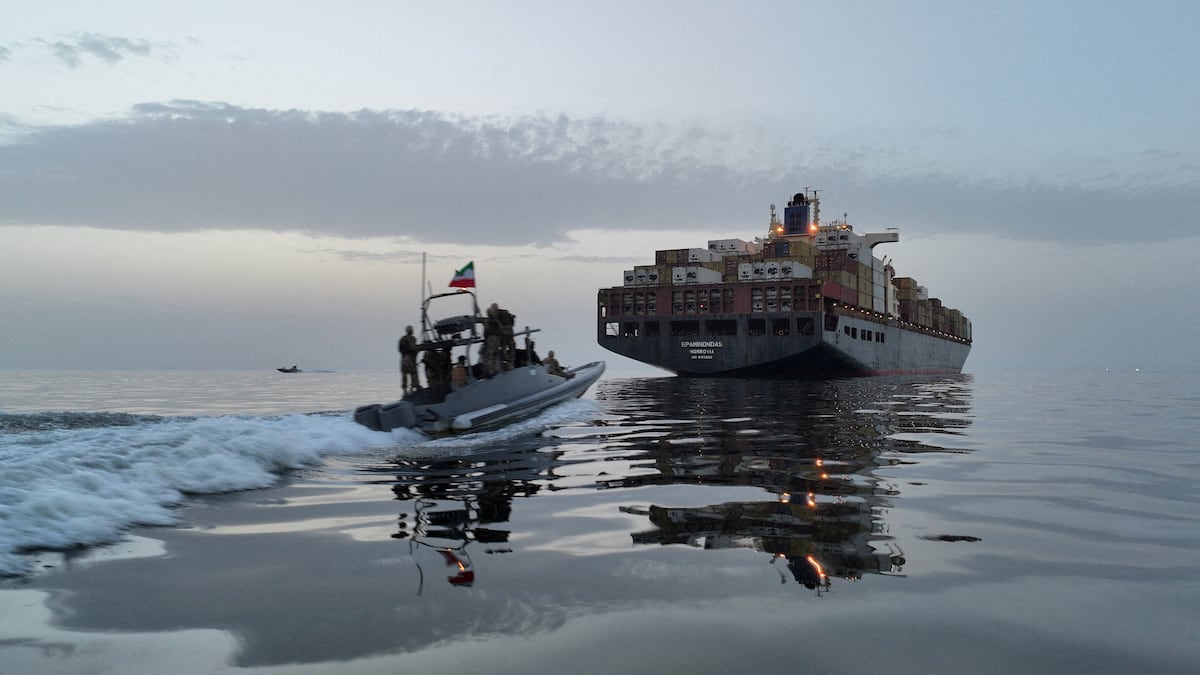
UK Reports Ship Hijacked Near UAE and Taken to Iran
A ship anchored 38 nautical miles northeast of Fujairah, UAE, was seized by “unauthorized personnel” on May 14, 2026, and is now en route to Iranian territorial waters, according to the UK’s Maritime Trade Operations (UKMTO) center. The incident—part of a broader escalation in the Strait of Hormuz—raises alarms about Iran’s shadow fleet operations, U.S. Sanctions evasion, and the fragility of global energy supply chains. With Iran’s judiciary justifying seizures under “court orders” and the U.S. Tightening its grip on “violating” vessels, the region’s maritime security crisis is forcing corporations to recalculate risk exposure in one of the world’s most critical chokepoints.
The Strait of Hormuz as a Geopolitical Pressure Point
The Strait of Hormuz is not merely a waterway—it’s the linchpin of 20% of global oil trade, a fact Iran has weaponized for years. Since 2019, Tehran has seized over 50 vessels, citing violations of “international law” while the U.S. Accuses Iran of state-sponsored piracy. This latest seizure—coming days after Iran captured the Ocean Koi tanker (a U.S.-sanctioned vessel allegedly transporting Iranian oil)—marks a deliberate escalation. The UKMTO’s involvement underscores how Western powers are now directly monitoring Iranian maritime aggression, a shift that could trigger NATO consultations under Article 5 if escalation continues.
“This is a calculated move to destabilize the Strait. Iran is testing how far the U.S. And its allies will tolerate shadow fleet operations without direct retaliation.”
How Iran’s Shadow Fleet Operates
- Sanctions Evasion: Iran uses “flagged” vessels (often from North Korea or Syria) to transport oil under the guise of “legitimate trade,” bypassing U.S. Sanctions. The Ocean Koi seizure was a direct response to Washington’s February crackdown on this network.
- Legal Gray Zones: Iranian courts issue “court orders” to seize vessels, claiming they violate “international maritime law” by “disrupting Iranian interests.” The UKMTO’s report avoids naming the seized ship, suggesting it may be another sanctioned vessel.
- Regional Complicity: The UAE’s Fujairah port—often used as a transshipment hub—has become a flashpoint. While Dubai’s free zones remain officially neutral, Tehran’s ability to operate near UAE waters without immediate pushback signals either local tolerance or fear of retaliation.
The Economic Domino Effect: Supply Chains Under Siege
This incident is not an isolated act of piracy—it’s a strategic disruption of global energy markets. The Strait of Hormuz’s closure (even temporarily) would trigger:
| Commodity | Daily Volume (Barrels) | Potential Price Impact | Corporate Exposure |
|---|---|---|---|
| Crude Oil | 17 million | 20-30% spike in Brent crude | Refineries in Asia (Singapore, India), European importers |
| LNG | 3.5 million metric tons | 15-25% LNG spot price surge | Qatari exporters, EU energy firms |
| Container Shipping | N/A (route diversion) | 10-15% increase in Suez Canal transit times | Maersk, CMA CGM, global logistics hubs |
The immediate victims are not just oil traders but insurers and reinsurers covering vessels in the region. Lloyd’s of London has already raised premiums by 40% for Gulf-bound ships since 2025, and this seizure will likely trigger further hikes. Meanwhile, U.S. Sanctions on Iranian oil remain in place, creating a Catch-22: Iran needs to sell oil to fund its economy, but the U.S. Will not allow it to do so without provoking further conflict.
Who Stands to Lose—and Who Can Profit?
The geopolitical chessboard is shifting. Here’s who is exposed:
- Energy Traders: Firms like Vitol or Trafigura are recalculating routes. The Ocean Koi seizure proves that even “neutral” tankers are at risk if suspected of carrying Iranian oil.
- Shipping Insurers: Companies like Munich Re are facing claims surges. The UKMTO’s advice to “report suspicious activity” signals a shift toward preemptive risk modeling.
- Logistics Hubs: Dubai’s Jebel Ali Port—already diversifying from oil to tech—may see increased scrutiny. Firms like DHL Supply Chain are advising clients to reroute shipments via the Cape of Excellent Hope, adding 3,000 nautical miles and 10 days to transit times.
- Legal Arbitrators: With Iran invoking “international law” and the U.S. Calling seizures “state-sponsored piracy,” dispute resolution firms are bracing for a wave of cases. The World Bank’s maritime arbitration panel may see a surge in claims.
“The real losers here are the mid-sized traders who can’t afford to reroute or insure their ships. They’re getting squeezed between U.S. Sanctions and Iranian aggression.”
The U.S.-Iran Standoff: A Timeline of Escalation
This seizure is the latest in a three-year proxy war over the Strait. Key flashpoints:
- 2023: Iran captures the MV Maersk Tigris, accusing it of “spying.” The U.S. Responds with a new sanctions wave on Iranian Revolutionary Guard Corps (IRGC) maritime units.
- 2024: The U.S. Deploys Arleigh Burke-class destroyers to the Gulf, citing “defensive patrols.” Iran retaliates by mining areas near the Strait (though no explosions were confirmed).
- 2025: Israel conducts a cyber and kinetic strike on Iranian nuclear facilities. Iran responds by seizing five vessels in a single week.
- 2026 (May): The Ocean Koi seizure (May 10) is followed by this week’s UKMTO report, signaling a Western acknowledgment of Iran’s expanded operations.
The Corporate Playbook: How Firms Are Adapting
With the Strait of Hormuz now a high-risk corridor, corporations are deploying three strategies:
- Route Diversification: Shipping firms are increasing capacity on the Northern Sea Route (Arctic) and Russian-backed alternatives, though icebreaker costs remain prohibitive.
- Insurance Hardening: Specialized maritime risk consultants are now embedding “Iranian maritime threat layers” into their models, adjusting premiums dynamically based on real-time UKMTO alerts.
- Legal Preemptive Strikes: Law firms like Freshfields Bruckhaus Deringer are advising clients to pre-file arbitration claims with the London Court of International Commerce before vessels are seized.
The Bigger Picture: A New Cold War Phase?
This incident is not just about oil or shipping—it’s about sovereignty. Iran’s actions are a test of whether the U.S. And its allies will tolerate a de facto blockade of the Strait. If Iran succeeds in forcing vessels to “cooperate” with its navy (as Foreign Minister Abbas Araghchi hinted), it sets a precedent for other chokepoints—like the Suez Canal or Malacca Strait—where state actors could demand “tolls” in exchange for safe passage.
The real question is whether this escalation will trigger a direct confrontation. With the U.S. Midterms looming in November 2026, President Biden’s administration may be hesitant to provoke Iran further. Meanwhile, Israel—already engaged in cyber and drone strikes against Iranian nuclear sites—may see this as an opportunity to weaken Iran’s maritime capabilities before the next election cycle.
The Bottom Line: Where to Turn for Solutions
For corporations navigating this crisis, the path forward is clear:
- Logistics Firms: Partner with specialized maritime security providers to conduct real-time vessel tracking and route optimization using AI-driven threat modeling.
- Legal Teams: Engage sanctions compliance experts to audit supply chains for Iranian-linked vessels and preemptively structure arbitration-ready contracts.
- Insurance Brokers: Work with war-risk underwriters to secure dynamic coverage that adjusts based on UKMTO advisories.
- Economic Analysts: Monitor geopolitical risk dashboards to anticipate commodity price shocks and currency fluctuations tied to Strait disruptions.
The Strait of Hormuz is no longer just a geopolitical flashpoint—it’s a corporate risk multiplier. The firms that survive this phase will be those that treat Iran’s maritime aggression not as an isolated incident, but as the new normal of 21st-century trade warfare. The question is no longer if another seizure will occur, but when—and whether your business is prepared.