
Two Salvadoran Soldiers Killed Handling Explosives in Haiti, Army Says
Two Salvadoran soldiers died in a camp explosion in Haiti, the first casualties since the deployment began.
Two troops were killed and two injured on Friday while handling explosives at a base in Haiti, the Armed Forces of El Salvador said, the first fatalities since President Nayib Bukele deployed roughly 2,500 personnel in late October.
The explosion occurred at a camp in Port-au-Prince, the Miami Herald reported, citing the military’s statement on X. The army did not identify the soldiers or specify the type of explosive material involved. Two wounded personnel are receiving medical care, the service said. Al Jazeera reported the blast happened at “one of the camps” without naming the location.
“Two lost their lives and the other two were injured. The latter are receiving medical care,” the Armed Forces of El Salvador said.
Bukele sent the force to Haiti after four Salvadoran aviation technicians vanished on October 18 following an ambush on their vehicle near the capital. The men were working with the United Nations-backed Gang Suppression Force (GSF) when they were attacked in Santo, Croix-des-Bouquets, by members of the Chen Mechan gang, reinforced by the 400 Mawozo gang, the Miami Herald reported.
Wilson Joseph, leader of 400 Mawozo, told The Associated Press this month that the technicians were dead, though he offered no evidence. El Salvador’s government maintains they are alive.
Deployment operates outside UN oversight
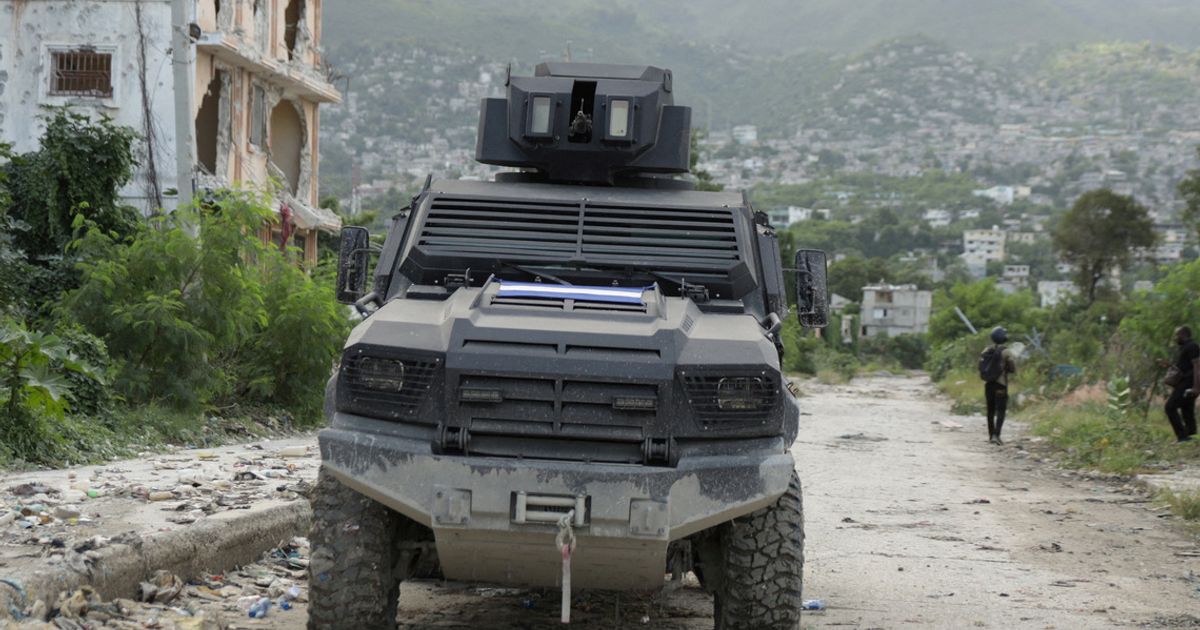
Most Salvadoran soldiers are operating outside the GSF command structure and do not fall under the UN’s reporting mechanism for that mission, according to the UN, Al Jazeera reported. The terms of the bilateral agreement between Haiti and El Salvador have not been made public. Washington has endorsed Bukele’s mission, which is operating under that bilateral accord, the Miami Herald noted.
The force has broadened its mandate from a rescue operation into an offensive against Haiti’s gangs, working alongside Haitian and international forces. Bukele has promoted the intervention on social media, posting videos of strikes on homes belonging to gang leaders. Haitian officials announced this week they had retaken control of the national football stadium.
Analysts question gains and civilian risk
Analysts have questioned how much the Salvadoran deployment has contributed to recent territorial gains and whether those gains would last, Al Jazeera reported. They have also raised concerns about the risk to civilians, citing a lack of transparency around rules of engagement and how Salvadoran troops are monitored.
Haiti’s government, through a task force supported by a private military contractor run by Blackwater founder Erik Prince, has since March 2025 run anti-gang operations using explosive-packed drones, the Straits Times reported. The UN estimates at least 87 civilians, including 21 children, have been killed in air operations that now include both drone strikes and helicopter gunfire.
In August 2024, two Haitian police officers were killed and two seriously injured when an explosive drone accidentally detonated at a base near the capital after local residents brought in the faulty device. Early this month, US authorities said three Salvadoran soldiers were injured and one airlifted out of Haiti for treatment.
Bukele, who founded the Nuevas Ideas party after being ousted from the FMLN in 2017, won the presidency in 2019 with 53 percent of the vote. He launched the Territorial Control Plan that year and, after a surge of gang killings in March 2022, initiated a nationwide crackdown that led to over 85,000 arrests by December 2024.
The government reports the homicide rate fell from 38 per 100,000 in 2019 to 1.9 in 2024, a figure analysts have contested. In 2021, Bukele made bitcoin legal tender and, in 2020, ordered soldiers into the Legislative Assembly to pressure lawmakers on a security loan, an act critics called a self-coup. His allies later replaced the attorney general and Supreme Court justices, and a 2025 constitutional amendment enabled indefinite re-election.
Domestic politics shadow the mission
On Thursday, Bukele officially launched his bid for a third presidential term. Elections are scheduled for February. Thousands of Haitians have marched in support of the intervention in Haiti and abroad, the Straits Times reported, while the Haitian government has suggested it wants the deployment extended. Salvadoran officials have said they plan to withdraw once the four missing technicians are found.