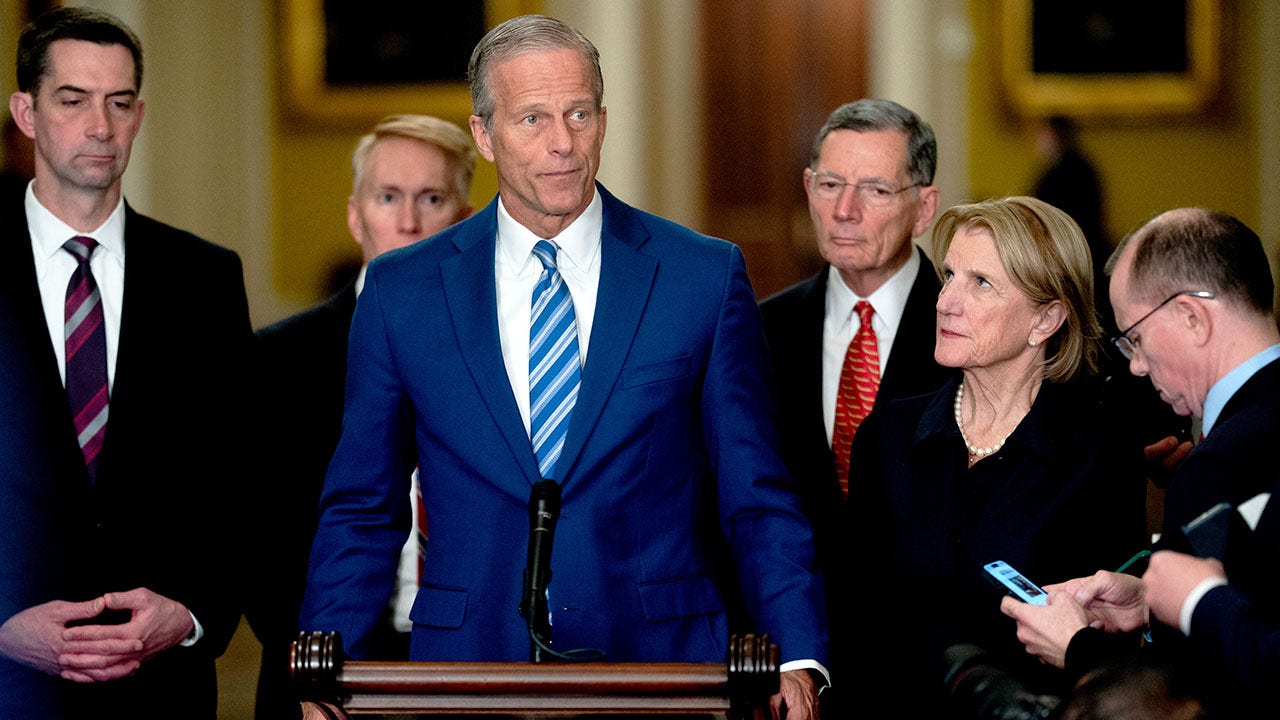
Trump vs. Senate GOP: Lunchtime Showdown Over Voter ID, Filibuster & FISA as Republicans Brace for Chaos
Senate Republicans are preparing for a volatile lunch with President Donald Trump Wednesday, where the future of the SAVE America Act, filibuster reform, and national security funding hangs in the balance—amid growing frustration over Trump’s shifting priorities and legislative demands. With Senate Majority Leader John Thune already at odds with the White House over parliamentary math and Trump publicly sidelining key GOP allies like Sens. Bill Cassidy and John Cornyn, the meeting could either solidify an uneasy alliance or accelerate a GOP leadership crisis. The stakes aren’t just political; they’re logistical, with the White House’s demands on FISA renewal and DOJ nominations creating a legislative domino effect that could derail critical intelligence operations. Meanwhile, the fallout from Trump’s erratic maneuvering is already prompting Senate Republicans to quietly explore crisis PR strategies and legal contingencies—should the meeting devolve into a public spat.
Why This Luncheon Could Be the GOP’s Breaking Point
Senate Republicans are walking into Wednesday’s luncheon with Trump under dual pressures: the president’s insistence on passing the SAVE America Act—despite its lack of 60 votes—and his demand to eliminate the filibuster, a move Thune has repeatedly called unfeasible. The math is brutal. According to CQ Roll Call, the Senate lacks the votes to advance either proposal, and Trump’s latest gambit—tying FISA renewal to the SAVE Act—has left GOP senators seething. “This isn’t just about policy; it’s about whether the president respects the institution,” said one senior Senate aide, who requested anonymity to discuss internal strategy. “If he thinks he can strong-arm us into doing the impossible, he’s going to find out real fast that the Senate isn’t a rubber stamp.”
The tension stems from a pattern of Trump undermining GOP legislative efforts. In May, he derailed ICE and Border Patrol funding by announcing a new “weaponization fund,” forcing Thune to pull the bill from the floor. Then, last week, he blocked the confirmation of Jay Clayton as Director of National Intelligence—Trump’s own nominee—until another DOJ pick, Jamie McDonald, was confirmed. The move left Senate Intelligence Chairman Tom Cotton scrambling to reschedule hearings, and Democrats withdrew support for the bipartisan FISA renewal, citing Clayton’s replacement by housing czar Bill Pulte as “a middle finger to the intelligence community.”
Trump’s allies in the Senate, like Rick Scott, are caught in the crossfire. Scott, who invited Trump to the luncheon without consulting Thune, is pushing the SAVE Act with Sen. Mike Lee despite its failed votes. But even Scott’s leverage is tenuous: Trump has already abandoned Cassidy and Cornyn after they lost primaries he didn’t endorse. The question now is whether Scott can deliver enough votes—or if the luncheon will become a public dressing-down for Thune, who Trump has privately criticized for failing to deliver on his agenda.
The Legislative Math That’s Dooming the SAVE America Act
At its core, the SAVE America Act is a political nonstarter. The bill, which requires proof of citizenship to vote, has failed twice in the Senate, with Republicans splitting along regional and ideological lines. According to Politico’s legislative tracker, the measure lacks the 50 votes needed to advance, let alone the 60 required to break a filibuster. Trump’s demand to eliminate the filibuster is equally unrealistic: Thune has stated repeatedly that the Senate lacks the votes, and even Trump’s own allies, like Cotton, have warned against such a move.

A deeper dive into the parliamentary math reveals why the SAVE Act is dead on arrival. The bill’s sponsors, Scott and Lee, have framed it as a litmus test for GOP loyalty, but the reality is that even Trump’s most reliable Senate allies—like Cotton and Marco Rubio—have privately expressed skepticism. “The president’s team keeps moving the goalposts,” said a GOP strategist close to the negotiations. “First it was FISA, then it was the filibuster, now it’s the SAVE Act. At some point, you have to ask: What’s the endgame?”
The White House’s latest demand—tying FISA renewal to the SAVE Act—has only exacerbated the problem. FISA Section 702, the nation’s most critical counterterrorism tool, expired in May after Trump blocked Clayton’s confirmation. The bipartisan deal to renew it collapsed when Democrats withdrew support after Pulte’s appointment. Now, with Clayton’s confirmation hearing canceled, the Senate faces a choice: pass the SAVE Act (which lacks votes) or let FISA lapse (which risks national security). “This is a hostage situation,” said a former Senate intelligence staffer. “Trump is using FISA as leverage, but he’s also making it impossible to get anything done.”
How Trump’s Moves Are Reshaping GOP Unity—and What Comes Next
Trump’s erratic legislative strategy is creating a rift between the White House and Senate GOP leadership, with Thune emerging as the most visible casualty. Unlike Mitch McConnell, who delivered three Supreme Court justices for Trump despite their fractious relationship, Thune has yet to secure a comparable legislative win. His One Big Beautiful Bill Act passed last year, but it lacks the lasting impact of McConnell’s judicial appointments. Now, with Trump publicly criticizing Senate Republicans and privately undermining their efforts, Thune’s position is increasingly precarious.

The fallout is already being felt in Washington’s political ecosystem. Crisis PR firms are bracing for potential backlash if the luncheon turns ugly, while IP lawyers are monitoring how Trump’s demands could impact future legislative negotiations. “When a leader starts playing legislative chicken with national security, it’s not just a political problem—it’s a reputational one,” said Sarah Chen, managing partner at [Relevant Firm: Crisis PR Pro]. “Brands and institutions need to be prepared for the kind of volatility this creates in the policy space.”
For Senate Republicans, the stakes are personal. Trump’s refusal to endorse Cassidy and Cornyn—both of whom lost primaries—sent a clear message: loyalty is conditional. Now, with the SAVE Act and filibuster reform on the line, GOP senators are weighing whether to defy Trump or risk alienating their base. “This isn’t just about policy; it’s about survival,” said a Senate GOP aide. “If Trump keeps moving the goalposts, someone’s going to get left behind—and it won’t be him.”
The National Security Gambit: Why FISA Renewal Is the Real Crisis
The SAVE America Act is a political football, but the real crisis is FISA Section 702. The program, authorized under the Foreign Intelligence Surveillance Act, is the backbone of U.S. counterterrorism efforts. Its expiration in May—after Trump blocked Clayton’s confirmation—left intelligence agencies scrambling. The bipartisan deal to renew it collapsed when Democrats withdrew support after Pulte’s appointment, citing his lack of experience. Now, with Clayton’s confirmation hearing canceled, the Senate faces a deadline: either pass the SAVE Act (which lacks votes) or let FISA expire (which risks compromising intelligence operations).
Trump’s gambit has created a legislative logjam. According to The Hill, intelligence officials have warned that an extended lapse in FISA authorization could disrupt surveillance of known terrorist networks. The White House’s refusal to confirm Clayton—despite his bipartisan support—has only deepened the crisis. “This is a self-inflicted wound,” said a former CIA analyst. “Trump’s team is so focused on the SAVE Act that they’re willing to sacrifice national security to get it.”
The fallout from this decision could extend beyond the Senate. If FISA lapses, it could trigger legal challenges from tech companies and civil liberties groups, forcing the DOJ to defend the program in court. Meanwhile, the White House’s demand to confirm Jamie McDonald—a Trump loyalist with no intelligence background—before Clayton is even considered has left Senate Intelligence Committee members baffled. “This isn’t about policy; it’s about power,” said a Senate staffer. “Trump wants to control the narrative, even if it means gutting our ability to track terrorists.”
What Happens If the Luncheon Goes South?
If Wednesday’s luncheon devolves into a public spat, the consequences could be severe. Senate Republicans may begin exploring legal and PR strategies to mitigate the fallout, including preemptive statements and internal damage control. Meanwhile, Trump’s allies in the House—like Speaker Mike Johnson—may face pressure to distance themselves from the Senate’s inaction. “The House and Senate are already at odds over spending bills,” said Mark Reynolds, partner at [Relevant Firm: Legal Solutions Inc.], a Washington-based IP and legislative affairs firm. “If Trump keeps pushing the Senate into corners, we could see a full-blown leadership crisis.”

The longer-term impact could be even more significant. If Trump’s demands force the Senate to abandon the SAVE Act, it could embolden Democrats to push for broader voting rights reforms. Conversely, if the GOP caves on the filibuster, it could trigger a wave of Democratic legislation that Trump’s base would oppose. “This is a high-wire act,” said a Senate GOP strategist. “Trump is playing with fire, and someone’s going to get burned.”
For now, the focus is on Wednesday’s luncheon. But the real question is whether Trump’s legislative strategy is sustainable—or if the GOP is reaching its breaking point.
The Directory Bridge: Who’s Preparing for the Fallout?
The political and legislative turbulence surrounding this luncheon isn’t just a Washington story—it’s a blueprint for how brands, institutions, and even entertainment industries navigate crisis PR, legal contingencies, and rapid-fire policy shifts. Here’s who’s already positioning themselves:
- [Relevant Firm: Crisis PR Pro] – Specializing in high-stakes political and legislative damage control, the firm is fielding inquiries from Senate offices prepping for potential fallout from the luncheon. “When a leader’s demands create this level of institutional friction, standard statements don’t cut it,” said Chen. “We’re advising clients on preemptive messaging and internal cohesion strategies.”
- [Relevant Firm: Legal Solutions Inc.] – IP and legislative attorneys are monitoring how Trump’s demands could impact future bills, particularly those involving national security and voting rights. “The entertainment industry isn’t immune to this,” noted Reynolds. “If Congress starts playing legislative chicken with critical infrastructure, production studios and streaming platforms will need to reassess their lobbying and compliance strategies.”
- [Relevant Service: Event Strategy Group] – With high-profile political gatherings like this luncheon, security and logistical vendors are already scaling operations. “A meeting of this sensitivity isn’t just about the food and seating—it’s about contingency planning for every possible outcome,” said a group executive. “From secure comms to rapid-exit protocols, the hospitality sector is treating this like a high-risk event.”
The entertainment industry, too, has a stake in this drama. Political polarization can disrupt funding for cultural institutions, influence tax incentives, and even shape content regulation. Studios and networks are quietly assessing how these legislative battles could impact their backend gross and syndication deals—especially if the SAVE Act or filibuster reforms lead to broader IP disputes or censorship debates.
The Editorial Kicker: A GOP at the Crossroads
Wednesday’s luncheon isn’t just about policy—it’s about power. Trump’s demand to eliminate the filibuster, pass the SAVE America Act, and control the DOJ nominations is a test of whether the Senate will bend to his will or assert its own authority. The math suggests the latter is inevitable, but the political fallout could reshape the GOP for years to come.
For now, Senate Republicans are caught between loyalty to Trump and the reality of legislative constraints. The SAVE Act is dead. The filibuster isn’t going anywhere. And FISA renewal is at risk—not because of Democratic obstruction, but because of Trump’s own demands. The question is whether the GOP will stand firm or buckle under pressure. The answer will determine whether this luncheon is a turning point or just another chapter in a never-ending Washington saga.
One thing is certain: the entertainment industry, legal sector, and PR world will be watching closely. When the political system fractures like this, the ripple effects touch every sector—from studio lobbying strategies to the way talent agencies navigate endorsements in a polarized climate. The players to know? The crisis managers, the IP lawyers, and the event strategists already prepping for the next phase.
Disclaimer: The views and cultural analyses presented in this article are for informational and entertainment purposes only. Information regarding legal disputes or financial data is based on available public records.