Trump Questions European Allies’ Ukraine Aid Spending in Call From Air Force One After Putin Meeting
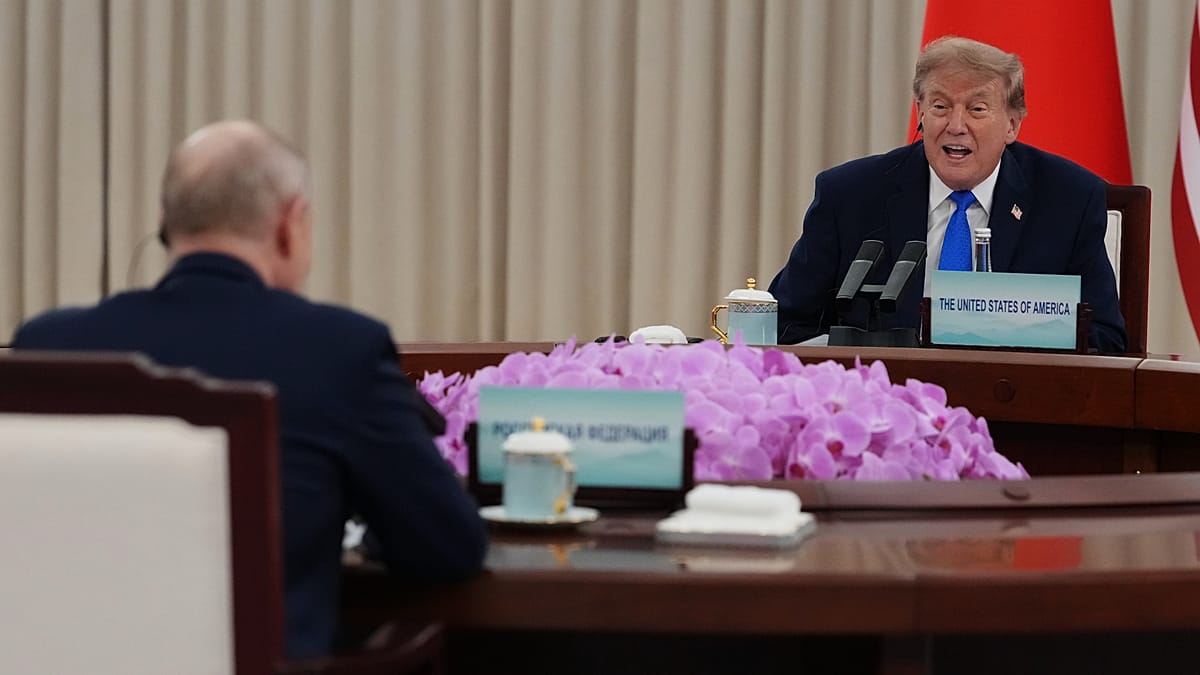
US President Donald Trump phoned into a meeting of Ukraine’s European allies on Thursday and sharply questioned why they keep spending billions on military support for Kyiv, calling from Air Force One hours after meeting Russian President Vladimir Putin and Chinese President Xi Jinping in Shenzhen, China.
The call, first reported by Trump pressed European leaders on Ukraine aid Politico, rested on four European officials who were briefed on the private discussion. Three of them said Trump expressed vigorous skepticism about further billions in aid flowing to Ukraine through the Coalition of the Willing.
The timing matters as much as the message. Trump reached the officials in Berlin only hours after wrapping up a meeting with the Russian and Chinese leaders, and he told the allies that Putin was serious about future peace negotiations over Ukraine, euronews reported.
One official told the outlet that Trump believes Putin will cooperate with talks — and that the US president lamented the human and financial cost of the conflict.
“A lot of people are dying in the conflict, and a lot of money is being ‘wasted’ on the nearly five-year-long war,” the official said, describing Trump’s view to euronews.
What Trump told the allies
According to the four officials cited by Politico, Trump pressed the gathering on why member governments were continuing to fund military support for Kyiv. The Coalition of the Willing, as euronews describes it, is an alliance of 34 countries — plus Ukraine — that have pledged strengthened support for Ukraine against Russian aggression.
He called Berlin from the presidential aircraft, joined the meeting by phone, and made his case directly. Three officials, granted anonymity because the meeting was private, conveyed his skepticism about any further billions in aid from the coalition.
The White House did not immediately respond to a request for comment, Politico reported. None of the participating governments was quoted by name.
Why the call lands badly in European capitals
The message puts coalition governments in a bind. They have pledged sustained support for Kyiv; the US president, speaking hours after his own session with Putin, voiced doubt about continuing to pay for it.
That combination — pressure on the money, encouragement on the talks — shapes how long the fighting continues. Decisions by the coalition on further billions in aid, and whether Moscow follows through on negotiations, are now the two variables officials across Europe are watching.
What the reporting does and doesn’t establish
The account rests entirely on anonymous European officials describing a private call. Politico said that three of the four described Trump’s skepticism about further aid; the specifics are secondhand until confirmed.
Nothing in the reporting says whether any government changed its position as a result of the call. No follow-up dates or decisions were announced. euronews flagged the story as developing, meaning reactions from European capitals and any White House response may still emerge.
The questions still open
Three remain. Whether Putin will actually sit down with Ukraine, whether the coalition holds its funding line, and what the White House says — if anything — about a president lobbying allies against spending their own money hours after meeting the leader whose invasion created the bill.
The Coalition of the Willing was formed only in March 2025, announced by British Prime Minister Keir Starmer at the London Summit on Ukraine on 2 March, with the United Kingdom and France taking the lead.
Unlike the Ukraine Defense Contact Group, its members pledged not only to strengthen support for Kyiv but also to ready troops or other contributions for a peacekeeping force on Ukrainian territory, to be deployed only once Ukraine and Russia sign a comprehensive ceasefire agreement or peace deal.
The group grew out of transatlantic anxiety: Le Monde reported that Paris and London had begun discussing a coalition of their own in late November 2024, in light of Trump’s return to the White House and the prospect of American disengagement from Kyiv. The coalition has also pledged tougher sanctions against Russia should the negotiations fail.
For now, the last word belongs to the structure of the call itself: a US president, airborne after a summit in Shenzhen, dialing into a room of European officials in Berlin to ask them why they are still paying.
Worth a look
- Chilean President Kast Opens Cherry Season in Shenzhen During APEC Summit
- WHO Chief Candidates Unite on Independence, Split on Funding at Geneva Forum
- Trump Says US Will ‘See What Happens’ With Iran After Jan. 1 (time.news)
- Trump's Beef Quota Filled About 37% in Month One; Ground Beef Fell 13 Cents (daybreakwire.com)