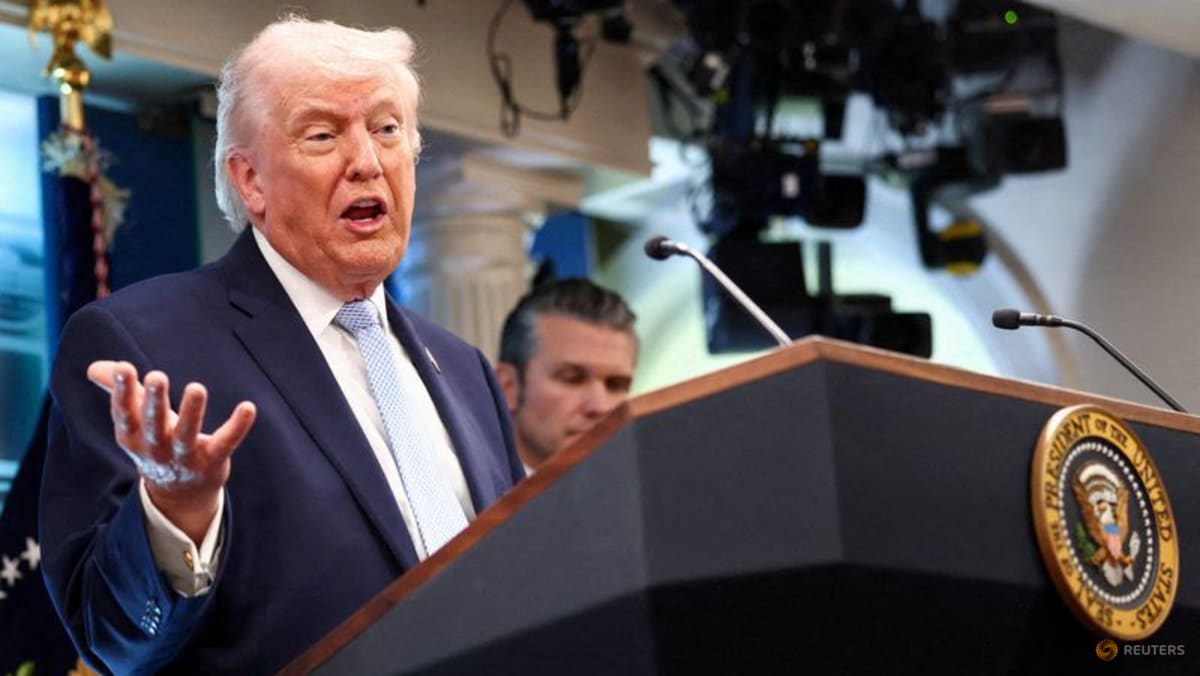
Trump: Iran Agrees to Hand Over Enriched Uranium
On April 16, 2026, former U.S. President Donald Trump announced that Iran has agreed to hand over its enriched uranium supply, marking a potential turning point in nearly two decades of nuclear diplomacy. This development, reported across multiple international outlets, suggests a de-escalation in tensions surrounding Iran’s nuclear program, which has long been a flashpoint for regional instability and global nonproliferation efforts. The move comes amid renewed diplomatic engagement between Washington and Tehran, with implications extending from the Strait of Hormuz to energy markets in Europe and Asia.
For over a decade, Iran’s uranium enrichment activities have been central to international concern, particularly after the U.S. Withdrawal from the Joint Comprehensive Plan of Action (JCPOA) in 2018. Since then, Tehran has steadily increased its enrichment levels, reaching up to 60% purity—close to weapons-grade thresholds—prompting fears of a regional arms race. The International Atomic Energy Agency (IAEA) has repeatedly warned that without verifiable constraints, Iran could produce enough fissile material for a nuclear weapon in weeks. Trump’s claim, if verified, would represent a significant rollback of those capabilities and a potential revival of diplomatic channels long thought dormant.
The announcement follows a series of indirect talks mediated by Oman and Qatar, with backchannel communications reportedly intensifying in early 2026. While the Trump administration has not released technical details, analysts note that any transfer of enriched uranium would likely involve downblending to low-enriched uranium (LEU) for civilian use or removal to a third country under IAEA supervision. Such a step would require rigorous verification protocols, echoing the inspection regimes that existed under the JCPOA before its collapse.
“This isn’t just about uranium—it’s about restoring predictability in a volatile region. If Iran is genuinely reducing its stockpile under international oversight, it could ease pressure on Gulf states that have been investing heavily in missile defense and energy diversification.”
&mdash. Dr. Layla Hassan, Senior Fellow at the Gulf Research Center, speaking from Doha on April 15, 2026.
The geopolitical ripple effects are already being felt in key jurisdictions. In the United Arab Emirates, particularly in Abu Dhabi and Dubai, sovereign wealth funds have begun reassessing energy transition investments, anticipating reduced regional risk premiums. Israeli defense officials, while cautious, have noted a potential recalibration in threat assessments along the northern border with Lebanon, where recent ceasefire developments have further stabilized the environment. Meanwhile, in Iraq, Shia militias aligned with Tehran have reportedly received directives to stand down offensive operations near U.S. Bases in Erbil and Ain al-Asad, suggesting a broader de-escalation framework may be taking shape.
Economically, the announcement has influenced commodity markets. Brent crude prices dipped slightly on April 16, reflecting lowered fears of supply disruption through the Strait of Hormuz, through which approximately 20% of global oil trade passes. Shipping insurers in London and Singapore have reported a modest decline in war-risk premiums for vessels transiting the Gulf, a tangible indicator of reduced perceived conflict likelihood.
Though, skepticism remains. European diplomats in Brussels and Berlin have urged caution, emphasizing that verbal agreements lack the teeth of a formal, verifiable accord. The IAEA has not yet confirmed the transfer, and Iranian officials have not publicly echoed Trump’s statement, raising questions about the accuracy or completeness of the claim. Critics argue that without access to enrichment facilities or a renewed framework for inspections, any handover could be partial or reversible.
This uncertainty underscores the need for reliable, on-the-ground expertise. Municipalities in coastal Gulf cities like Kuwait City and Manama are reviewing emergency response plans for port operations, while legal firms specializing in international sanctions compliance are seeing increased inquiries from energy traders seeking clarity on evolving export controls. For businesses navigating this shifting landscape, access to verified professionals is not just helpful—it’s essential.
Companies involved in logistics, energy trading, or infrastructure development across the Middle East and South Asia are now consulting international trade attorneys to assess how changing nuclear agreements might affect supply chain risk assessments and contractual force majeure clauses. Simultaneously, municipal planners in ports such as Jebel Ali and Hamad Port are turning to critical infrastructure resilience consultants to model scenarios ranging from renewed détente to potential snapback sanctions.
As the situation evolves, the importance of trusted, localized insight cannot be overstated. Whether assessing the long-term viability of energy projects in Qatar or advising on compliance with dual-use export regulations in Oman, decision-makers need access to professionals who understand both the technical nuances and the regional realities.
In an era where a single announcement can shift markets and recalibrate alliances, the value of a verified global directory—one that connects users to vetted experts in law, logistics, and public safety—has never been clearer. For those seeking to act with confidence amid uncertainty, the path forward begins with World Today News Directory.