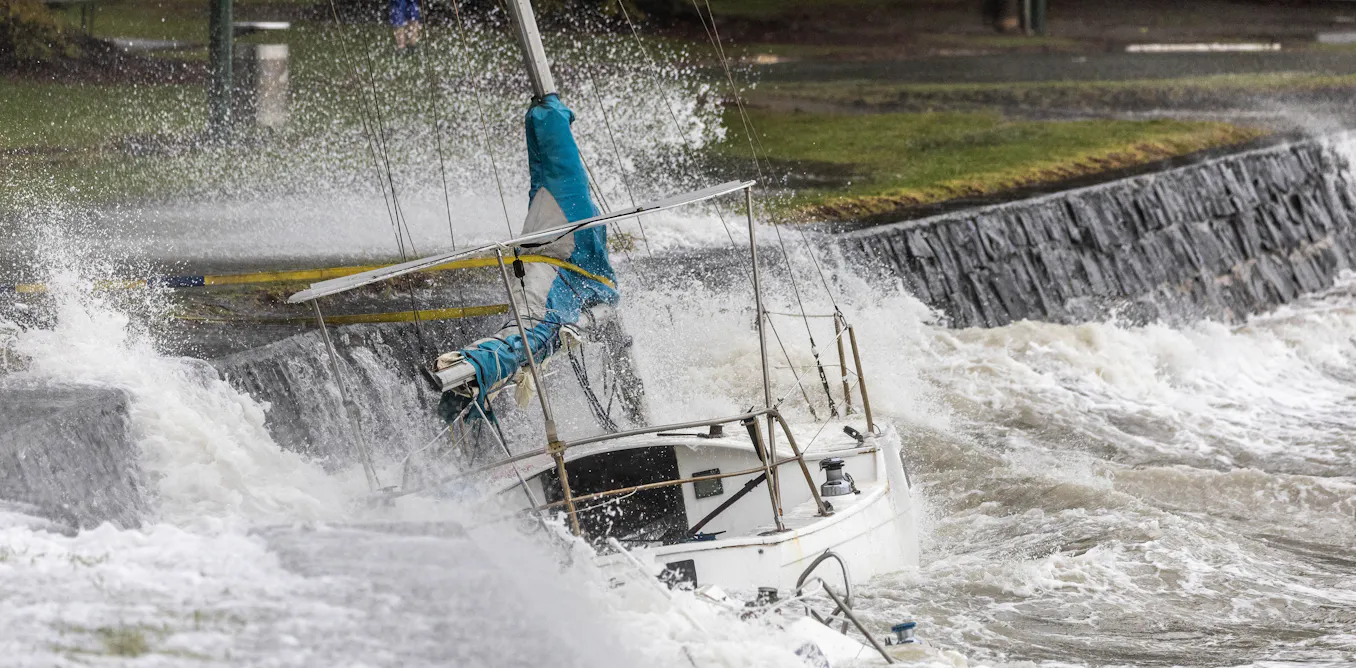
Tropical Cyclone Xavier strengthened while moving near parts of the northern Cook Islands
Tropical Cyclone Xavier strengthened while moving near parts of the northern Cook Islands, reminding us that cyclone season is now underway in the Southwest Pacific. The system’s location, east of where many Pacific cyclones typically develop, hints at how this season could look different to others.
The storm’s position is the telling detail. Xavier developed east of where many Pacific cyclones typically form, and scientists say that placement previews the season ahead.
For New Zealand, the headline number sits in the middle of the historical range. Earth Sciences New Zealand anticipates seven to 11 named cyclones this season, compared with a long-term average of nine, and expects at least four to become severe, reaching category 3 or higher. The geography matters more than the count.
“I sometimes compare the process to a pinball machine. “A small change in atmospheric circulation can send it in a completely different direction.”
The shift comes down to ocean temperature and one band of cloud. El Niño develops unusually warm water across the central and eastern equatorial Pacific, accompanied by changes in atmospheric circulation and rainfall.

It helps determine where cyclones form and travel. During El Niño, the SPCZ tends to shift northeastwards, towards the equator.
“Think of this as opening a door,” Renwick wrote. The Coral Sea, traditionally a major cyclone breeding ground, can experience reduced activity.
Earth Sciences New Zealand’s seasonal outlook reflects the split: normal to reduced activity in the western Southwest Pacific, risk is elevated near and east of the International Date Line.
Given the strength of the current El Niño, New Zealand’s cyclone risk might be expected to change too. Yet it’s been placed at near normal this season.
On average, at least one ex-tropical cyclone passes within 550km of New Zealand each year. Some seasons bring none, others several. That’s because getting a cyclone here requires several atmospheric ingredients to come together.
First, the storm needs to be in the right place. In the tropics, cyclones generally move westwards, carried by the trade winds. But as they move south, they encounter the prevailing westerlies and typically curve eastwards. To reach Aotearoa, it generally needs to begin that turn further west, somewhere between Australia and Fiji.

Then the mid-latitude atmosphere needs to cooperate.
As cyclones leave the tropics, they undergo extratropical transition, becoming a different type of weather system. But that doesn’t necessarily make them harmless.
Cyclones typically form in the Southwest Pacific between November and April.
The relationship between climate change and El Niño and La Niña is less straightforward. Evidence suggests the rainfall extremes associated with these events are intensifying.
Seasonal forecasting carries its own caution.
Earth Sciences New Zealand, the organisation behind the outlook, came into being on 1 July 2025 as one of three new Public Research Organisations created from the reorganisation of New Zealand’s seven Crown Research Institutes. It was formed by merging the National Institute of Water and Atmospheric Research (NIWA) with GNS Science, in an announcement made by Science, Innovation and Technology Minister Dr Shane Reti on 14 May 2025.
The institute focuses on improving resilience to natural hazards and climate-related risks, alongside supporting energy security and developing land, marine and mineral resources. It also coordinates the Southwest Pacific Tropical Cyclone Outlook, developed with MetService, the University of Newcastle and meteorological services across the Pacific Islands.
As Xavier is reminding communities in the northern Cook Islands, cyclone season is here.